- Who We Serve
- What We Do
- About Us
- Insights & Research
- Who We Serve
- What We Do
- About Us
- Insights & Research

Securities Lending & Borrowing
Securities Lending & Borrowing
Enhance returns through agency lending and efficiently cover your borrowing needs

Financing & Liquidity
Financing & Liquidity
Access funding and optimize your liquidity program through bilateral and centrally cleared repo solutions

Collateral Solutions
Collateral Solutions
Outsource your collateral management needs and optimize margin obligations through collateral transformation
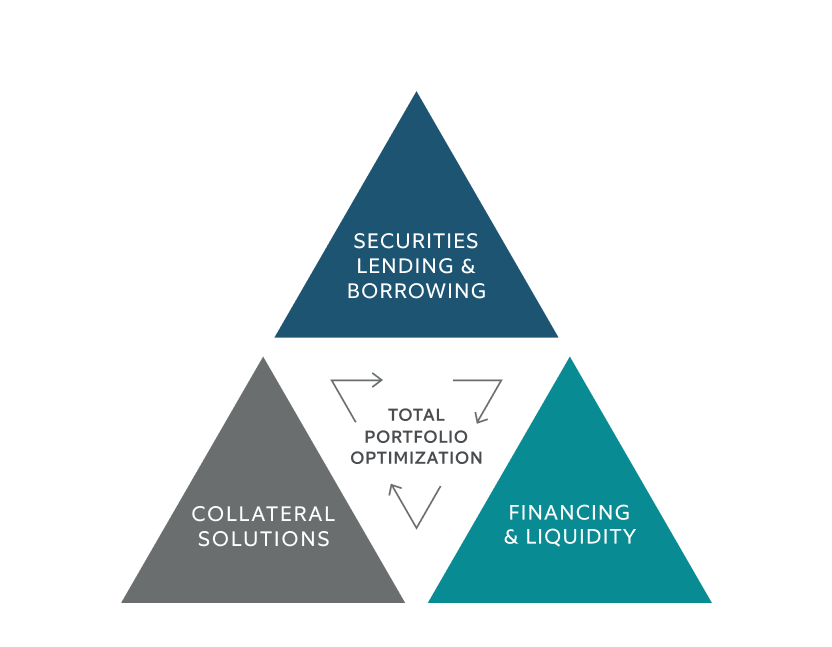
Capabilities That Drive Scalable End-to-End Solutions
Optimizing the value of your financial resource is critical in generating enhanced alpha and driving out costs from your portfolio. Deploying a holistic and total portfolio strategy across the competing needs of this resource is foundational in securing optimal outcomes.
Northern Trust’s Securities Finance offering provides a suite of integrated capabilities across Securities Lending & Borrowing, Financing & Liquidity and Collateral Solutions that allow you to drive greater portfolio optimization.
Securities Lending & Borrowing
Generate incremental return from your long assets through our global agency lending platform; our technology allows you to tailor parameters giving you control of your risk reward profile.
Securities Borrowing
Borrow from your own portfolio, peers, our Agency Securities Lending program or from the wider securities lending market.
FINANCING & LIQUIDITY
Source and invest US Dollar cash and US government securities from Northern Trust as your sponsor to the Fixed Income Clearing Corporation (FICC).
Support your liquidity needs through a suite of government liquidity funds, global cash funds and strategic money market funds.
COLLATERAL SOLUTIONS
Utilize our operations outsourcing service to help you determine counterparty exposure, issue collateral calls, select assets for margin demands and support your derivatives, repo, and other collateral product needs.
Employ our Collateral Optimization service as an extension of our collateral management program. We will help you determine the most efficient use of your assets to be pledged as collateral.
More Insights

May 26, 2026
Rising central clearing demands are driving firms toward FICC sponsored repo as an efficient alternative to direct membership.

May 14, 2026
Ahead of the implementation, here is what you need to know about the upcoming changes – and how Northern Trust is preparing.
SECURITIES FINANCE LEADERS
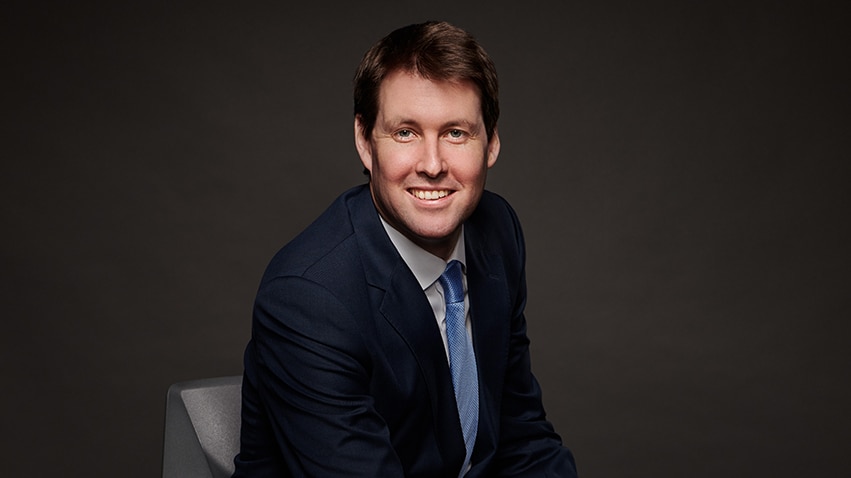
Meet our Global Head of Foreign Exchange and Co-Head of Securities Finance
Dane Fannin is Head of Global Foreign Exchange (GFX) and Co-Head of Securities Finance at Northern Trust based in Chicago
© 2024 Northern Trust Corporation. Head Office: 50 South La Salle Street, Chicago, Illinois 60603 U.S.A. Incorporated with limited liability as an Illinois corporation under number 0014019. Products and services provided by subsidiaries of Northern Trust Corporation may vary in different markets and are offered in accordance with local regulation. This material is directed to professional clients (or equivalent) only and is not intended for retail clients and should not be relied upon by any other persons. This information is provided for informational purposes only and does not constitute marketing material. The contents of this communication should not be construed as a recommendation, solicitation or offer to buy, sell or procure any securities or related financial products or to enter into an investment, service or product agreement in any jurisdiction in which such solicitation is unlawful or to any person to whom it is unlawful. This communication does not constitute investment advice, does not constitute a personal recommendation and has been prepared without regard to the individual financial circumstances, needs or objectives of persons who receive it. Moreover, it neither constitutes an offer to enter into an investment, service or product agreement with the recipient of this document nor the invitation to respond to it by making an offer to enter into an investment, service or product agreement. For Asia-Pacific markets, this communication is directed to expert, institutional, professional and wholesale clients or investors only and should not be relied upon by retail clients or investors. For legal and regulatory information about our offices and legal entities, visit northerntrust.com/disclosures. The views, thoughts, and opinions expressed in the text belong solely to the author, and not necessarily to the author's employer, organization, committee or other group or individual. The following information is provided to comply with local disclosure requirements: The Northern Trust Company, London Branch, Northern Trust Global Investments Limited, Northern Trust Securities LLP and Northern Trust Investor Services Limited, 50 Bank Street, London E14 5NT. Northern Trust Global Services SE, 10 rue du Château d’Eau, L-3364 Leudelange, Grand-Duché de Luxembourg, incorporated with limited liability in Luxembourg at the RCS under number B232281; authorised by the ECB and subject to the prudential supervision of the ECB and the CSSF; Northern Trust Global Services SE UK Branch, UK establishment number BR023423 and UK office at 50 Bank Street, London E14 5NT; Northern Trust Global Services SE Sweden Bankfilial, Ingmar Bergmans gata 4, 1st Floor, 114 34 Stockholm, Sweden, registered with the Swedish Companies Registration Office (Sw. Bolagsverket) with registration number 516405-3786 and the Swedish Financial Supervisory Authority (Sw. Finansinspektionen) with institution number 11654; Northern Trust Global Services SE Netherlands Branch, Viñoly 7th floor, Claude Debussylaan 18 A, 1082 MD Amsterdam; Northern Trust Global Services SE Abu Dhabi Branch, registration Number 000000519 licenced by ADGM under FSRA #160018; Northern Trust Global Services SE Norway Branch, org. no. 925 952 567 (Foretaksregisteret), address Third Floor, Haakon VIIs gate 6 0161 Oslo, is a Norwegian branch of Northern Trust Global Services SE supervised by Finanstilsynet. Northern Trust Global Services SE Leudelange, Luxembourg, Zweigniederlassung Basel is a branch of Northern Trust Global Services SE. The Branch has its registered office at Grosspeter Tower, Grosspeteranlage 29, 4052 Basel, Switzerland, and is authorised and regulated by the Swiss Financial Market Supervisory Authority FINMA. The Northern Trust Company Saudi Arabia, PO Box 7508, Level 20, Kingdom Tower, Al Urubah Road, Olaya District, Riyadh, Kingdom of Saudi Arabia 11214-9597, a Saudi Joint Stock Company – capital 52 million SAR. Regulated and Authorised by the Capital Market Authority License #12163-26 CR 1010366439. Northern Trust (Guernsey) Limited (2651)/Northern Trust Fiduciary Services (Guernsey) Limited (29806)/Northern Trust International Fund Administration Services (Guernsey) Limited (15532) are licensed by the Guernsey Financial Services Commission. Registered Office: Trafalgar Court, Les Banques, St Peter Port, Guernsey GY1 3DA. Northern Trust International Fund Administration Services (Ireland) Limited (160579)/Northern Trust Fiduciary Services (Ireland) Limited (161386), Registered Office: Georges Court, 54-62 Townsend Street, Dublin 2, D02 R156, Ireland.