Home
Home WINTER 2006
features see also

retire with
confidence


As the lines between a career and retirement keep blurring, more and more people are reinventing “the golden years.” And this is changing what they need to do to prepare financially as well.


Photography by Peter Barrett/Masterfile

Retirement isn’t what it used to be. Today, some people retire when they’re as young as 50; others never plan to. Whether it’s focusing on passions they put on hold to raise a family, building a business, discovering new skills or engaging in a second career, many retirees are successfully rewriting the rules for the next stage in life.

Which means retirement planning isn’t as simple as it used to be, either. Today many people are finding that creating a strategic plan that focuses on long-term liquidity and flexibility is vital for achieving their retirement goals, and for their peace of mind. The good news is there are as many ways to achieve these goals as there are ways to spend your retirement.

Pursuing a Passion
Retirement came a little earlier than Judy Zwald of Rochester, N.Y., expected. But when, at age 62, her job was relocated to Atlanta after a company buyout, she decided it was as good a time as any to stop working and start painting. Creating art was a lifelong hobby of hers and she was eager to take it up full time.

But Judy found that walking away from work wasn’t easy — even to pursue her life’s passion. “When I first quit I felt guilty about not working,” she says, “but I conquered it! It took the better part of a year. My job wasn’t a big career for me, but it becomes your identity, so you have to focus on what you’re doing now.”

Which, for Judy, involves gardening, relaxing and painting two to three nights per week in her studio, producing pieces given as gifts and sold at auctions. And although she says the mental preparation for retiring took almost a year, financially, she felt somewhat more prepared.

“My husband and I have a steady income from a 401(k),” she says. “I started work full time in 1980 and my husband is self employed, and we have ongoing investments that give us income.”

For many people like Judy, retirement is a time to pursue interests they may have put on hold. But pursuing your passion may mean your expenses are actually higher in retirement than while you were working — especially if your passion involves travel. If you’re envisioning an active retirement, you should work with your investment advisor to ensure that your retirement plans and other investments will be able to generate enough income throughout your retirement years to allow you to pursue your interests without depleting your assets too quickly.

Follow a Calling
For Robert H. Wheeler, 60, pursuing his own dream meant preparing for and entering a second career.

“Around the time I reached my mid-40s, the possibilities of having a second career became more attractive,” says the one-time lawyer. “I was enjoying practicing law and investing in and developing new companies, but I was also increasingly inclined to working within community and church activities. I had hoped that ‘retirement’ would mean moving into an activity that was driven by values that we held important and not so much by needs to make a living.”

In order to help match his values with his goals, Robert decided to pursue a Master’s degree in theology in 1994 so he could prepare professionally to engage in some form of church-related work. Five years later, he began work as a ministry formation director with Catholic Theological Union in Chicago, Ill., embracing his new spiritual path.

“I have never entertained the possibility of stopping work,” he says. “In a sense, all of the pre-retirement experience was an opportunity to gain the skill and experience that I am now using in my role at CTU.”

Successful financial planning offered Robert the freedom to take his retirement in a totally different direction by ensuring that he and his family were prepared for the transition. However, preparing to move from one income to another, especially if the second income is lesser than the first, may mean “bridging the gap” between work and retirement by ensuring a sufficient cash flow during the transition. Maximizing contributions to any tax-deferred plans you have in the years before the transition may be important, for example, or using retirement account balances to supplement income from the second career. Whatever path you may choose, preparing for a successful transition can help you start the journey.

One Step at a Time
For many successful people, making the transition from a busy career to the slower pace of retirement isn’t easy — even if they are looking forward to relaxing and having time to enjoy. In fact, some may need to get there in stages.

William Clark Luster, Jr. was one of those people. Determined to enjoy the relaxation retirement can bring, he stepped down three years ago from his 27-year post as CEO and executive director of The Pressley Ridge Schools, a nonprofit in Pittsburgh that helps troubled children. At 57, he realized he wanted to leave his career “while they were still clapping.”

However, retirement didn’t last long. Within six months, a headhunter enticed him to re-enter the workforce for the Kansas Children’s Services League, where he worked for 21/2 years before retiring — for the second time — last August.

Nevertheless, he says he enjoyed his second, if short-lived, career. “It was a wonderful transition to retirement,” he says.

When preparing for a transition toward retirement, one of the key features of planning may be simplicity. Consolidating retirement accounts from multiple employers into a single rollover IRA or IRA rollover trust, for example, could simplify your decision-making processes as well as your investment strategy. Keeping your funds in a single IRA can also help simplify your distribution planning, along with lowering costs and providing easier distribution calculations. No matter how you get there, successful financial planning can turn out to be the final set of brushstrokes on a masterful retirement.

The Dream Is Already Here
For some, retirement in any form seems almost out of the question. Sixty-year-old Sharon Drager, a former Peace Corps. volunteer and construction company owner, has dedicated the last few years to helping the aging find, build and design sustainable, affordable living spaces.

As she approaches her own retirement age, Drager is eager to stay active. After achieving a few more career goals, she plans to reassess her workload and determine whether or not she will retire.

“Some people start sleeping longer and more frequently, fish a lot, take extended vacations, or spend more time with the family,” she says. “Work is not part of their routine. For me, perpetual vacation would not provide enough challenge and interest. The pleasure of providing information and encouragement so that people can continue to enjoy a life either inside or outside of retirement is my goal.”

Even if you never retire, however, you shouldn’t neglect retirement planning. Taking advantage of tax-deferred growth in a retirement plan, for example, can be a good way to pass additional wealth on to heirs. And you still may have to begin taking required minimum distributions when you reach age 701/2, even if you continue to work. So even if you keep working well past traditional retirement age, financial planning is essential.

When considering how the next stage in your life may turn out, consider as well how you plan to get there. Financial planning may not be as exciting as becoming an artist, starting a second career or continuing to do the work you love, but it may turn out to be an important step on the route to some of the best years of your life.


New Retirement Planning Guide Can Help
Create a Prosperous Retirement
Photography by Jean-Yves Bruel/Masterfile

Regardless of how you envision your perfect retirement, saving is no longer enough to ensure you’ll achieve it. You need to create a retirement plan that focuses on long-term liquidity and flexibility.

Giving careful consideration to when you would like to retire and how you plan to spend your retirement years is just as important as calculating your current and anticipated expenses. Together, the answers to these questions can play an important role in crafting an income strategy that will not only meet your needs, but also help you realize your desires.

Northern Trust’s new retirement planning guide, “Creating a Prosperous Retirement,” focuses on helping you develop a cash flow plan based on your individual retirement goals. The guide highlights and provides potential solutions to many of the concerns people face in their retirement years — regardless of their retirement style — including:

  • Dealing with rising healthcare and long-term care costs,
  • Using real estate to finance your retirement,
  • Creating a retirement plan distribution strategy,
  • Addressing the special concerns related to early retirement, and
  • Dealing with concentrations of employer stock or restricted stock.

Working through these issues with your advisors can help you create a strategy for generating a stable cash flow that will allow you to have the retirement lifestyle you want. A strategy with enough flexibility to help meet your changing needs will help ensure your money lasts as long as your retirement does.

You can get a copy of “Creating a Prosperous Retirement” by contacting your Relationship Manager or calling 866.296.1526.


Improving the World, One Investment
at a Time

With a wealth of socially responsible investing choices now available, balancing your portfolio’s effect on the world and on your bottom line is more important than ever.

Is a Family Office Within Reach?

You may think that family offices are only available to families with extensive wealth. That’s no longer necessarily true. Thanks to new options, family office support is available for more families today.

Finding the Right Fit

Due diligence can go a long way toward helping you choose which of the more than 1 million charities to support. Here’s how to identify charities that are aligned with your personal interests and will spend your money well.

departments

Market Outlook

Fall-off likely in consumer spending, housing prices.

Information Exchange

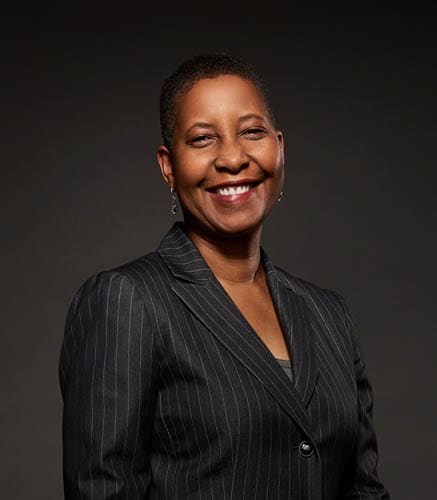
Marguerite H. Griffin, Northern Trust’s National Director of Philanthropic Services, offers unique perspectives on philanthropy.

Lifestyle

Imagine having a jet at your beck and call. The idea may not be as far-fetched as you think.

News & Notes

The latest updates from Northern Trust.

learn more

Our Family Office Capabilities

Benefit from our expertise in working with generational wealth.

the magazine
get in touch

Contact a Relationship Manager

Whether you are an individual or an institution, Northern Trust is committed to providing you with the personal service you deserve.

feedback?

What do you think about the articles in Wealth? Send us your comments.

© 2006 Northern Trust Corporation     www.northerntrust.com

The views, opinions and investment information expressed are those of the individuals noted herein, do not necessarily represent the views of Northern or any other person in the Northern organization and are subject to change based on market or other conditions. The material is provided for informational purposes only and should not be construed as investment, tax or legal advice or a recommendation to buy or sell a security. Northern disclaims any responsibility to update such views. Northern does not guarantee that the information supplied is accurate, complete or timely and does not make any warranties with regard to the results obtained from its use. Northern does not guarantee the suitability or potential value of any particular investment or information source. You should consult your investment, tax, legal and accounting professionals before taking any action.

To ensure compliance with requirements imposed by the Internal Revenue Service, we inform you that any tax information in this magazine is not intended or written to be used, and cannot be used, for the purpose of (i) avoiding penalties under the Internal Revenue Code or (ii) promoting, marketing or recommending to another party any transaction or matter addressed herein.

Northern Trust banks are members FDIC. © 2006