Wealth
 
Winter 2007
Departments   Features
Information Exchange

Blue Chip Forecasting

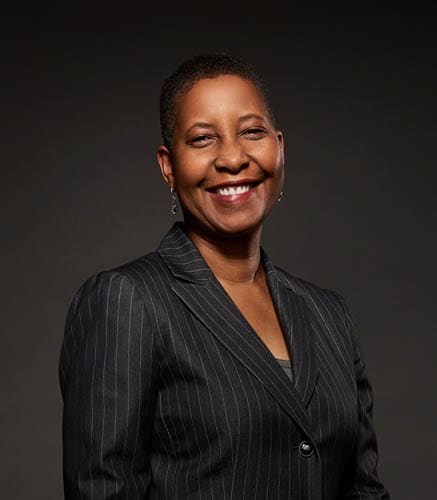
Paul Kasriel, director of economic research for Northern Trust, recently won the Lawrence R. Klein Award for Blue Chip Forecast Accuracy. Here he discusses his approach to economic forecasting.

Paul Kasriel

As director of economic research, Paul Kasriel is responsible for making Northern Trust’s economic and interest rate forecasts, which have ranked in the top five of the Blue Chip Survey for accuracy in recent years. Kasriel is also the co-author of the book “Seven Indicators That Move Markets.” He is a member of the American Economic Association and the National Association of Business Economists and has served on the Economic Advisory Committee of the American Bankers Association.

You’ve just been awarded the Lawrence R. Klein Award for Blue Chip Forecast Accuracy. To what do you attribute your accuracy and consistency?
I have spent a lot of time testing hypotheses based on fundamental economic theory about the behavior of the overall economy. As a result of this testing, I have come up with some leading indicators that consistently have done a reasonably good job, but by no means a perfect job, of forecasting the cyclical behavior of the economy. My forecasts are based on these leading indicators as well as some judgmental factors.

What factors do you consider when producing your economic forecasts?
I have found that one of the most important factors in cyclical forecasting, which is what I won the award for, is the stance of Federal Reserve monetary policy. The challenge is to discover measures that reflect the stance of monetary policy. I am continually amazed by how much effort is exerted by many forecasters in trying to predict what the Fed will do next and how little effort is exerted by them in correctly assessing the future effect on the economy of what the Fed already has done.

What’s unique about your approach to monitoring the economy and the markets?
I don’t know whether it is unique, but I pay a lot of attention to the behavior of market-determined prices — financial market prices and commodity market prices. I operate under the assumption that market participants with superior information cause market prices to change. I also operate under the assumption that markets don’t function in isolation. That is, bond markets, stock markets, commodity markets and foreign exchange markets are all related to each other. What I try to do is decipher an economic “story” these markets are telling that is consistent with their collective price behavior and that is consistent with basic economic theory.

You write a newsletter called “The Econtrarian: Your alternative to the econsensus.” Do you often try to challenge the consensus view, and, if so, why do you think it’s important to do so?
I do often challenge the consensus because I have found that much consensus analysis is at odds with generally accepted basic economic theory. It is important to challenge the consensus because consensus forecasts usually are wrong at cyclical turning points in the economy’s behavior. And it is at cyclical turning points when tactical investment decisions are most critical.

What is your aim in producing a forecast?
Of course, my primary aim is to produce an accurate forecast to help Northern Trust make better-informed business decisions for the corporation and better-informed investment decisions for its clients. Another aim is to explain to my audiences how I arrive at my forecasts. I, for one, would have more confidence in an economic forecast if I knew that it was arrived at using logically consistent economic analysis backed up with supporting empirical evidence.

What is the biggest mistake you can make as a forecaster?
Assuming you have developed a reliable forecasting model in which you have confidence, the biggest mistake you can make is to change your outlook on the basis of a few new economic reports that are at odds with your forecast. You cease to be an economic forecaster if your view changes with each new economic release. Rather you become merely an economic reporter.

What are the intangible aspects of economic forecasting? What do you do outside of work that makes you a better forecaster?
I am a Lake Michigan sailor. The lake presents a sailor with a variety of wind and water conditions, which can change quickly. As with economic forecasting, you learn to anticipate the changing sailing conditions. When you are sailing in foggy conditions, you have to depend on your compass to tell you the direction in which you are headed. In economic forecasting, you have to develop a model of leading indicators, something akin to a compass, to help tell you the direction in which the economy is headed. Sailing also teaches an appreciation of lagged effects. For example, the boat does not turn immediately when you push or pull on the tiller. Correctly taking lags into consideration is an important element of successful economic forecasting. Lastly, in sailboat racing, sailing the same course as your competitors is not always the best way to try to beat them. When you anticipate a wind shift, sometimes it is better to sail a different course than the rest of the fleet.

Kasriel Wins Forecasting Accuracy Award

Kasriel Wins Forecasting Accuracy AwardKasriel Wins Forecasting Accuracy Award Paul Kasriel, director of economic research at Northern Trust, has been awarded the 2006 Lawrence R. Klein Award for Blue Chip Forecast Accuracy. The award honors Kasriel for having the most accurate economic forecast among Blue Chip survey participants from 2002 to 2005.

Sponsored by the W. P. Carey School of Business at Arizona State University, the award is one of the most prestigious and long-standing awards in the profession. “The Lawrence R. Klein Award competition involves the 50 savviest forecasters in the country,” says Lee McPheters, associate dean of the W. P. Carey School of Business. “To come out on top, a forecaster must predict most of the indicators nearly perfectly over a four-year period. Paul Kasriel saw that the inflation rate was going to move up while the unemployment rate was slow to come down. Meanwhile, he projected GDP growth to within a quarter percentage point over the same period.”

[top]

1
Departments
1
the magazine
1
1
Latest from northern trust
Daily Global Commentary
A review of current activity in global financial markets, with an emphasis on U.S. markets.
Northern Trust Perspectivesm
A monthly review of the latest market challenges and opportunities.
1
get in Touch
Contact a Relationship Manager
Whether you are an individual or an institution, Northern Trust is committed to providing you with the personal service you deserve.
1
Feedback
What do you think about the articles in Wealth? Send us your comments.
1


The views, opinions and investment information expressed are those of the individuals noted herein, do not necessarily represent the views of Northern or any other person in the Northern organization and are subject to change based on market or other conditions.The material is provided for informational purposes only and should not be construed as investment, tax or legal advice or a recommendation to buy or sell a security. Northern disclaims any responsibility to update such views. Northern does not guarantee that the information supplied is accurate, complete or timely and does not make any warranties with regard to the results obtained from its use. Northern does not guarantee the suitability or potential value of any particular investment or information source. You should consult your investment, tax, legal and accounting professionals before taking any action.

To ensure compliance with requirements imposed by the Internal Revenue Service, we inform you that any tax information in this magazine is not intended or written to be used, and cannot be used, for the purpose of (i) avoiding penalties under the Internal Revenue Code or (ii) promoting, marketing or recommending to another party any transaction or matter addressed herein.

Northern Trust banks are members FDIC. © 2007