Wealth
 
Spring 2008
Features   Features

Planning for a Successful Wealth Transfer

Creating a thorough wealth transfer plan can do more than protect your family's financial future and your legacy. It can give you piece of mind.

Planning For a Successful Wealth Transfer
LEARN MORE: “Estate Planning: Strategic Wealth Transfers During Life and at Death” covers a broad range of wealth transfer issues, using case studies, planning tips and clear explanations of sophisticated wealth transfer strategies.

A comprehensive, well-designed wealth transfer plan delivers many advantages, including financial security for you and your family, an opportunity to minimize your tax liability and the chance to leave a lasting legacy. Your hard-earned success, after all, deserves proper preservation.

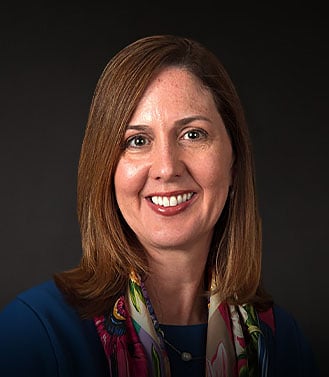
On the surface, creating a wealth transfer plan might appear to be a daunting task. “It’s difficult to deal with your own mortality and how things will go on when you’re not there to supervise,” says Stacy Singer, manager of estate settlement services at Northern Trust. But with some forethought and expert advice from your legal and financial advisors, careful planning now could yield significant benefits in the future.

An Opportunity, Not a Chore
Viewing estate planning as an opportunity to ensure financial security for your loved ones, rather than as a chore, can be helpful. Approach the process as if you are creating a blueprint of your objectives — an overall wealth transfer plan. When completed, the plan not only will protect your assets and provide security for your beneficiaries, but also offer a clear and detailed account of how your financial, legal and medical affairs should be handled.

Each of life’s milestones — marriage, the birth of a child or grandchild, receiving an inheritance, divorce or selling a business — should elicit a review of your plan, says Singer. Other factors that could prompt a re-evaluation of your plan include changes in the tax laws or a substantial change in your net worth.

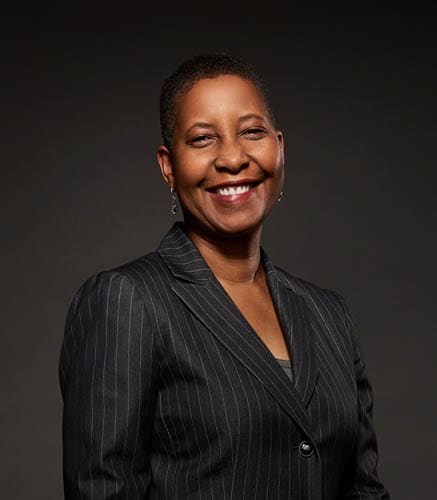
“Often, people don’t realize that when [their] assets change, an estate plan no longer works properly,” states David R. Hodgman, partner and executive committee member at Schiff Hardin LLP.

Map Your Assets
When creating and updating your wealth transfer plan, documenting your assets and liabilities is vital. Failing to do so can result in years of uncertainty for your heirs, as was the case for one of Singer’s clients. His multi-million dollar estate included more than 100 different securities and accounts, none of which were specifically named or listed in his wealth transfer plan.

“It took us almost three years just to locate all of the different assets,” Singer says. “His family spent that entire time unsure of the amount of money they’d receive and whether there would even be enough to pay everyone listed. Of course, this led to a great deal of stress and strained relationships.”

All of this, she says, could have been avoided by keeping a simple, handwritten list of the assets’ locations, including any account numbers, and letting someone else know where the list was stored.

Additional documentation includes complete information about assets other than cash or securities (real estate, automobiles and boats, for example); deeds of ownership for real estate and other tangible assets; and details of employee benefit plan entitlements such as 401(k) plans and individual retirement accounts.

Be Specific
They say the devil is in the details, and with a wealth transfer plan this is certainly the case. Failing to take care in how you reference your assets in your will and your wealth transfer plan can have unintended consequences and potentially derail your plan.

“If you intend to leave someone a bequest worth a certain dollar amount, be specific about that amount,” Singer says. Otherwise, your bequest may have a very different value — or be worth nothing at all if the assets have been sold or otherwise disposed of. “If your will states to give someone 1,000 shares of stock and that stock is no longer in your possession, the beneficiary receives nothing.”

And don’t forget to specify the disposition of personal items, such as great-grandma’s highboy or dad’s heirloom pocket watch. In Singer’s experience, “most litigation and contention results from disputes over personal property.”

Keep up With the Tax Law
Every day, tax rules change as new laws are enacted, new court cases are decided and new Treasury regulations are promulgated. Significant developments in 2007, for example, touched areas as diverse as the kiddie tax, transfers of fractional interests in art, appraiser penalties, family limited partnerships, the deductibility of investment management fees and remedial action under the generation skipping tax. To determine the effect of these changes on your wealth transfer plan, pay attention to the financial press and newsletters prepared by your financial advisors — and be sure to have your documents reviewed at least once every three years.

Similarly, if you have sophisticated strategies in place such as a family limited partnership or a grantor retained annuity trust (GRAT), discuss their proper administration under current law with your wealth transfer team. What you fail to do may mean the difference between successful minimization of transfer taxes and a tax planning disaster. For example, failure to relinquish control in a family limited partnership can subject the entire partnership to estate tax at your death. At least five major court cases in 2007 focused on this single issue — and the IRS won every one.

Executor Decisions
When choosing an executor or trustee for your estate, you have the option of choosing either an individual or a corporation. And while it may seem like a simple choice, both options have advantages and disadvantages.

If you name an individual as either executor or trustee, you may like the idea of someone who knows your family making sure your wishes are carried out. Before naming an individual, however, consider whether that person is able to handle both the time commitment and the legal and financial responsibilities these roles require.

To ensure timely execution of their wealth transfer plans, many benefit from appointing a corporate fiduciary to serve as either a trustee or co-trustee. “While some people are fearful if they name a corporate trustee the fees will be higher, in my experience this typically is not true,” Hodgman says. A corporate trustee or executor can provide your heirs with professional advice and experience in making distribution decisions and instill confidence that the “institution will be there and do the job.” He adds you must balance these considerations before making a decision.

Avoid Making Assumptions
Your life insurance plans and retirement accounts are not controlled by your will or trusts unless they are payable to the executor or trustee. These assets pass directly to whomever is named as a beneficiary, regardless of what your wealth transfer plan says. This often overlooked aspect of the planning process causes many people to make erroneous assumptions about how these assets will be distributed.

“When people change jobs or when benefits get significantly larger, they need to review if the beneficiary designation is appropriate,” Hodgman explains. “[An] improper beneficiary designation, or improper titling of assets, is one of the common reasons why estate plans don’t work.”

Your Plan, Your Philosophy
Creating your wealth transfer plan, and discussing it with your heirs, also provides an opportunity to “present a philosophy,” about the value system that guides your decisions, Hodgman says.

Before naming an individual as executor, consider whether that person is able to handle both the time commitment and the legal and financial responsibilities this role requires.

For example, a former client of Singer’s was an avid supporter of women’s charitable causes throughout her life. That support carried through in her wealth transfer plan, where she named specific charities as beneficiaries. She discussed her decision and the reasons behind it with her family, explaining how her plan supported her values.

“Not only did a battered women’s shelter receive $1 million,” Singer says, “but my client’s daughter has already included similar charities in her own estate plan, and she’s only in her 20s.”

Right People, Right Assets, Right Time
Regardless of who or what you name as beneficiaries in your plan, Singer recommends working with your legal and financial advisors to ensure your plan addresses potential consequences, such as taxes, in the way you expect, and answers the question: “Are the right people receiving the right assets at the right time?

[top]

Departments
the magazine
Northern Trust Wealth Spring 2008
Latest from northern trust
Daily Global Commentary
A review of current activity in global financial markets, with an emphasis on U.S. markets.
Northern Trust Perspectivesm
Monthly review of the latest market challenges and opportunities.
get in touch
Contact a relationship manager
Whether you are an individual or an institution, Northern Trust is committed to providing you with the personal service you deserve.
feedback?
What do you think about the articles in Wealth? Send us your comments.
   
© 2008 Northern Trust Corporation     www.northerntrust.com
Northern Trust

The views, opinions and investment information expressed are those of the individuals noted herein, do not necessarily represent the views of Northern or any other person in the Northern organization and are subject to change based on market or other conditions.The material is provided for informational purposes only and should not be construed as investment, tax or legal advice or a recommendation to buy or sell a security. Northern disclaims any responsibility to update such views. Northern does not guarantee that the information supplied is accurate, complete or timely and does not make any warranties with regard to the results obtained from its use. Northern does not guarantee the suitability or potential value of any particular investment or information source. You should consult your investment, tax, legal and accounting professionals before taking any action.

To ensure compliance with requirements imposed by the Internal Revenue Service, we inform you that any tax information in this magazine is not intended or written to be used, and cannot be used, for the purpose of (i) avoiding penalties under the Internal Revenue Code or (ii) promoting, marketing or recommending to another party any transaction or matter addressed herein.

Northern Trust banks are members FDIC. © 2008