Wealth
 
winter 2008
Departments   Features

Information Exchange
Joining Forces

When business and academia combine forces, true innovation begins. Experts at two of Northern Trust’s partner institutions offer their insights into the benefits of these partnerships.

Joining Forces
Illustration by Dave Cutler/Images.com

While the quest for knowledge differs greatly from the quest for increased revenue, academic and corporate institutions can, in fact, work hand-in-hand. Partnerships between universities and businesses not only foster innovation and refine research topics, but they can also improve a company’s bottom line.

Northern Trust has long recognized the value of collaborating with academic institutions to help bring our clients innovative solutions to the issues they face. To explore the advantages and challenges of these alliances, Wealth spoke to experts at two of our partner institutions — Brian Barry and Anil Kashyap from the Graduate School of Business at the University of Chicago, and Lloyd Shefsky from the Kellogg School of Management at Northwestern University. Each offers insight into the benefits of corporate and university partnerships.

How can a university benefit from a corporate partner?
Barry: The greatest benefit of these partner-ships is the exchange of ideas and information between researchers and the practitioners who are actually out there doing business everyday. Their day-to-day experiences can offer insight into new research.

Kashyap: Corporate partners can bring together an audience that [universities] can’t typically access. Meetings, seminars and discussions with a mixed group of audience members not only give our initiatives greater exposure,but ultimately, they provide us with a focus group ... where we can test out new ideas and new areas of interest. Beyond providing us with a growing list of industry contacts, these gatherings also can lead to new course development for future students.

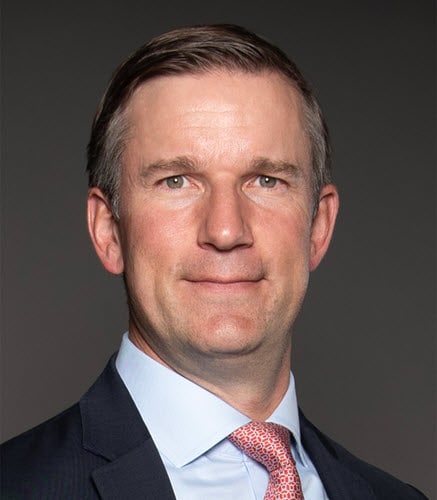
Brian Barry Brian Barry
Brian Barry is a clinical associate professor of economics at the University of Chicago’s Graduate School of Business, as well as the executive director of the university’s Initiative on Global Markets (IGM). IGM deals with the global movement of capital, products and talent in the modern economy and their impact on financial markets, and the role of policies and institutions within international business.

Shefsky: Because a university can’t commercialize a product the way a corporation can, universities benefit from a business’s production, marketing and sales capabilities. Science doesn’t entail understanding the terms of commercialization. A corporate partner can do that for them.

What are some initiatives the University of Chicago’s Graduate School of Business (GSB) is working on with its corporate partners?
Barry: In July 2006, we launched the Initiative on Global Markets (IGM) with a founding grant from the Chicago Mercantile Exchange (CME). At the time, the GSB already had many well-established centers, with each one pushing the frontier in a different area of business-related research: the Polsky Center specializes in entrepreneurship, the Kilts Center focuses on marketing, the Center for Research in Securities Prices deals with financial markets, and so on. Since the GSB already had all of the crucial bases covered so well, it was able to use the CME Trust money, and then the generous donations of the corporate partners we added, to do something really new and different.

Instead of starting another center based on a single discipline, we’ve combined some of our leading faculty from across many different fields — accounting, microeconomics, corporate finance, development economics, asset pricing and others — into one research initiative. This cross-functional talent pool has allowed us to take on some of the biggest issues in the modern global economy. Our long-term goal is to help people understand how global markets work and how public policies affect those markets, so that business leaders and others can make better decisions. With the IGM, we think we’ve created a powerful new way to pull together a lot of the research that is going on around here so that we can get it out there in ways that make it easier for people to find it, understand it, debate it and apply it to the big decisions they face.

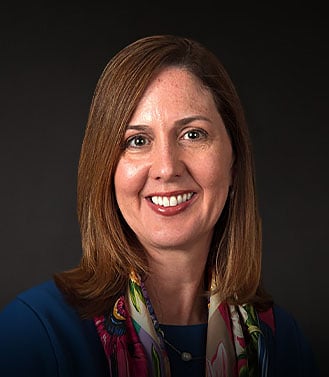
Anil Kashyap Anil Kashyap
Anil Kashyap is the Edward Eagle Brown Professor of Economics and Finance at the University of Chicago’s Graduate School of Business, where he also serves as an executive board member and co-director for the Initiative on Global Markets.

Which businesses does the IGM currently partner with and how are they contributing?
Kashyap: We currently have three corporate partners in the financial services area, one of which is Northern Trust. We hope to soon add two or three more partners outside of financial services, including a global manufacturing firm.

Barry: The funds our partners donate help in many ways. The Initiative gives much of it directly to researchers at the GSB, so that they can buy data, hire research assistants, meet with colleagues from other universities and do other things that help them to tackle big questions more quickly. The IGM also uses a lot of the funds for conferences and public lectures, in an effort to foster better debate about how global markets work. At the IGM we have frequent interactions with our corporate partners as well, which helps us to understand how our research relates to new business problems and changing events. For example, our researchers occasionally present their ideas to important decision makers at Northern Trust. Those discussions, and the questions they generate, benefit everyone involved.

What can a university offer a corporate partner to help improve its bottom line?
Shefsky: Research, research, research. Not many companies in the United States are doing enough research and development these days. Because it costs money, research projects are generally dropped to the bottom of a company’s list of priorities. And because research takes time, many CEOs aren’t willing to invest in something that may affect their successor’s future more than their own. But academic research can provide a partnering business with invaluable predevelopment research, as well as information and insight into their market, their product and the future of both.

What are some of the challenges of initiating and maintaining these alliances?
Barry: The challenge is finding the right fit for both the university and the business. Not every business is a good candidate for a partnership, and not every university is doing research that’s applicable to the market. Finding the right partner takes time.

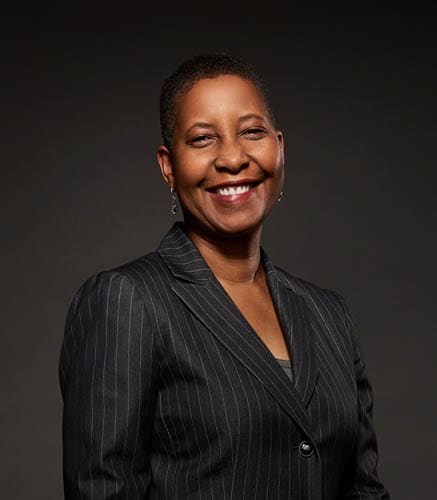
Lloyd Shefsky Lloyd Shefsky
Lloyd Shefsky is a clinical professor of entrepreneurship at Northwestern University’s Kellogg School of Management. He is also a founding partner of Shefsky & Froelich Ltd., a law firm that focuses on advising entrepreneurs, their companies and family enterprises at every stage of development.

Shefsky: Unfortunately, one doesn’t always understand the other. Academics can do research, and businesses can commercialize products, but scientists and entrepreneurs don’t always see how one applies to the other. A successful partnership demands a corporation’s patience with the research process, and a university’s sensitivity to the terms of commercialization.

What do universities look for in a corporate partner?
Barry: We look for industry leaders who think that good analysis makes for good decision-making. Without that, the relationship would be difficult to maintain.

Kashyap: Firms that think globally are more likely to value the long-term benefits that university-conducted research can provide.

Shefsky: Universities look for partners that can effectively apply their research and still have the ability to handle all of the regulatory and patent issues internally.

[top]

Departments
the magazine
Northern Trust Wealth Winter 2008
Latest from northern trust
Daily Global Commentary
A review of current activity in global financial markets, with an emphasis on U.S. Markets.
Northern Trust Perspectivesm
Monthly review of the latest market challenges and opportunities.
get in touch
Contact a relationship manager
Whether you are an individual or an institution, Northern Trust is committed to providing you with the personal service you deserve.
feedback?
What do you think about the articles in Wealth? Send us your comments.
   
© 2008 Northern Trust Corporation     www.northerntrust.com
Northern Trust

The views, opinions and investment information expressed are those of the individuals noted herein, do not necessarily represent the views of Northern or any other person in the Northern organization and are subject to change based on market or other conditions.The material is provided for informational purposes only and should not be construed as investment, tax or legal advice or a recommendation to buy or sell a security. Northern disclaims any responsibility to update such views. Northern does not guarantee that the information supplied is accurate, complete or timely and does not make any warranties with regard to the results obtained from its use. Northern does not guarantee the suitability or potential value of any particular investment or information source. You should consult your investment, tax, legal and accounting professionals before taking any action.

To ensure compliance with requirements imposed by the Internal Revenue Service, we inform you that any tax information in this magazine is not intended or written to be used, and cannot be used, for the purpose of (i) avoiding penalties under the Internal Revenue Code or (ii) promoting, marketing or recommending to another party any transaction or matter addressed herein.

Northern Trust banks are members FDIC. © 2008