Information Exchange
Family Advisory Services Roundtable
Increasingly, families are working with a multifamily office to help simplify wealth management. Jim Rauh and Doug Regan share what Northern Trust is doing to help clients meet this need.
 |
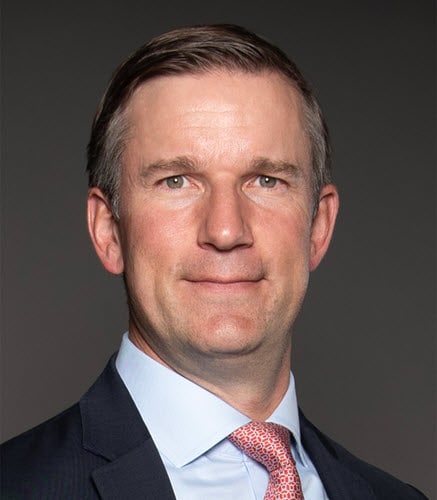
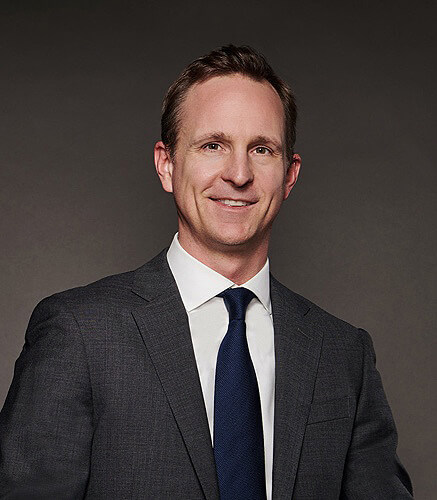
James M. Rauh is senior vice president and head of Advisory
Services, Personal Financial Services. Before joining Northern Trust in
1997, Jim served on the management committee of Samuel C.
Johnson’s bank holding company and held various positions with
Robert W. Baird & Co. A member of The Executives Club of Chicago
and the Greater Milwaukee Committee, Jim is a director of the Brady
Education Foundation. He holds a bachelor’s degree in economics
from the University of Wisconsin. |
Q: Why did Northern Trust launch the
Family Advisory Services program?
Rauh: For the last two years, I’ve been
responsible for our Wealth Advisory practice,
which focuses on clients who have significant
needs but don’t want to incur the expense or
responsibility of maintaining their own family
office and staff. While working with these
clients, we saw an opportunity to help by
expanding our capabilities to essentially become
the family office for them. So we began offering
our Family Advisory Services — through which
Northern Trust introduces the concept of a
multifamily office, versus a single-family office,
to our clients — to provide sophisticated
investment advisory solutions, comprehensive
servicing of investment assets, wealth planning
services and a list of family lifestyle services to
families who have the need but not the desire
to establish and support their own office.
Q: What expenses are involved in running
a single-family office?
Regan: A family office is a personal decision
and so is the amount of money a family
is willing to allocate annually to support the
infrastructure and the people they employ to
run it. And because families also need to fund
retirement and health care plans for their family
office employees, running a family office
can become an expensive, long-term proposition.
Typically, a family office evolves out of a
wealth-creating event, such as selling a business,
and starts with a nucleus of two or three
employees. Over time, offices often grow by
adding in-house tax specialists, investment
specialists, financial consultants or educational representatives
who help future generations understand the responsibilities of
wealth. We’d estimate that a fairly straightforward family office
has a budget of about $1 million a year. So it only begins to
make economic sense for families with at least $300 million of
investable assets.
Q: Who would benefit most from partnering with
Family Advisory Services?
Rauh: While it’s imprecise to measure a family’s needs by
the size of its wealth, this often serves as a good barometer.
And what we’ve come to realize is that families with roughly
$50 million of investable assets often have more complex
financial lives than families with $10 million or $20 million.
That complexity comes with having multiple residences, the
desire to provide more comprehensive accounting and reporting
services for the extended family, business partnerships
and ownership structures. So, for families within that $50 million
to $300 million range, we serve as their multifamily office.
Q: How substantial is the market for this kind of service?
Rauh: According to our research, the number of U.S.
households with at least $50 million of investable assets has
more than tripled over the last decade. It’s grown from 4,000
households in 1998 to more than 14,000 in 2008. Additionally,
we found heavy concentrations of these wealthy families in
markets where Northern Trust already is located, including
areas in or around New York City, southwest Connecticut,
San Francisco, Los Angeles, Chicago, Boston, southeast Florida
and Dallas. We have strong representation in these particular
markets, which now are home to more than a third of those
households with $50 million of investable assets.
Regan: Also, other data we’ve seen shows that the primary
focus of families of scale revolves around their investment
solutions strategies. So we think that providing family
advisory services really plays into one of our strengths,
which is having a full, open-architecture investment platform.
Q: What specific services are available to Family
Advisory Services clients?
Rauh: Our comprehensive family advisory services fall
into four main categories. The first is our investment advisory
services, which are designed to protect and grow a
family’s wealth. The second is asset servicing and technology,
which tracks their wealth. Third, our strategic planning services
will help to protect and transfer wealth during their lifetime
or upon their death. And, fourth, our family services
will address lifestyle management, concierge and personal
services for families.
Q: Because a multifamily office serves several clients,
how does Northern Trust make sure that each family’s
individual needs are taken care of?
Rauh: First, we surround them with five or six dedicated
Northern Trust team members, one of whom will serve as the
family’s primary point of contact. The others will be people
who specialize in the certain areas required for that family.
Regan: Once we partner with a family, we provide a
roadmap tailored to their specific needs and interests that
spells out the services they can expect from us over the next
12 months. We map out a strategic wealth plan for that family
annually to make sure we’re regularly hitting topics of interest,
such as taxes, philanthropic planning, education, financial
planning and more. This way, they can see on the first day
of the year what the next 365 days will look like with us as
their partner. We take a holistic approach to wealth management,
making sure all of the pieces of their financial picture
fit together to support the family’s goals.
 |
Douglas P. Regan is president of Northern Trust’s Wealth Management Group. Doug has served in
several capacities since joining the bank in 1985, most recently as chairman and chief executive for the
southeast region, responsible for 25 offices in Florida and Atlanta. He has taught at the National Trust
School at Northwestern University and at the University of Notre Dame’s Graduate School of Business
Administration. Doug currently serves on the board of The Old Town School in Chicago. He earned a
bachelor’s degree from Notre Dame and a law degree from the Chicago Kent College of Law. |
[top] |