Wealth - Winter 2012
twitter rss
Fall 2010 Issue

Northern Trust’s Family Business Group

Northern Trust’s Family Business Group

Wealth spoke with Northern Trust’s
Dan Barron, managing director of the Family Business Group, about the unique trust and estate services the division provides its clients.

October 2010


Q. Wealth: What are the Family Business Group’s core responsibilities?

Dan Barron: We manage the closely held businesses that Northern Trust holds in trusts and estates. Essentially, we monitor the health of those businesses, vote proxies and sometimes act as board members. If there’s any valuation required, we supervise that process, provide governance expertise, and if it’s appropriate to sell a company, we manage that process as well. We often work with business owners to help them determine the best ways to structure and manage the business to accomplish their goals for the family, the current generation and beyond.

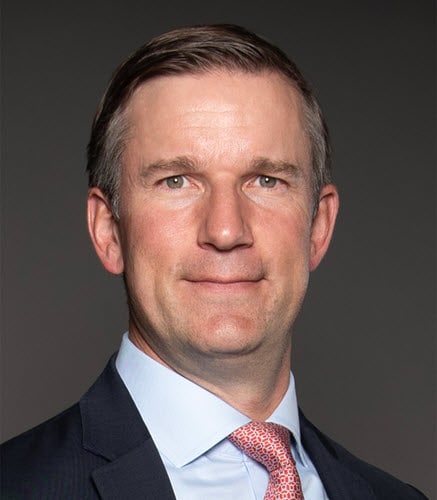
Daniel Barron

Daniel Barron is a senior vice president at Northern Trust in Chicago. He manages the Family Business Group, which consists of 15 professionals who manage, value, advise and serve in officer and director capacities for the closely held assets in trust and estate accounts at Northern Trust. Dan received his B.A. degree from Knox College in Galesburg, Ill., and M.M. degree from the J.L. Kellogg Graduate School of Management at Northwestern University. He also has been granted the Accredited Senior Appraiser designation for business valuation by the American Society of Appraisers.

Q. How long has the group been providing service to Northern Trust’s clients, and what does the group look like today?

Barron: We’ve been around for well over 100 years. Northern Trust understood very early on that to serve high-net-worth clients — composed to a great extent of entrepreneurs — we needed to be prepared to work with closely held businesses.

Today, our team consists of 15 people. We have attorneys, CPAs and MBAs on staff. We have people with years of experience managing businesses in a fiduciary capacity and people who have spent a number of years working with family offices, which is very pertinent experience to what we do.

Q. What makes the group's services unique?

Barron: Closely held businesses are all unique. Currently, we have 70 situations where Northern Trust has a controlling interest in a business, which means that if it’s a corporation, Northern Trust has anywhere between 51% and 100% of the stock in trust. As a fiduciary, Northern Trust is the owner of that company, so it requires a lot of hands-on, focused work. We need to constantly stay on top of how well that company is doing, how that company is being impacted by industry and economic circumstances, how the board of directors is doing its job in supervising management and determine whether management is being effective. The Family Business Group has people with hands-on experience doing all of these things.

Q. How closely do you work with each client?

Barron: It depends on the nature of their business. If it’s a corporation, we sometimes sit on the board of directors, which means that we are attending board meetings and closely examining the financial statements at least four times a year. We also work with companies on a regular basis as special issues come up, such as a merger or an acquisition, the loss of a key person in management, or a challenge to the company from competition or industry circumstances. In addition, we meet with the trust beneficiaries on a periodic basis to inform them of how well the closely held company is doing, what challenges the company is facing and what we see as opportunities for the future.

Q. What types of companies do you work with?

Barron: We work with companies in many different industries, including manufacturing, publishing, hospitality and gaming, and the service industry; basically, everything from gear companies, fire extinguisher makers and crane manufacturers to newspapers, distribution companies and retailers. What they have in common is that their assets are non-tradeable, so there’s no market for the stock. If we determine that we want to sell it, we have to create the market.

Q. How do you go about doing that?

Barron: We do that by managing a sales process that begins by constructing the appropriate team composed of an investment banker, a transaction attorney and possibly an accountant, and then we work with this team to take the company to market.

Historically speaking, we might go several years and not sell a single company. However, in the past few years we’ve sold roughly five companies in which Northern Trust, as trustee, had a controlling interest, usually 100%.

Q. What makes working with families different than other types of clients?

Barron: All families are unique. In a family business, there might be some people who work in the company and some who don’t. As a result, some family members may be paid a salary while others are not. And as a trustee, we have to look out for the interests of everyone. We deal with difficult situations by communicating effectively and striving for as much transparency as possible. When information is not communicated, it adds to the mystery of the company and can create suspicion among those who aren’t directly involved in the business. So we do our best to help all family members understand what’s going on in the company — we do this by visiting and communicating with beneficiaries on a periodic basis.

Q. So why would an entrepreneur want to put the stock in the hands of a corporate trustee?

Barron: An entrepreneur comes to Northern Trust because he or she is beginning to wonder: What is going to happen to the company when I retire, pass away or become incapacitated? Are there children or other family members who can run the business? What are the most effective and tax efficient ways to transfer company stock and control? If that entrepreneur wants that company to endure over time, it’s very important to have a corporate trustee. Otherwise, the ownership of that stock, over two generations, might be broken into minority portions owned by people who might not agree on the strategy for the company or whether the company should be kept or not. Without anyone having control interest, important and necessary decisions might go unmade.

If there’s a corporate trustee, you can have a unified strategy for working with that company. There are instances where we’ve held businesses for decades. If there had not been a trust in place, those businesses would not have endured.

An entrepreneur doesn’t come to us for advice on how to run their business or how to make money with it — they already know how to do that. What we bring to the table is the ability to ensure that the proper corporate governance and management expertise is there to keep the company running for the benefit of the family long after that person is gone. And if it’s appropriate, for whatever reason — whether it’s economic, industry or family-related — to sell that company, then we have extensive expertise in managing that as well.

Gaining Independence: Calming family strife, reconciling competing business visions, and securing future direction: In this article, Northern Trust's Dan Barron, managing director of the Family Business Group makes the case for an independent board of directors for the family-owned business.