Q. What types of trends or changes have you seen in inheritance practices over the past 20 years?
Hugh Magill: One of the biggest changes we’ve seen in inheritance practices with our clients is more flexibility in the use and design of trusts. Over the typical lifetime of a trust, it must navigate a wide range of circumstances — family changes, multiple economic and market cycles, different tax climates and changes in domicile. Well-designed trusts must be able to accommodate these circumstances with as much flexibility as possible, without subjecting the trust assets to unnecessary taxation or to the claims of creditors. Another change has been an increasing interest of parents to discuss estate planning with their children, as well as the role that wealth plays in the family.
Michael LoVallo: On the law firm side, there has been a trend toward consolidation of practices with increased expertise in the area. I’ve been doing [estate planning] for the last 30 years, and there had been a general attitude that almost any lawyer could practice in the area and dabble in it, but there’s been a healthy consolidation of it lately. I think it’s in response to a respect for the complexity and the technical requirements as well as the importance of having a depth of experience. This is an area where the personal goals and philosophies of people — more than almost any other area of the law — really need to come into play and be understood. An estate plan is very much a personal statement and reflection of values and priorities, and all of that needs to be integrated with sound tax planning and a solid platform for investment management.
Northern Trust’s Long History of Fiduciary Care
Northern Trust has a long history of building relationships with trust clients, and the expertise that comes from more than a century of experience. We have been privileged to work with many families over multiple generations, and we work hard to nurture those relationships and facilitate each generation’s, and each family member’s, growth.
As a trust company, our fiduciary duties to our clients are woven into the cultural fabric of Northern Trust. When clients entrust their assets to our management, and their families to our care, we fulfill that trust by continually considering and doing what is in their best interests. To do so, we must keep abreast of changing federal and state laws, the development of new wealth transfer strategies, and demographic changes such as the reshaping of family structures through divorce, blended families and same gender relationships.
Q. When establishing a trust, your choice of trustee would be one of the more important decisions to make. What are some considerations people should keep in mind as they contemplate their options?
LoVallo: When choosing a trustee, you have to take several things into account: their experience, the depth of resources available to the trustee, the amount of work, specialized skills and most importantly, objectivity and independence. But on top of all that, fit is extremely important. You can look at the objective side — experience, resources, a demonstrated ability to deal with special assets, and continuity — but a lot of it comes down to fit and chemistry, both institutional chemistry and personal chemistry. Who’s going to handle the relationship? And is there a personal rapport, understanding and respect?
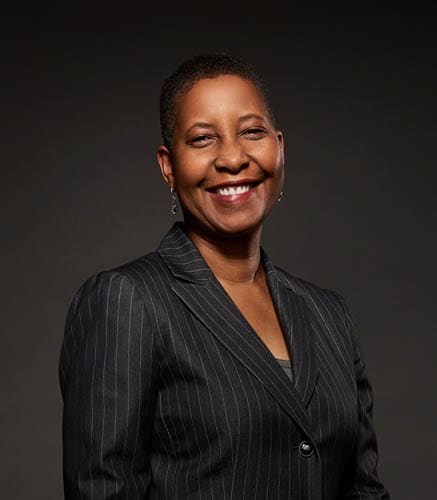
Michael LoVallo is a managing partner of the Chicago office of Reed Smith. He attended Georgetown University for his undergraduate degree and received his J.D. from Columbia Law School. Today, he provides advice to fiduciaries on technical aspects of tax, estate and trust law. LoVallo also represents beneficiaries and fiduciaries in estate and trust disputes and litigation.
Magill: Serving as trustee is a complex, long-term role; it’s not an easy job. As trustee, you are responsible for asset management, tax planning and compliance, discretionary administration, trust accounting and, ultimately, for fulfillment of the trust’s role in the overall estate plan. These multi-disciplinary roles are outside the scope of most individuals’ abilities or experience. An individual trustee will usually need to establish a team that would include an estate-planning attorney, an accountant, an investment manager and a custodian to hold assets, execute trades and manage receipts and disbursements.
Selecting and overseeing this team can be challenging, even for the most talented individual, especially if the trustee is related to the family. For instance, how will Uncle Ted — who might be a very successful attorney or an accountant in his own right — build this kind of team? Equally important is understanding the time commitment required. Does Uncle Ted have the time to perform due diligence on the investment advisor, confer with beneficiaries and weigh discretionary needs, and ensure that tax returns are accurate and timely? He may have the ability, but does he have the time?
Another aspect to remember when selecting a trustee is that the trustee’s fiduciary relationship often begins at the time of a death. This is a traumatic time for a family, when members are grieving, but the trustee will have immediate responsibilities. Personally, I have not found grieving and fiduciary responsibility to be very compatible.
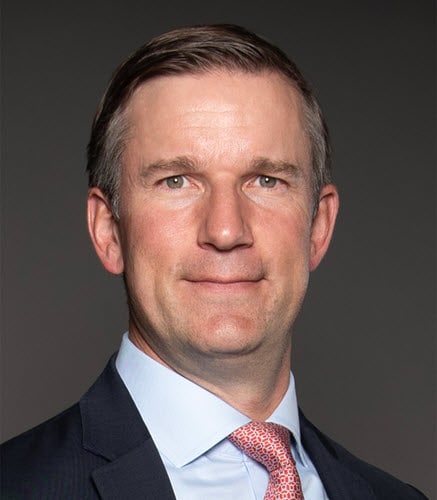
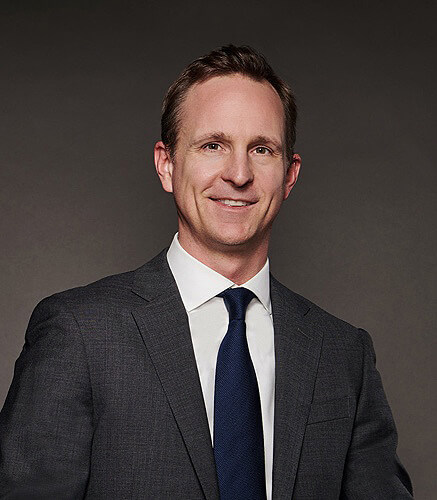
R. Hugh Magill is chief fiduciary officer and national director of trust services for Northern Trust. In this capacity he is responsible for Northern Trust’s fiduciary and philanthropic services to private clients nationally. Magill received a B.A. degree, cum laude, from St. Olaf College in Northfield, Minnesota, and a J.D. degree from the University of Minnesota Law School, where he was named a distinguished alumnus in 2005.
If the trustee is a family member, how fair or realistic is it to expect that he or she can maintain the detachment that the role requires and let family ties neither color fiduciary judgments nor influence family relationships? Fiduciary duty also requires that a trustee avoid conflicts of interest and self-dealing; complying with those duties requires special vigilance of an individual trustee and may place constraints on his or her ability to participate in commonly shared investment or financial activities.
By using a corporate trustee, you gain access to an already-assembled team that has comprehensive expertise. And, of course, this team has worked on a wide range of complex estate plans and served families of diverse wealth, so there are few challenges that we haven’t encountered or can’t bring creative insight to.
Q. Is geographic location important?
LoVallo: It can be. I’ve seen situations presented where the trust officers were not in the same geographic location and it wasn’t an issue because people are willing to travel, or communicate by phone or video conferencing. But in my experience, while that can work, being in the same location works better. And having substantial backup and operations in the same location works best, rather than having just a satellite office in the same location. It just seems to be easier when everyone is in the same location.
Q. So why might someone planning an estate choose an individual trustee? And what are the risks of doing so?
Magill: The biggest advantage an individual trustee brings to the table is family insight and perspective. How does cousin Jane handle money? How will the relationship between siblings affect their response to certain decisions? These kinds of insights can help a trustee make compassionate decisions based on family dynamics and individuals’ needs. But it also can color a trustee’s judgment and make it more challenging to be impartial.
And, unfortunately for many individual trustees, their decisions can affect their relationships with the beneficiaries — especially if the trustee is a family member.
LoVallo: If you have a trusted advisor and an investment management counselor, then I think individual trustees can work. But it needs to be understood that this position is not just a figurehead. It’s a real role with real legal responsibility. It’s time-consuming, and there’s compensation that needs to be addressed. Sometimes, families think that a family member shouldn’t take compensation, but it’s a lot of work and it can take away from their other professional and personal responsibilities. You need someone who doesn’t shrink away from their role because they’re not being compensated. So it’s important for the grantor to bring everyone into his or her thinking and intentions ahead of time in order to avoid as much conflict as possible.
Q. Is there a way for families to reap the benefits of both types of trustees?
Magill: Many families are combining the strengths of both individual trustees and corporate trustees by naming them to act as co-trustees. This allows the family to benefit from an individual trustee’s insight, while taking advantage of a corporate trustee’s expertise in trust management and administration.
By employing a collaborative approach, co-trustees provide continuity and balance. The individual brings perspective about the family. The corporate trustee brings a depth of experience and judgment, and ensures continuity in management and administration, which are particularly important for trusts designed to serve multiple generations.
LoVallo: I think co-trustees work well when the job may be too big for an individual, but you still really want some family oversight. There may be significant or complex assets, and having the corporate fiduciary do most of the administrative work — such as tax planning, recordkeeping and accounting — and relying on the family’s input on high-level decisions can work well.
Another thing to consider building into a trust is removal powers. Including this clause empowers the family and ensures maximum attentiveness from fiduciaries. But good corporate fiduciaries are not threatened by these powers because they’re confident enough in their work.