From one-time gifts, to charitable remainder
trusts (CRTs) that name one or more charitable
organizations as a beneficiary, to ongoing support of private
foundations, charitable giving is a highly individualized process.
If you’re considering making a substantial lifetime
philanthropic contribution or dedicating part of your estate to
charity, ask yourself these questions to help choose the strategy
that works best for you.
How Invested Are You in the
Organization?
The timing of a charitable gift isn’t
everything, but there is a big difference between writing a check
to your favorite charity today and informing the organization that
you’ve included it in your estate plan. If you want to see
your money at work, you may want to give sooner rather than later;
if that’s not important – or if your current cash flow
needs don’t allow – you may decide on smaller, periodic
lifetime donations combined with a larger bequest at death.
There’s also a middle approach: making a moderate gift now,
watching how the organization uses the money and then deciding
whether to make a more substantial commitment.
“Clients will say, ‘We really want to be able to see
what the organization is able to do with our dollars, and what we
see during our lifetime may affect how much we give at our
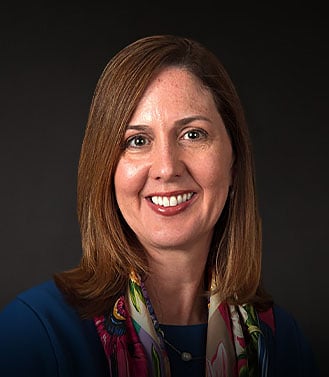
death,’” says Marguerite Griffin, Northern
Trust’s national director of Philanthropic Advisory Services.
Do be sure, however, to include whatever charities you ultimately
decide upon in your will or trust. According to the latest
statistics, only 8% of U.S. donors remember to include their
favorite charities in their estate plans.
Based on how the organization manages the initial gift, you may
decide to establish a CRT, a planned-giving vehicle created when a
donor makes a gift to a special type of irrevocable trust.
Initially, the trust makes periodic payments to named individual
beneficiaries (generally either the donors or family members) over
a specified term. Then after the trust term expires, the balance is
given to one or more specified charitable organizations, either
outright or in trust.
Or, if the prospective donors are not sure a charity will manage a
large CRT distribution prudently, they may decide to create and
name their own private foundation as the beneficiary of the CRT,
then have the private foundation make gifts to the charity.
“That way, the donor or the donor’s family can still
provide some kind of oversight,” Griffin says.
How Much Control Over Your Gift Do You
Prefer?
As a donor, determine whether you trust the leadership of the
designated charitable organization to spend your
dollars wisely, or if you prefer to retain some control.
As a first step, get to know the organization you’re
considering, as well as how its work fulfills a broader charitable
mission. “It’s really important to be educated about
the cause itself so that you understand what you’re trying to
accomplish and how it can be done – not just what this one
organization is able to do,” Griffin says. “You want to
be attached to the issue more than the organization. That way, even
if something happens to the organization, you will still be able to
realize your goals.”
If you establish a private foundation, keep in mind that the
foundation isn’t allowed to satisfy your personal charitable
pledges, nor is the foundation allowed to invest in a business that
you own. And, if you (and/or your family members) serve as a
director of your foundation, you will have a fiduciary duty to
ensure the foundation and its investments are managed prudently.
“These are all things to identify in advance, so you can go
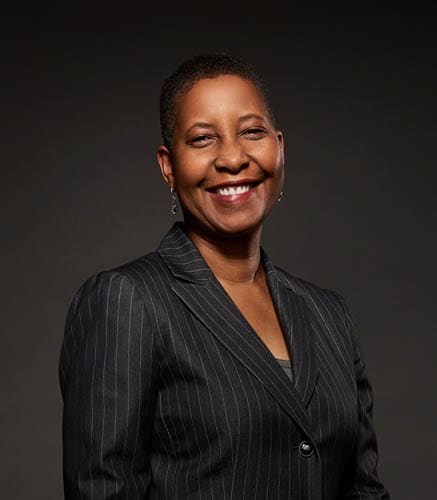
in strategically and efficiently,” says Tim Bresnahan, second
vice president of Northern Trust’s Philanthropic Advisory
Services Group.
If you’re establishing a foundation or fund that will exist
beyond your lifetime, there are even more issues to consider. For
example:
- If it’s a private foundation or donor advised fund, how will it operate after your death?
- If you’re making a gift directly to a charitable organization, should you narrowly specify how the group can spend the money?
- What if, decades from now, social or technological change makes your gift obsolete?
Rather than sort through these issues on your own, Griffin
recommends enlisting the help of a philanthropic advisor
experienced in crafting gift agreements that honor your intent and
ensure your gift remains useful to the charitable
organization over the long term.
Who is the Primary
Beneficiary?
Different planned giving vehicles are designed with charitable or
non-charitable primary beneficiaries in mind. The way you
prioritize your beneficiaries will influence your planned giving
strategy.
With a CRT, for example, the principal is ultimately paid to
charity. A charitable lead trust (CLT), in
contrast, makes periodic payments to charity for a specified term;
at the conclusion of the trust’s term, the principal passes
to the donor’s individual beneficiaries.
“The first step in a charitable giving plan is to make
sure you are comfortable with the amount of assets left to your
family,” Griffin says. “If you don’t have
children or if their financial security is no issue, then you can
move right to charity.”
Is Philanthropy an Important Component
of Your Family Legacy?
For some donors, the point of a charitable gift is
less about the charity itself and more about providing an
opportunity for family members to participate together in
philanthropy. That can work, Griffin says, but only if you’ve
made a lifelong habit of modeling philanthropy to your children and
they’ve learned to value it as you do. If that groundwork
isn’t laid, your family is likely to lose interest in giving.
“The primary focus of a private family foundation should be
effective grant making,” she adds. “When the work of
the foundation encourages family members to spend more time
together, that’s a wonderful outcome. However, if you start a
foundation where the expectation of family commitment is high, yet
the family’s commitment to philanthropy is not very
substantial, you may be disappointed with the results that the
foundation is able to achieve. It’s important to have clear
expectations and then clearly communicate those expectations to
family members.”
Crafting the Perfect
Strategy
Charitable giving in any form is beneficial to
both the donor and the recipient. But it takes vision and planning
to make an extraordinary gift – one that will impact society
and extend your legacy for generations.
“Our giving is an extension of how we see ourselves,”
Griffin says. “Understanding your motivations, and
what’s possible with a particular charitable vehicle, is key
to determining how you can achieve what you want to through
philanthropy.”
Gift Tax Exemption Opportunities for Non-citizens
The 2010 Tax Relief Act increases the gift, estate and generation-skipping tax exemption to $5 million while reducing the respective tax rates to 35% for 2011 and 2012. As a result, now may be an ideal time to make gifts using techniques that either discount or minimize the value of the property transferred, enabling as much as possible to be transferred within the $5 million.
Non-citizens who live in the United States, but who are not certain whether they are subject to U.S. gift and estate taxes, can consider taking advantage of the law to hedge their potential gift tax liabilities. Only some non-citizens living in the United States will be deemed domiciled there for tax purposes, according to the recently published paper, “Foreigners and the Gift Tax.” Note that even non-citizens not considered domiciled are subject to the gift tax only on property considered “sitused” in the United States – generally assets limited to real property and tangible property, such as art or jewelry, that are physically located in the United States. However, non-citizens who are considered domiciled in the United States for transfer tax purposes will be subject to the gift tax rules for transfers of any type of asset. A non-citizen who is unsure of his or her status should be made aware of the increased exemption, as it provides an opportunity to make larger gifts without fear of paying a current gift tax.
The 2010 Tax Relief Act’s $5 million exemption provides a valuable hedge where domicile status is unclear, says Beth D. Tractenberg, co-author of “Foreigners and the Gift Tax” and partner at Katten Muchin Roseman LLP in New York. Consider a non-citizen who is unsure of whether he or she will be deemed domiciled in the United States. If he or she has not previously used the gift tax exemption and gifts $5 million from an offshore account in his or her name to an offshore account held by an individual or trust in 2011 or 2012, there would be no gift tax exposure regardless of domicile status. For a person deemed nondomiciled, this gift would not be subject to U.S. gift tax. For someone deemed domiciled in the United States, the gift would be covered by the gift tax exemption.