Since the first family office was created in 1882 for the Rockefeller family, high-net-worth individuals have leveraged offices staffed with family-focused professionals to assist with every aspect of their finances, from integrated wealth planning to legal services to foundation management and security detail.
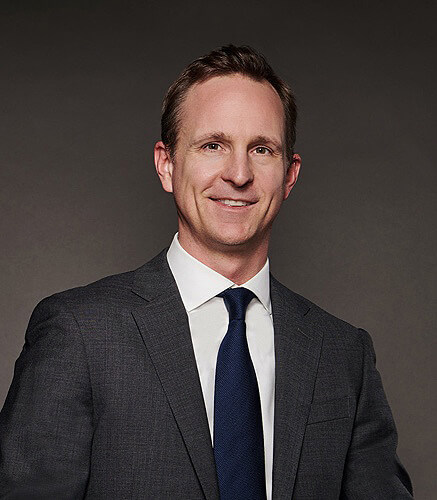
Fast forward more than a century, and the need for family offices to help wealthy families coordinate their financial and personal needs hasn’t wavered. “As the families’ needs continue to grow, and family members become more geographically dispersed, the family office becomes a central focal point for the family,” says Louisa Taylor, director of family office services in The Wealth Management Group®, a special division of Northern Trust that supports family offices. “While family offices were originally started to support investment, accounting, tax and estate planning, many today support family education programs, philanthropic and concierge services.”
Typically, a family office evolves from the operating business and the financial needs of the family. It can grow and be reshaped as the family becomes multi-generational and geographically dispersed. But just as no two families are alike, so too are no two offices. The number of generations, overall net worth of the family and the key services they require all determine the type and complexity of the family office.
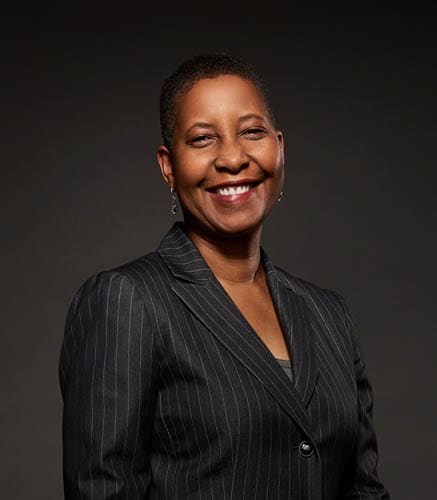
Whether offices employ three people or 80, “each family office takes on the mission, character and culture of the family,” says Shannon Kennedy, The Wealth Management Group’s global director of wealth services. One office may assist with a family’s operating business, while another may focus on tax and investment planning.
As families move from an operating company to managing liquid assets, and look for more creative investment structures and financial solutions, the structure of their offices changes. “Families can have very complex investment structures including alternative asset portfolios,” Taylor says. “This requires the office to support partnership accounting and reporting structures.”
Family offices often are asked to review the financial viability of a new operating company. If a family is considering opening a new business, “the family office can run different scenarios to determine the viability of the business model,” Taylor adds. Therefore, the family office doesn’t just handle the nuts and bolts of the family’s finances; it can also support the family in more innovative ways.
Preserving Assets with Family Offices
For families with $100 million and into billions of dollars of investable assets, family offices can guide clients to sustain what they have. At the same time, they can focus on increasing wealth through manager selection and by providing an economy of scale that individual family members wouldn’t otherwise possess. When family members unite through a family office, they gain additional access to investment managers and lower management fees, which ultimately can sustain their assets. “Family units find leverage in investing together,” Kennedy says. “If there are 15 family members all worth $50 million, together they’re worth $750 million. They can form partnerships with each other so they can invest collectively.”
However, running a sizable office isn’t without challenges. It can be difficult to pull together quarterly investment summaries. Furthermore, nearly 80% of wealthy families use LLCs or Family Limited Partnerships (FLPs). Both entail separating data for each investor for tax purposes as well as additional monitoring for partner-level performance. Therefore, an essential function of an office is to coordinate the increasingly complicated accounting, tax and investment reporting.
Offices also help families preserve wealth by educating future generations about the family’s mission and vision, investing, estate planning, philanthropy and ownership of the family business. Some accomplish this through formal programs tailored to the family’s individual values. “Many offices have an educator on staff whose role is to plan family gatherings and meetings, and educate the current and next generation,” Kennedy says. That process can take on many forms. In philanthropic families, even the smallest grandchild may get involved, presenting ideas to the family foundation board members.
Family Offices Adapt to a Changing World
“Thirty years ago, most U.S. families were focused on liquid investments domestically,” Kennedy says. “As our economy has become global with more investment options, the way families invest has become more complicated.” This has led many clients to consider both alternative and global investments. They want their asset allocation to more closely align with how the foundation/endowment world invests.
Technology also now plays a more significant role in family offices, as it supports investment, performance and tax-related reporting. “There are a variety of software products that allow the family office to aggregate financial information from multiple sources,” says Taylor, adding that offices often need sophisticated accounting software to produce financial reporting for the family. Today’s offices also might be called upon to create a family Web site for scheduling and coordinating meeting dates among members, sharing the family mission and educating the next generation.
Additionally, modern families have a growing desire to network with other family offices while still protecting their privacy. Through the family office, they look for safe ways to participate in forums and networking opportunities to talk about issues they may not be comfortable discussing with family members, friends or colleagues.
Yet because the financial world has become more risk-averse during the past few years, today’s family offices also pay extra attention to risk management, due diligence, transparency and adherence to all financial regulations.
Above all, “a family office is dedicated to the needs of the family 24/7 so that wealth owners can focus on anything – joining the Peace Corps, investing in private equity or running a business – whatever is most meaningful to them,” Kennedy says.