Wealth - Winter 2012
twitter rss
Spring 2012 Issue

Assessing a Charitable Organization's Stability


Ensuring a Charitable Organization's Stability

Donors can assess a charitable organization’s financial health and longevity by examining financial statements, speaking with stakeholders and enlisting the help of community foundations and philanthropic advisors.

Spring 2012

For many high-net-worth individuals, philanthropy is a cornerstone of their personal philosophy and an integral part of their investment approach. But even seasoned donors should remember to carefully vet each charitable organization before giving to it in order to gauge its stability and sustainability.

 “A philanthropic investment should be considered in the same way one undertakes a financial investment, requiring the same rigor and due diligence,” says Steve Seleznow, president and CEO of the Arizona Community Foundation, which brings together donors and nonprofits to support community needs. “You want a social return from a donation, just as you’d expect a financial investment to yield a financial return.”

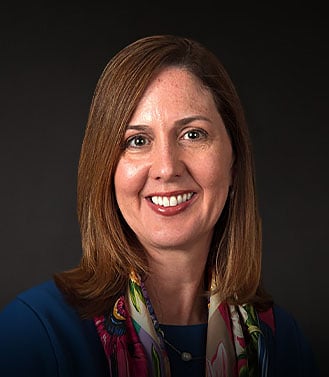
During tough economic times when grant support and donor pools often shrink – and nonprofits face increasing uncertainties as a result – donors are in a greater position to make a difference, says Kendall Kay, national director, Foundation and Institutional Advisors (FIA) at Northern Trust. Her advice: “Make sure your investment is not just about today, but sustains the organization’s mission over time.”

But how can donors assess a charitable organization’s financial health and longevity? Due diligence should involve scrutinizing the charity’s financial statements, meeting with stakeholders, making site visits and speaking with objective third parties, all in an effort to gauge the organization’s accountability, transparency, investments and operational practices.

Does It Look Good on Paper?

A nonprofit’s Form 990, which tax-exempt organizations file each year with the Internal Revenue Service, is a logical starting point and will show whether the organization is in the red, with more debt than assets. By law, charitable organizations must provide the form to anyone who requests it. Many groups post it on their websites along with their annual reports. Form 990s also can be found through nonprofit information sites such as CharityNavigator.org and the IRS’s GuideStar.org. These sites assign efficiency ratings or ratios to show how much money a charitable organization spends on administrative costs, overhead and fundraising compared with programs.

But Seleznow suggests taking these ratios in stride. “Those ratios are overemphasized and don’t necessarily reflect reality in many cases,” he says. “Not every administrative cost is a bad thing. In fact, many nonprofits make the mistake of not investing enough, so they’re not able to scale or improve operations because they haven’t built the capacity to do it.” 

While Form 990s are readily available, they’re difficult to decode because there’s no standard regarding how the information is presented. The document can be long and complex, and it can be hard to understand what really is behind the numbers that are reported.

Donors should ask the charitable organizations to explain the information provided. “If the organization can’t walk you through it, you should perhaps reconsider,” says Shelley Hoss, president, Orange County Community Foundation.

Audited financial statements, required by law in some states, can be revealing as well. A transparent organization will provide donors with the report, as well as access to the independent auditing firm for questioning, Kay says. 

The Faces Behind the Figures

While financial documents are a good starting point to vet a charitable organization, “they provide an incomplete picture of what’s really going on,” says Hoss. “The vetting of a charitable organization works best when there’s personal involvement. Of all the resources you can access, the most important is firsthand experience. This is even more critical when making a big gift.”

Involvement can include site visits and volunteering for the organization. “Is the organization doing what it says it’s doing? Do you like what you see?” adds Seleznow. “Make both announced and unannounced visits because anyone can put on a show.”

Prospective donors are advised to meet with the charitable organization’s stakeholders, including key leaders and staffers, board members, volunteers and other donors. Look for evidence of strong, capable leadership, an engaged board, a record of successful outcomes and good stewardship of resources, Kay advises.

And while most nonprofit boards consist of dedicated and capable volunteers, they may lack the time and depth of investment expertise to manage investment portfolios on a day-to-day basis. Successfully managing assets over the long-term requires diligent oversight and financial acumen, she adds.

Therefore, aside from requesting hard metrics for the charitable organization’s mission-driven outcomes, James Leckinger, chief investment officer for FIA at Northern Trust, says donors should ask these key questions of its leaders:

“These questions are the same ones leaders should be asking themselves routinely,” Leckinger adds. “After all, it’s their responsibility to uphold and advance the organization’s mission and vision, and provide for its financial sustainability.”

Enlist Community Foundations, Philanthropic Advisors

Donors can consult with objective third parties such as community foundations and philanthropic advisors when considering a significant gift.

Community foundations, on donors’ behalves, perform comprehensive due diligence on nonprofits, including assessing leadership and governance, programs and services, financial stability and sustainability, and overall effectiveness.

Additionally, many donors are concerned with the legacy of their own gift – whether the charitable organization will continue to use the gift in the way the donor intended. A community foundation can help ensure sure the charitable organization does.

Community foundations also can help when donors want to make gifts in installments, linking each to an outcome or performance milestone that must be met before money changes hands.

These incremental gifts attached to benchmarks or milestones are a sensible way to invest in a struggling or startup charity advancing a worthwhile cause, as benefactors shouldn’t necessarily turn their backs on such enterprises. In addition, donors can offer gifts to startups in exchange for a seat on the board to minimize risk through hands-on involvement.

As with investing, philanthropy involves taking calculated risks – particularly today as economic woes tend to increase the demands on charitable organizations while adding to their challenges, Kay says.

Perhaps now more than ever, she concludes, responsible donors must bring the rigor of financial investment to their philanthropic pursuits.