Wealth - Winter 2012
twitter rss
Winter 2012 Issue

Could You Be Impacted by the Foreign Account Tax Compliance Act?

Could You Be Impacted by the Foreign Account Tax Compliance Act?

Wealth spoke with Northern Trust’s Michael Stein and Lorraine White about the potential impact of the Foreign Account Tax Compliance Act (FATCA) on personal clients of foreign financial institutions.

Winter 2012

The objective of the Foreign Account Tax Compliance Act (FATCA) – part of the Hiring Incentives to Restore Employment Act (HIRE Act) signed into law by President Obama in March 2010 – is to reduce tax evasion by U.S. individuals with respect to income from financial assets held outside the United States. It aims to do so by requiring foreign financial institutions to report information to the U.S. Internal Revenue Service (IRS) on such assets held directly or indirectly by U.S. taxpayers. Foreign financial institutions that fail to comply will suffer a 30% withholding tax on all payments received from financial investments in the U.S.

While the final regulations for FATCA have not yet been released, the U.S. Department of Treasury (Treasury) and the IRS have published some preliminary guidance. Wealth spoke with Northern Trust’s Michael I. Stein and Lorraine White about FATCA and what it may mean for personal clients of global financial institutions.

Wealth:How is Northern Trust currently preparing for FATCA?
Michael Stein:
We have organized an enterprise-wide, cross-disciplinary team to identify our legal responsibilities under FATCA and to explore how we can help our clients understand and meet their own FATCA obligations. We’re in the process of reviewing the expected impacts to our existing systems and operations, and planning changes as necessary.

Northern Trust also is responding to the Treasury and the IRS’ request for comments on proposed guidance. Along with other global custodians, Northern Trust is meeting with them regarding the rules and regulations they are drafting. It’s an ongoing process that we started last year shortly after the bill was passed.

The problem is that we have the law and some initial guidance from the Treasury and the IRS, but we don’t have final regulations providing details on the processes and timing. The Treasury and the IRS tell us we can expect final regulations in July 2012.

Fortunately, the Treasury and the IRS have given the industry a phased approach in terms of implementation. Some of the provisions will come into effect January 1, 2013, some January 1, 2014, and some January 1, 2015.

When you consider the fact that there will have to be changes to data processing systems in order to handle the documentation requirements – possibly withholding and some reporting requirements– January 1, 2013, isn’t far away. It takes time to develop systems, test them and put them in place.

We are doing the best we can with the information we have available. In certain instances, we have a good handle on what will be required. In other areas, we are waiting for additional guidance.

Wealth: What other challenges do financial institutions like Northern Trust face in preparing for FATCA?
Lorraine White:
One of the challenges is the legal tensions that exist in other jurisdictions where foreign financial institutions operate, largely due to data privacy. For example, European institutions are required to comply with the European Directive covering client data privacy, specifically the Directive that covers the ’fair and lawful’ processing of customer personal data and contains rules prohibiting data transfers to non-European Economic Area countries.

In practice this means we cannot force existing clients to advise us of their U.S. tax position, and in order to report data regarding them to the IRS, the client must provide consent. For those clients who refuse to consent to the transfer of data about their accounts to the U.S. government, FATCA requires the application of a penalty withholding.But you cannot apply another government’s tax unless you have some authorization to do so. You are caught between a rock and a hard place as an institution: You will be forced to violate your local government’s laws or suffer the consequences of FATCA – neither of which is palatable.

Wealth: Since the objectives of FATCA are focused on ‘U.S. persons,’ are foreign citizens completely exempt under FATCA?
White: FATCA defines U.S. account holders to include all U.S. citizens, including dual citizens, and U.S. green card holders. Therefore, foreign citizens cannot automatically be excluded from the definition of ‘U.S. persons.’ So while FATCA is aimed at U.S. citizens and residents who knowingly hide assets overseas to escape their tax obligations, it will inevitably sweep up some individuals who carry neither a U.S. passport nor green card. For example, someone born in the U.S. who has lived overseas since childhood may be entirely unaware of any U.S. tax requirements, yet he or she would likely qualify as a U.S. person. FATCA requires foreign financial institutions to provide names, taxpayer identification numbers and account details for all account holders identified as ‘U.S. persons’ that hold at least $50,000 of assets in their accounts.

Wealth: With the information we know today, how will FATCA apply to individual investors?
Stein:
It’s going to apply on a couple of different levels. On one level, individuals will need to sit down with their family office or their trusted tax advisor and evaluate – based on what the family currently has in place in terms of investment vehicles and plans – how it will affect their existing accounts.

An affluent family may have accounts at a number of financial institutions, some in the United States, some not. The family may include members who are U.S. citizens or residents, and it may include members who are not citizens or residents.

Individuals can expect inquiries from their financial institutions regarding additional tax documentation. Financial institutions, in general, will have to make determinations about their existing clients as well as new clients: Is this a U.S. client or a non-U.S. client? Is it an individual? Is it a legal entity? If it’s a legal entity, what type is it?

If individuals are accessing Northern Trust’s services through one of our foreign subsidiaries or are using a provider other than Northern Trust outside of the United States, there will be additional questions they will need to answer from their investment providers, banks and so forth.

On the second level, if individuals or families are investing in non-U.S. banks or non-U.S. investment funds, hedge funds or private equity funds, they will need to know whether the investment is with a foreign financial institution that is FATCA-compliant.

The goal of FATCA is for the IRS to gain additional reporting on income and assets held by U.S. persons outside the United States.

The IRS’ leverage to get that compliance and reporting is 30% withholding on U.S. sources of income and gross proceeds of sale on U.S. investments. If you are an affluent family, regardless of whether you are a U.S. citizen or resident, you will want to know whether your investment vehicle is FATCA-compliant. If it’s not, there’s going to be a potential for 30% withholding, which would result in significant tax inefficiency in terms of the investment results.

Individuals will need to determine what they are invested in, how it will be treated under FATCA and whether the financial institution will be compliant or whether they will be potentially subject to withholding. Then they will need to evaluate whether they want to continue to participate in the investment vehicle if it’s not going to be FATCA-compliant.

Individuals also may be impacted by some lesser-known provisions of the new law. Individuals filing U.S. income tax returns will face new requirements to report foreign financial accounts and assets on a schedule attached to their Form 1040. Investments by U.S. individuals in foreign investment funds will be subject to additional reporting. U.S. individuals who create foreign trusts also will be subject to increased reporting and other rules affecting foreign trusts that have U.S. beneficiaries and allow trust property to be used or borrowed without adequate compensation.

Wealth: What are the first changes individuals can expect to see?
Stein:
The first thing we expect to happen is, starting in 2013, financial institutions – banks, brokerage firms, investment funds, mutual funds, private equity funds – will start gathering more information on existing clients as well as new clients.

That documentation is the first phase of FATCA. The next phase in 2014 will be implementation of the withholding requirement. In January 2015, we will see additional withholding with respect to gross proceeds of sale.

Wealth: What actions will individuals need to take to ensure compliance with FATCA?
Stein:
The most important thing individuals can do is consult with their family office or personal tax advisors. Those advisors know the most about their clients’ current tax situation and will be able to advise them on what impact, if any, FATCA may have on them.

Individuals can start putting together an inventory of partnerships, trusts and investments, and have their tax advisor assess the potential impact from FATCA, including potential documentation requirements and withholding issues.

Don’t wait until 2013. Get in front of this and monitor it carefully.

Wealth: Might there be unintended effects of FATCA?
White:
One unintended consequence affects the non-U.S. citizen that is an individual investor in U.S. securities – either directly or indirectly. There is an impact there, not least because of potential conflict of laws and people not understanding why they are being asked certain things by their financial institutions. If they fail to respond, they are considered recalcitrant and possibly subject to withholding.

Stein: There are many complex rules that have been brought in with FATCA that could potentially affect those who think they won’t be subject to this. You need to talk to your tax advisor even if you don’t think FATCA will affect you because there are many pitfalls for the unwary, and there can be unexpected and unintended consequences. We recommend individuals and families act now to work with their tax advisors to assess the likely impact of FATCA on their own situations.

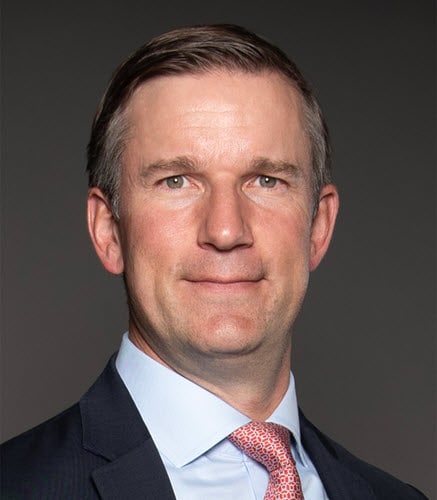
Mike Stein

Michael Stein is a vice president and tax manager in the Personal Financial Services Tax group at Northern Trust. He earned a bachelor's in accounting and a master's in taxation from DePaul University and a master's in finance from University of Chicago.

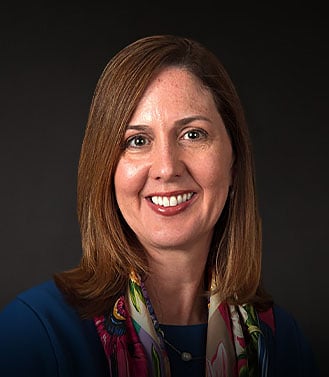
Lorraine White

Lorraine White is senior vice president and a member of Northern Trust's International Tax Services group. Her responsibilities include providing technical support to Northern Trust's asset servicing groups and the bank's clients in the EMEA, APAC and NA regions, and assuring consistent tax servicing policy and practice.

LEGAL, INVESTMENT AND TAX NOTICE: This information is not intended to be and should not be treated as legal advice, investment advice or tax advice. Readers, including professionals, should under no circumstances rely upon this information as a substitute for their own research or for obtaining specific legal or tax advice from their own counsel.

IRS CIRCULAR 230 NOTICE: To the extent that this message or any attachment concerns tax matters, it is not intended to be used and cannot be used by a taxpayer for the purpose of avoiding penalties that may be imposed by law.

The proposed rules set forth in the IRS Notices discussed herein constitute preliminary guidance only, and may change significantly before final regulations are issued. Foreign individuals and entities should engage their own tax and legal advisors regarding the applicability of FATCA to their individual facts and circumstances and their potential obligations under the FATCA rules.