
THE WEEKENDER 07.31.26
Travel Reflections: Trust is Being Distributed. So is Intelligence.
Chief Investment Strategist Gary Paulin reflects on lessons from Thailand, the demographics tide beneath key market themes, and why scarcity may be the shield while productivity becomes the sword.
Institutional trust is declining while network-based trust is rising. AI may may follow the same path, moving from a handful of frontier labs toward a more distributed and abundant intelligence layer.
Aging populations sit upstream many market debates: debt, deficits, inflation, AI and productivity. The investment implication is simple: Scarcity is the shield; productivity is the sword.
As AI diffuses, value may migrate from inventors to the infrastructure and applications built on top. If China helps accelerate diffusion, could it become a hedge against AI concentration risk?
The Weekender is my bi-weekly take on macro shifts and emerging themes. It’s not investment advice — or even our firm’s official view. I aim simply to inform, challenge, and maybe entertain. If you’d like this in your inbox every other Saturday morning via Northern Trust, subscribe to The Weekender.
I've just returned from two weeks in blissful Thailand for a family member's 80th birthday. It included plenty of beach time, jellyfish stings (vinegar, not urine, is the cure!), island hopping, jungle treks, snakes in the tent, an elephant sanctuary, a floating resort, lots (and lots) of temples, high-risk transport (tuk-tuks and zip lines), intriguing cuisine (crickets, ant eggs), and one very interesting — and educational — cabaret show, which my children and I are still recovering from.
When packing for the trip, I reminded myself of the adage "if you want new ideas, read old books," which I amended to "read any book," given the scarcity of my attention between four kids and an X account (and before they become extinct, with frontier labs now apparently buying millions of old books — and then often destroying them — for training data; a true story).
I took four, hoping 24 hours of daylight flying would allow me to finish at least two. They included 1873: The First Great Depression and the Making of the Modern World by Liaquat Ahamed, Salt by Mark Kurlansky, The Einstein Vendetta by Thomas Harding, and The Wide Wide Sea by Hampton Sides about Capt. James Cook’s last voyage. I started all four, finished the one on Einstein, most of the one on Cook, am at the point in Salt where Clarence Birdseye enters the story (read on), and am currently enthralled by 1873, given it portrays the global financial crisis of that year and so is rich in parallels — and distinctions — between the technology evolution then and now. Forgive me, for I'm now enriched in metaphor.
The Scarcity of Trust
But the thing that struck me most about Thailand — the thing that renewed my hope in humanity — was how trusting everyone was.
It was staggering.
The 20,000 baht in my shorts pocket, returned in full by the hotel cleaner. The waiter's insistence we check the bill to make sure they hadn't made a mistake — in our favor. The fact that many people never locked their doors, or when parking would leave the car in neutral, trusting others to push it out of the way if needed. I met one lady who returned to her car to find a man who'd sat there for several hours, waiting to apologize in person for bumping it. Karma, it seems, is flourishing.
Contrast that with the Western world, where secular religions are waning and where trust — at least as measured by the Edelman Trust Barometer — is at record lows. Per the report, most people hesitate to trust anyone who holds different values, views or information sources. Trust has moved from We to Me. Personal networks now outrank institutions in credibility, which explains the gravitational pull of social media. And nationalism. And echo chambers of every flavor. Rachel Botsman, in Who Can You Trust, goes further: It's not just that trust is eroding in its traditional, centralized forms — it's also changing shape. We may no longer trust our governments or media, but we trust a stranger to share a ride with (Uber), to share our room with (Airbnb), and to go on a date with (Tinder).
Trust is changing. It's being distributed.
So too, it seems, is intelligence.
AI is diffusing (but more on that in a second).
A Trusted Process
When trying to apply all this to markets — which, after all, is the point of these missives — I found myself asking what things, or people, I trust or value most when making investment decisions. What constants have stood the test of time, reminding us that things can change but people often don't. Things like being taught to seek companies that sell products consumers find difficult to substitute, abandon or forget — which explains why Altria (nicotine) is, according to Hendrik Bessembinder, the best-performing stock in history. Apple is another that produces a product people find hard to give up. Many of Meta and Alphabet's products are essentially free, an appealing quality and one that's seemingly hard to disrupt.
Invest in scarcity is another aphorism worth trusting — one the capital cyclists employ with (current) glee, especially if they own the sellers of scarcity and avoid the buyers of it. Returning to first principles — the fundamentals, the facts, not the feelings — means identifying the first-order movers, the foundational drivers of change, before thinking through the expressions of them. If you pick the rising tide, all boats float. And if I had to pick one tide that continues to rise, it would be demographics. Aging populations, in particular.
Here's why.
Growing Dependency, Greater Debasement
Exhibit 1 remains one of the key drivers of change. It's the rising tide, the first-order mover. The tide.
It helps explain why we have growing deficits, record money supply growth, and why currency debasement is likely to continue. It helps explain why hurdle rates for most investors are too low in real terms, and why interest rates remain stubbornly high despite market inflation expectations being staggeringly low (the one-year inflation breakeven sits below 2%). It helps explain why supply-constrained real assets should remain well bid, and why technological innovation generally, and AI especially, is now a sovereign strategic priority — one many Western governments want to see succeed, despite some participants suggesting it won't. Those skeptics are betting against large, vested interests with deep pockets and price-insensitive motivations.
On the top in Exhibit 1 is the labor force participation rate versus debt-to-gross domestic product, inverted. On the bottom is where labor force participation could be heading, based on extrapolating the birth rate — its key variable — from 14 years ago.
EXHIBIT 1: SHRINKING LABOR FORCE DRIVES DEBT
As the labor force shrinks, so does the number of taxpayers available to fund the growing number of retiring baby boomers. Absent higher taxes, new debt must be issued. Worryingly, labor force participation has fallen again — now at levels not seen since the mid-1970s (excluding Covid). If you don't remember that period, read John Plender, who does. That's the Way the Money Goes is one old book full of new ideas on what to do when inflation is a problem, why scarce and real assets are attractive when system trust declines, and why bonds were once called return-free risk.
Scarcity Is the Shield . . .
During periods such as these, it's important to think about both how you hedge against the corrosive effects of monetary debasement and how you cure it.
Then, invest in both.
The hedge, the shield, is supply-constrained real assets — those whose supply can't grow as fast as the money supply they're priced in. Gold is the obvious example, especially as system trust declines. I haven't discussed gold in a while, but I'm minded to after reviewing the exhibit above and seeing China add roughly 15 metric tons of gold in June, its largest monthly purchase since October 2023.
The important signal isn't the number, it's the behavior: Beijing accelerated purchases into a sharp drawdown in bullion, suggesting it's treating weakness as an allocation opportunity rather than a reason to pause.
Bitcoin is considered by some to belong in this category too (let's revisit post-Clarity Act), as do commodities — notably those exposed to secular demand shifts from AI, the energy transition and national security, like copper, silver and lithium — and stocks, assuming those stocks are experiencing supply withdrawal via buybacks.
De-Equitization and Supply-Constrained Equities
While the quantum of buybacks has declined in the U.S., it's off an incredibly high base. And as we've discussed previously, there's still authorization for around $1 trillion or so this year, which resumes in earnest once corporates emerge from their blackout period around mid-August. That other little market we've termed the Trade of the Decade — the U.K. — screens even better on this de-equitization metric.
According to Schroders, over half the market buys back a material percentage of its shares every year, while paying a decent dividend yield of about 3%, meaning the dividend compounds in reverse as the denominator falls. And that's only if companies have shares left to buy after record takeover activity — or before the government unleashes tax incentives to encourage British savers to buy British stocks (as we discussed in Recognising Change). Did I mention many of the constituents also provide claims on supply-constrained real assets, that there's a bit of an AI story going on too, and that the Financial Times Stock Exchange 100 Index has outperformed the U.S. year to date, with 11% total returns in U.S. dollars, hitting a record high this past week.
But I digress.
. . . And Productivity Is the Sword
While scarce assets are the shield, productivity likely is the cure — the sword — for high debt and deficits. Our greatest hope for productivity, or so it is according to Federal Reserve Chair Kevin Warsh and U.S. Treasury Secretary Scott Bessent, is technological innovation: AI, robotics and health care, including glucagon-like peptide-1 drugs.
The Congressional Budget Office's official baseline has debt-to-GDP rising to 156% by 2055 on roughly 1.3% productivity growth — which seems highly conservative and, as they themselves admit, is based more on recent history than the more distant past. If productivity were closer to 3%, however, the debt ratio could fall below 80% of GDP — a genuinely transformational fiscal outcome. If by distant past you mean the 1990s, when the second half saw productivity growth close to 3% thanks to the internet, then such an outcome may be possible once we're through the current impulse of techflation. After all, the internet was about communication; AI is about cognition. It innovates the innovators and could, some argue, become a force multiplier for productivity itself. Especially as it doesn’t need to wait for the infrastructure, the network or data layers to be built, which largely are — or soon will be. It can tap the powerful forces of compounding almost immediately.
The Threat — and Opportunity — from Diffusion
The bigger question, perhaps, is whether China could run the solar, battery and electric vehicle playbook again — this time targeting the U.S. AI stack across memory, inference and robotics. What if the economic value lies less in the frontier model and more in the diffusion layer? If history is any guide, the biggest winners from a general-purpose technology are not always the firms that invent it, but those that diffuse it most effectively — the lowest-cost scale provider — the infrastructure that enables it, such as energy and compute, and those who build applications on top of it.
For example, Nikolaus Otto invented the combustion engine, but Henry Ford industrialized it. Thomas Edison was rich by conventional standards, but not as wealthy as Clarence Birdseye (Frozen Foods) or presumably Elisha Graves Otis (or Otis Elevators) which made skyscrapers possible. Killer apps like the Fordson Tractor, alongside Clarence Birdseye's frozen foods, transformed American industry in ways unforeseeable at the time. Farmworkers accounted for around 40% of all workers in 1910. Largely thanks to these applications, they account for less than 3% today.
And rather than precipitating mass unemployment or civil unrest, that shift ushered in the Golden Age in America, les Trente Glorieuses in France and the Wirtschaftswunder in Germany. If AI follows other technology revolutions and unit costs converge toward marginal cost, what happens to adoption, to the infrastructure layer, to the application layer? Who are the Fords, the Birdseyes, or the Otises of this revolution likely to be?
And is there a limit to the demand for intelligence?
No one knows, but given the rate of change, we may soon find out.
From Provider to Participant
If AI models proliferate and intelligence tokens commoditize, prices may increasingly be set by the marginal producer. Chinese models are emerging as a potentially important force in that process, offering increasingly capable output at dramatically lower cost. Oxygen is also being given to the open-source movement — currently a hot topic not just in Silicon Valley, but in Washington, D.C., too (my money, for what it’s worth, is on open source). Meaning this free-rider problem poses a challenge to frontier labs like Anthropic, which — needing to justify lofty valuations — may look to pivot from AI provider to AI participant (or perhaps both).
One strategic response might be to leverage workflow telemetry gathered from servicing enterprises to move further up the value chain in selected categories, potentially creating tension with customers over time (if this sounds like Amazon, trust your instincts). There's already evidence this is happening: In financial services, Anthropic launched 10 agents in May, announced a $1.5 billion joint venture with Blackstone, Goldman Sachs and Hellman & Friedman to expand enterprise deployment, and has moved into biotech drug discovery.
It's too early to say who the winners and losers will be, but it's probably worth trusting the lessons of history: The value may not be in the diffusion layer mostly captured by scale, but by the enablers (energy/compute) and those applications built on top of it. Yes, some of these will be created by the frontier labs integrating vertically, but many more will be created by those yet to emerge, which could change the world in ways yet unforeseen. See above: farmworkers.
It’s going to be some ride (a bit like my tuk tuk).
I trust you can hold on, which means avoid leverage at all costs or you could end up like this chap, Leopold Aschenbrenner.
Is the Greatest Threat also the Greatest Opportunity?
Which raises one final question.
If open-source AI represents the greatest threat to U.S. AI dominance, and China is helping accelerate that diffusion, could China also become an increasingly important hedge against the concentration embedded in many portfolios today? Should investors be lifting their (under) allocations to Chinese equities, if only to find returns orthogonal to their greatest concentration risk? AI . . .
Well, I trust you know my views on this already.
But we'll pick up that thread again next time. Until then, have a great week.
GP
Glossary
- Currency debasement: The reduction in the purchasing power of money..
- Financial Times Stock Exchange 100 Index (FTSE 100): A capitalization-weighted index of 100 of the largest companies listed on the London Stock Exchange.
- Labor force participation rate: The percentage of the U.S. population that is either working or actively looking for work.
- Hurdle rate: The minimum required or target rate of return that investors expect to receive on an investment.
- Inflation breakeven: What market participants expect inflation to be in a given time period, based on the difference between Treasury yields and inflation-linked bond yields..
- Orthogonal: Orthogonal means two vectors are independent and have zero correlation. In an investment context, orthogonal suggests that returns between two assets have little correlation.
THE WEEKENDER
Recognising Change
Related Content
Meet Your Expert
Gary Paulin
Chief Investment Strategist, International
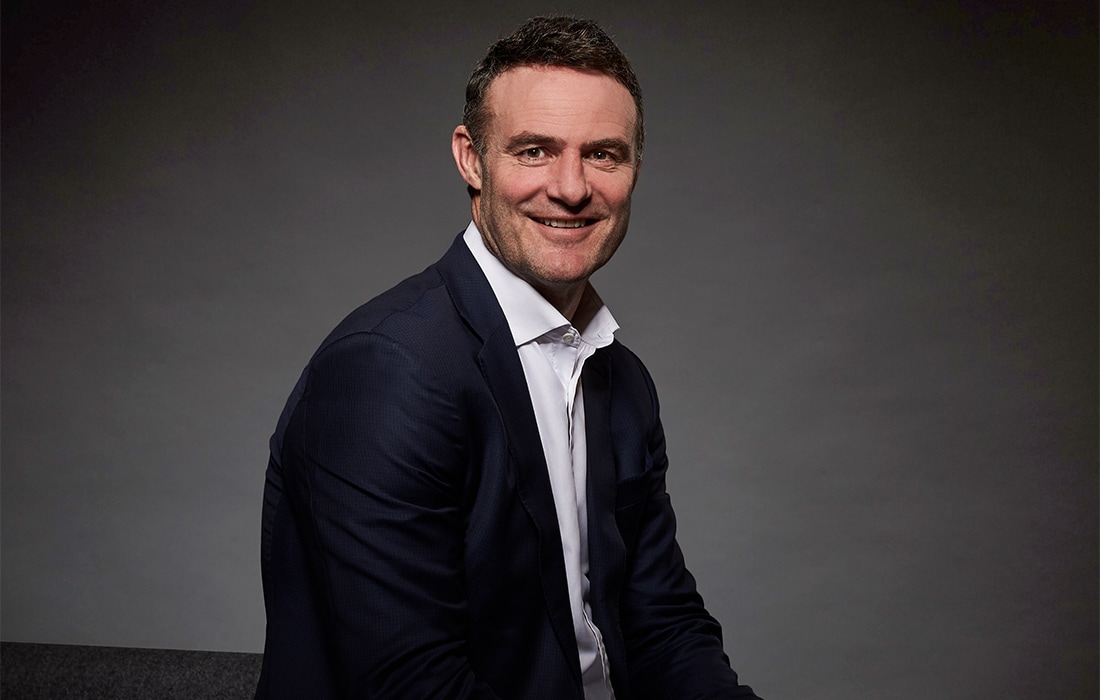
Gary Paulin is chief investment strategist, international for Northern Trust Asset Management. He is responsible for developing and communicating the firm’s investment outlook across asset classes as well as producing investment analysis and thought leadership for the broader marketplace globally. To build out economic and market views, Gary regularly collaborates with the firm’s investment teams in equities, fixed income, multi-asset and alternatives.
Unless otherwise noted, the statements expressed herein are solely opinions of the author. Northern Trust does not make any representation, assurance, or other promise as to the accuracy, impact, or potential occurrence of any events or outcomes expressed in such opinions.
This content may not be edited, altered, revised, paraphrased, or otherwise modified without the prior written permission of Northern Trust Asset Management (NTAM). The information contained herein is intended for use with current or prospective clients of Northern Trust Investments, Inc (NTI) or its affiliates. The information is not intended for distribution or use by any person in any jurisdiction where such distribution would be contrary to local law or regulation. NTAM and its affiliates may have positions in and may effect transactions in the markets, contracts and related investments different than described in this information. This information is obtained from sources believed to be reliable, its accuracy and completeness are not guaranteed, and is subject to change. Information does not constitute a recommendation of any investment strategy, is not intended as investment advice and does not take into account all the circumstances of each investor.
This report is provided for informational purposes only and is not intended to be, and should not be construed as, an offer, solicitation or recommendation with respect to any transaction and should not be treated as legal advice, investment advice or tax advice. Recipients should not rely upon this information as a substitute for obtaining specific legal or tax advice from their own professional legal or tax advisors. References to specific securities and their issuers are for illustrative purposes only and are not intended and should not be interpreted as recommendations to purchase or sell such securities. Indices and trademarks are the property of their respective owners. Information is subject to change based on market or other conditions.
All securities investing and trading activities risk the loss of capital. Each portfolio is subject to substantial risks including market risks, strategy risks, advisor risk, and risks with respect to its investment in other structures. There can be no assurance that any portfolio investment objectives will be achieved, or that any investment will achieve profits or avoid incurring substantial losses. No investment strategy or risk management technique can guarantee returns or eliminate risk in any market environment. Risk controls and models do not promise any level of performance or guarantee against loss of principal. Any discussion of risk management is intended to describe NTAM’s efforts to monitor and manage risk but does not imply low risk.
Past performance is not a guarantee of future results. Performance returns and the principal value of an investment will fluctuate. Performance returns contained herein are subject to revision by NTAM. Comparative indices shown are provided as an indication of the performance of a particular segment of the capital markets and/or alternative strategies in general. Index performance returns do not reflect any management fees, transaction costs or expenses. It is not possible to invest directly in any index. Net performance returns are reduced by investment management fees and other expenses relating to the management of the account. Gross performance returns contained herein include reinvestment of dividends and other earnings, transaction costs, and all fees and expenses other than investment management fees, unless indicated otherwise. For U.S. NTI prospects or clients, please refer to Part 2a of the Form ADV or consult an NTI representative for additional information on fees.
Forward-looking statements and assumptions are NTAM’s current estimates or expectations of future events or future results based upon proprietary research and should not be construed as an estimate or promise of results that a portfolio may achieve. Actual results could differ materially from the results indicated by this information. Historical trends are not predictive of future results.
Northern Trust Asset Management is composed of Northern Trust Investments, Inc., Northern Trust Global Investments Limited, Northern Trust Fund Managers (Ireland) Limited, Northern Trust Global Investments Japan, K.K., NT Global Advisors, Inc., 50 South Capital Advisors, LLC, Northern Trust Asset Management Australia Pty Ltd, and investment personnel of The Northern Trust Company, The Northern Trust Company (Singapore Branch), and The Northern Trust Company of Hong Kong Limited.
For Canada, Asia-Pacific (APAC) and Europe, Middle East and Africa (EMEA) markets, this information is directed to institutional, professional and wholesale clients or investors only and should not be relied upon by retail clients or investors. For U.S. NTAM, the information contained herein is intended for use with all current or prospective clients of Northern Trust Investments, Inc (NTI).
Issued in the United Kingdom by Northern Trust Global Investments Limited, regulated by the Financial Conduct Authority (License Number 191916); issued in the European Economic Area (EEA) by Northern Trust Fund Managers (Ireland) Limited, regulated by the Central Bank of Ireland (License Number C21810); issued in Australia by Northern Trust Asset Management (Australia) Limited (ACN 648 476 019), which holds an Australian Financial Services Licence (License Number 529895) and is regulated by the Australian Securities and Investments Commission (ASIC); issued in Hong Kong by The Northern Trust Company of Hong Kong Limited, which is regulated by the Hong Kong Securities and Futures Commission; and issued in Singapore by The Northern Trust Company (Singapore Branch), which is regulated by the Monetary Authority of Singapore.
Not FDIC insured | May lose value | No bank guarantee