- Who We Serve
- What We Do
- About Us
- Insights & Research
- Who We Serve
- What We Do
- About Us
- Insights & Research

Weekly Economic Commentary | June 5, 2026
Reconciliation: Penance For Partisans
Congress closed a funding gap but has opened greater fiscal risks.
By Ryan Boyle
Children raised in the Catholic faith celebrate a milestone when they receive the sacrament of Reconciliation: confessing sins and receiving forgiveness, with a penance. They are encouraged to make it a regular, virtuous habit. In Washington, the budget reconciliation process is becoming a habit that is far less virtuous.
The normal approach to federal budgeting is appropriations. By the beginning of each fiscal year (October 1), Congress is supposed to pass a set of 12 appropriations bills to fund all functions of the federal government. Any portion of the government without a bill will shut down. Shutdowns can be avoided by temporarily extending the prior year’s appropriations through a continuing resolution (CR). As CRs are Senate bills, they are subject to the filibuster, requiring 60 votes to proceed. Given close margins and extreme partisanship, passing legislation in this way has become almost impossible.
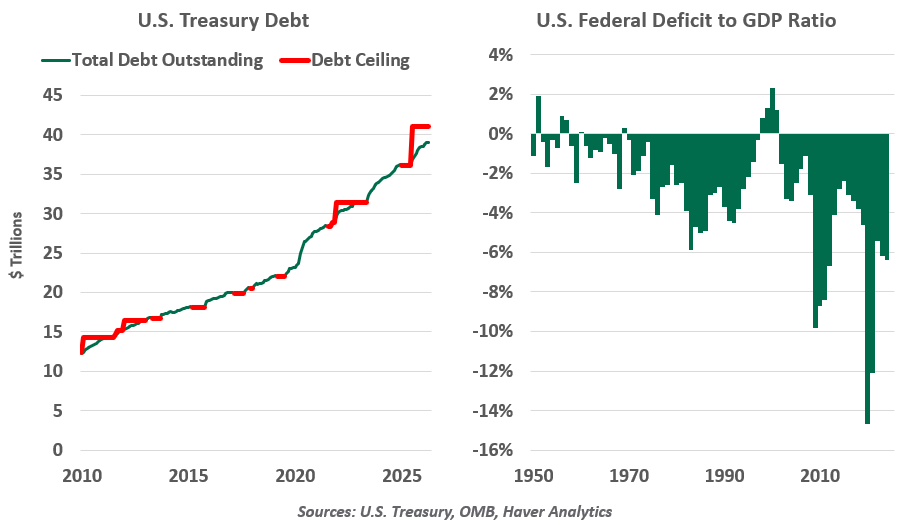
Congress demonstrated the difficulty of appropriations last year, as a budget deadlock led to a record-setting government shutdown. The truce to reopen led to a partial shutdown affecting the Department of Homeland Security (DHS). Acrimony over immigration enforcement left DHS without a final appropriation for fiscal year 2026. The agency had covered its costs with a patchwork of funds meant to cover several years of immigration enforcement in last year’s fiscal package. These measures could not endure indefinitely, and they imperiled other important DHS functions, like cybersecurity. A lasting solution was needed.
This week, a reconciliation bill cleared the logjam. These bills are considered separately from appropriations for targeted adjustments to existing fiscal laws, and they must pertain solely to spending, taxes or the national debt. They are exempt from the filibuster and can pass by simple majority vote.
Despite the fiscal-only parameters of reconciliation, it has been the mechanism for a number of significant laws. Over the past decade, the Tax Cuts and Jobs Act of 2017, the American Rescue Plan Act of 2021, the Inflation Reduction Act of 2022, and last year’s One Big Beautiful Bill Act all passed through reconciliation. These bills were highly impactful but highly partisan.
The separation between appropriation and reconciliation is fading.
The separation between appropriations and reconciliation is fading. Recent reconciliation bills have moved more discretionary items into mandatory measures, reaching a new high of over $300 billion of defense and security spending in last year’s “Big Beautiful” bill. Last year’s funding was a top-up to allocated funds, but this year’s bill moved entire budgets from appropriations to reconciliation.
The reconciliation bill passed by the Senate this week approved $70 billion to fund Immigration and Customs Enforcement (ICE) for several years ahead. After likely approval by the House, it will conclude the lingering challenge of paying for DHS and cement a budget for a top priority of the Trump administration. The bill’s scope was narrow, as other priorities like housing will advance through other bills, and matters like voter eligibility fall outside the fiscal limitations of reconciliation.
Though legislative tactics are fluid, this week’s news will likely be the last major fiscal bill of the year. Military spending will be addressed in the annual National Defense Authorization Act. Midterm elections in November will diminish the appetite for a shutdown in October; continuing resolutions may carry current budgets into 2027.
While we welcome policy clarity, we are concerned that these tactics will lock in a trend of moving more funding decisions to simple majority votes, with more partisan influence. The fiscally prudent Byrd Amendment, which attempts to limit the impact of reconciliation bills on federal deficits, will be nullified. The use of reconciliations aligns funding with political cycles, allowing a surge in spending that will end well before the ten-year window covered by the Byrd rule becomes binding.
To illustrate with the issue at hand: ICE funding is now secured until 2029. If Republicans are still in control of the presidency and Congress at expiration, they will pass another reconciliation bill then to keep up immigration enforcement. If the Democrats take control, ICE funding will almost certainly be pared back. Both parties are making plans that last little longer than the current presidential term. The Byrd Amendment’s 10-year fiscal neutrality window is an afterthought if reconciliation is used to make serial short-term funding decisions.
The fiscal outlook for the United States is concerning.
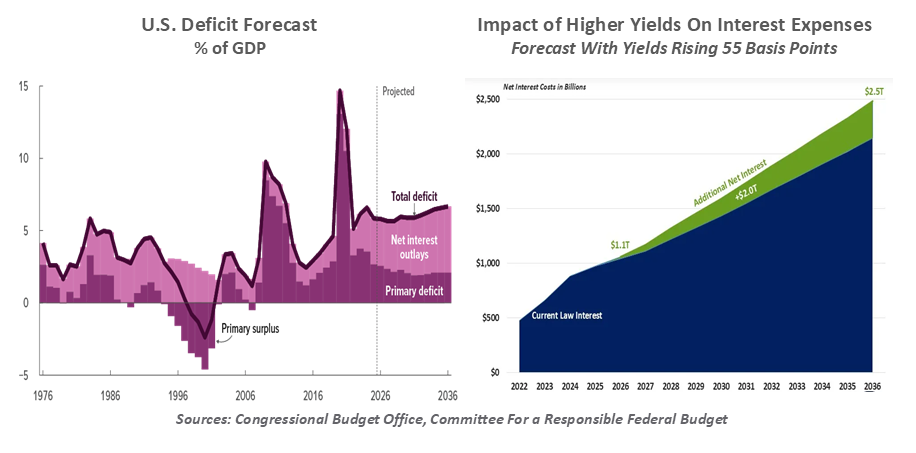
What you will not find in reconciliation bills is any attempt at fiscal discipline. The current budget has left the nation with a deficit totaling 5.8% of gross domestic product (GDP), in a deteriorating trend. The national debt continues to climb. Last year’s fiscal bill raised the debt ceiling to $41 trillion; at current growth rates, it maybecome binding within a year.
Interest rates have also risen. In the past month, longer-tenor Treasuries have repriced to reflect expectations of sustained higher inflation from energy market and supply chain disruptions due to conflict in the Middle East. We have long anticipated U.S. yields to rise as investors demand a greater risk premium for the nation’s fiscal recklessness and unreliable funding processes. The current round of inflation may prove to be temporary, but the budget is an enduring risk. The government’s debt service costs will grow in tandem with yields.
In the confessional, a penance is doled out in proportion to the sin. For Congress, the penance for the sin of fiscal recklessness is higher borrowing costs. Forgiveness is a long way off.
Related Articles
Meet Your Expert
Ryan Boyle
Chief U.S. Economist
Ryan James Boyle is the Chief U.S. Economist within the Global Risk Management division of Northern Trust. In this role, Ryan is responsible for briefing clients and partners on the economy and business conditions, supporting internal stress testing and capital allocation processes, and publishing economic commentaries.

Meet Our Team


Subscribe to Publications on Economic Trends & Insights
Gain insight into economic developments and our latest forecasts for the United States.
Information is not intended to be and should not be construed as an offer, solicitation or recommendation with respect to any transaction and should not be treated as legal advice, investment advice or tax advice. Under no circumstances should you rely upon this information as a substitute for obtaining specific legal or tax advice from your own professional legal or tax advisors. Information is subject to change based on market or other conditions and is not intended to influence your investment decisions.
© 2026 Northern Trust Corporation. Head Office: 50 South La Salle Street, Chicago, Illinois 60603 U.S.A. Incorporated with limited liability in the U.S. Products and services provided by subsidiaries of Northern Trust Corporation may vary in different markets and are offered in accordance with local regulation. For legal and regulatory information about individual market offices, visit northerntrust.com/terms-and-conditions.