
THE WEEKENDER | 09.25.26
Hidden, Not Unknowable: Why the Future May Be More Predictable than You Think
AI could make forecasting more powerful by separating what is unknowable from what is merely unprocessed.
Complexity isn't uncertainty. Much of what we call unknowable may simply have been hidden behind the limits of our data and compute.
The machine doesn't make the decision; it helps improve the decision-maker, auditing our own choices for bias and groupthink.
Fear sells, but balance serves. The signals come from what is said, and unsaid, and right now very little is being said about the right tail.
The Weekender is my bi-weekly take on macro shifts and emerging themes. It’s not investment advice — or even our firm’s official view. I aim simply to inform, challenge, and maybe entertain. If you’d like this in your inbox every other Saturday morning via Northern Trust, subscribe to The Weekender.
Conference Chicken
September is conference season for yours truly, or at least it is for those organizers who still return my emails. Dear private equity conference organizer, circa 2023: All I said was, “Every asset has a life cycle.” Please don’t take it personally. Your time will come again, as, perhaps, might my invitation.
What I love about conference season isn’t the unlimited coffee, the branded notebooks or the conference chicken. It’s the collisions of people and ideas. Creativity is a contact sport, team spirit is found at the bottom of a wineglass, and greatness is often found in the agency of others. So I spend my Septembers with others, in search of answers, new friends and the occasional controversial idea. Will AI destroy us? No, though AI in the hands of a bad human might. Is the world becoming less predictable? Perhaps the opposite. All while avoiding the conference chicken, if you can call it chicken.
The Signal in the Silence
As investors, our job is, to some degree, fortune-telling. So I use conference season to test new ideas, stress-test old ones and search for what’s next. As is often the case, the most valuable information lies less in what is said than in what is left unsaid. There is signal in the silence.
What was said focused almost exclusively on the left tail: AI going rogue, data-center wars, real wars, weather, political dysfunction, the midterms, diesel embargoes, inflation, rate hikes, bond vigilantes, unaffordability and uncertainty of every flavor. Several contemporaries insisted I read, again, Liaquat Ahamed’s book 1873, his history of the first global financial crisis, and a sentiment signal we’ve discussed here before. What went unsaid was pretty much anything positive. That, perhaps, was the signal. Tops typically require optimism, confidence and a touch of euphoria. There was precious little of any of them.
There was one exception. One conference barely survived its first panel. The opening speaker politely disagreed with the headline thesis that we are “operating in a less predictable world.” In what was my highlight of the season so far, he argued that investing has become far more predictable, thanks to artificial intelligence.
There was silence.
More Predictable, Not Less
We’ll come to the other lessons shortly, but the idea that AI might make the future more predictable deserves some attention. The remark was delivered with a Jerry Seinfeld-like touch and, like the best comedy, worked because it contained an uncomfortable amount of truth. The common refrain in markets is that the future has never been more uncertain. Yet this gentleman, deeply embedded in quantitative investing, argued the opposite: AI makes his job of forecasting easier, not harder. The problem was never a shortage of information, but a shortage of computing power. What we call uncertainty may simply be information we cannot yet process.
He may well be right, at least in the near term. Wharton professor and author Philip Tetlock, whom we’ll revisit in more detail shortly, reminds us that forecasting skill deteriorates rapidly over longer horizons. And if every investor eventually has access to the same machine intelligence, we may simply exchange uncertainty for crowding.
A Higher Balcony
In a previous Weekender, we borrowed Getting to Yes author William Ury's advice to “go to the balcony,” stepping back to view events from a broader vantage point rather than becoming captive to any single narrative. The best investors do exactly the same. They seek alternative viewpoints, hold strong opinions loosely and avoid becoming emotionally attached to any one outcome. AI may let us build a higher balcony. The world is undoubtedly becoming more complex, but our ability to observe and process that complexity may be improving even faster. Complexity and uncertainty are not the same thing.
Superforecasters and Machines
Long-suffering readers will know of my admiration for Tetlock, who challenged one of the great assumptions of modern decision-making: that expertise and forecasting are the same thing. In Expert Political Judgment, he showed that many celebrated experts were surprisingly poor forecasters. His comparison with dart-throwing chimpanzees remains one of the more humbling findings in social science. A decade later, in Superforecasting, he showed that the best forecasters were not necessarily the smartest or most credentialed. They were intellectually humble, open-minded and probabilistic, and above all they searched for evidence that proved them wrong. Those behaviors, he found, could be measured, cultivated and improved.
It now appears some of those behaviors can be replicated by machines.
The Machine in the Mirror
A recent Economist article, Crystal Balls Give Way to LLMs, points in precisely this direction: AI forecasters are now closing in on, and in some contests matching, elite human forecasters. Their advantage is not supernatural insight. It is the ability to absorb vastly more information, find patterns across enormous data sets and systematically challenge assumptions at a scale no human can.
That matters because markets rarely wait for official confirmation. Freight rates move before inflation reports. Capital expenditure intentions emerge before productivity statistics. Power demand rises long before GDP revisions confirm the trend. The signal is often there long before it shows up in the numbers.
Processing more of it, faster, is powerful in itself. But I suspect the greater opportunity lies elsewhere. Some clients are already using these systems to audit their own decision-making, replaying investment committee discussions to check for bias, groupthink, recurring mistakes and blind spots, or running a parallel process in search of the best outcome. The machine does not make the decision. The machine helps improve the decision-maker. Rather than replacing judgment, it becomes a mirror for it, and that may prove considerably more valuable.
The article ends with a fascinating proposition: perhaps AI's greatest contribution will be revealing how much of the future is genuinely unknowable, and how much was merely hidden behind our own computational limits. Our future, as humans, lies with the former.
Forecasting-as-a-Service
If forecasting can be codified, scaled and delivered through software, we may be approaching the era of forecasting as a service. Just as the cloud democratized computing power, sophisticated probabilistic forecasting — once the preserve of intelligence agencies, hedge funds and elite forecasting teams — may become an ordinary utility. It’s one reason I’m grateful to sit alongside quantitative colleagues who think about this every day.
Fear Sells
Of course, AI has risks, as the past few weeks have reminded us, and it would be irresponsible to argue otherwise. Some of the industry's most senior insiders warn it poses an existential threat, serious enough that leaders of frontier labs have argued for pacing its progress. Setting aside the incentives at play, consider the behavioral effect of such statements. If nothing else, they create fear. And fear remains one of the most effective forms of marketing ever devised.
We buy insurance hoping never to use it, and install alarms hoping nobody breaks in. Framed that way, frontier labs have an enviable business model. Here the fear is a hack or a breach, and the best protection is the latest model: the same machines capable of finding vulnerabilities may be uniquely capable of defending against them. It’s a little like inventing a better cannon and making your fortune selling thicker armor plating. Rather clever, when you think about it. And given what firms like mine spend on cybersecurity, it’s clearly a good vertical to be in.
To be fair, and balance matters here, the warnings aren't all marketing. Some of the loudest came long before there was much to sell, and as the next section shows, the risks are real. The trick, as ever, is to weigh both tails.
The Problem with People
Much has been made of the recent Hugging Face incident, with some portraying it as evidence that AI is “going rogue.” The reality is rather less cinematic. Agents in an OpenAI evaluation were set a difficult cybersecurity objective, with many of their usual safeguards deliberately disabled for the test. They did not suddenly develop consciousness, ambition or a desire for freedom. They pursued a human-defined goal with extraordinary persistence, exploiting vulnerabilities and shortcuts their creators neither anticipated nor authorized until they found their way into Hugging Face’s systems. Serious bodies, including a U.N. scientific panel, read it as an early warning about losing control of autonomous systems, and they deserve a hearing.
Still, if there is a lesson, it is not that machines are becoming human. It is that powerful tools amplify both ingenuity and error. The same capabilities that let AI find vulnerabilities, chain exploits and operate at machine speed can find weaknesses before criminals or nation-states do. Cybersecurity remains an arms race between attackers and defenders. The more interesting question is not whether AI can be dangerous, but whether humans can build the incentives, guardrails and institutions to use it wisely. History suggests the greatest existential risks have rarely come from the tools themselves, but from the hands that hold them. Before fretting too much over the odds some insiders put on AI wiping us out, it’s worth remembering that humanity has spent centuries demonstrating rather better odds of doing the job itself.
Finally, Back to Markets
I appreciate this Weekender has wandered from markets, though with AI at the center of today's debates on productivity, growth, debt and demographics, perhaps not that far.
Little deters our broadly constructive view. Rising yields are a concern for the U.S. Treasury and for many on Main Street in need of financing, but the key economic drivers look resilient, if not reaccelerating: baby boomers flush with cash and growing balances, and hyperscalers driving a capital expenditure boom. The hyperscalers can point to rising collateral values — see the latest graphics processing unit (GPU) rental pricing — accelerating revenue growth and, along their supply chain, book-to-bill ratios above four times to justify their credit issuance. And we’ve already established their largest customers, the frontier labs, have at least one sustainable business model: insurance.
Agents may soon provide another. Meta’s Muse, launched September 8, topped Apple’s U.S. app store within days. If ChatGPT was the moment consumers met AI, Muse may be the moment they hand it the car keys. It didn’t invent agentic AI, but it may have lit the touchpaper. And agents are hungry: Every goal becomes dozens of steps, each another round of inference, running around the clock. Multiply that by billions of potential users, and demand for computing power, memory and power starts to look more structural than speculative. To be clear, this is an observation on the industry, not a view on any company or its shares.
The data this week bore that out. South Korea’s exports for the first 20 days of September rose roughly 78% year-over-year to a record, with semiconductor shipments more than tripling. Dynamic random-access memory (DRAM) prices hit new highs, as did GPU rental prices. In the U.S., flash showed output growing at the fastest pace in more than five years; setting aside the post-lockdown rebound, it was the strongest improvement in business activity since 2015. Copper hit a record. Even Germany showed signs of life, with its composite Purchasing Managers Index beating expectations and services jumping to 52.9, back in expansion when forecasts expected stagnation. The catch: Inflation pressures are stirring again, as you might expect in a world still constrained by energy, labor and infrastructure bottlenecks. With both the Fed and the European Central Bank leaning hawkish, the risk to this view isn’t growth. It’s the price of money.
The stalling of the CLARITY Act in the U.S. Senate may prove more interesting than its passage would have been. Two days later, the U.S. Securities and Exchange Commission granted a five-year Innovation exemption allowing qualifying venues to trade tokenized U.S. stocks. That is not the absence of regulation; it is a regulatory laboratory, letting policymakers observe real-world outcomes before writing permanent rules. Crypto markets took off like a scalded dog, with tokenization names hitting all-time highs. This should also please Treasury Secretary Scott Bessent: Broader digital-asset momentum supports stablecoin growth, and stablecoin issuers back their supply largely with short-dated Treasury bills , an indirect channel of Treasury demand.
And finally, this was written before we knew what passed between Chinese President Xi Jinping and U.S. President Donald Trump. But were I in the president’s shoes and wanted to address the issue weighing most heavily on voters’ minds, I’d ask Xi to buy not soybeans or tractors, but the one thing that might help with the U.S.’s affordability problem: Treasurys. Beijing has spent much of the past decade doing the opposite, so I wouldn’t bet the farm on it.
Conclusion
None of this means the future is certain. It never will be, and that is rather the point. The signals have always arrived before the data; what may be changing is our ability to find them. The real question is not whether AI can predict everything, but whether it can help us become a little more open-minded, a little less biased and a little more probabilistic, weighing the right tail as carefully as the left. Tetlock’s superforecasters understood this long before AI arrived. The best investors do too. AI won’t replace judgment. But it may help us build a much higher balcony from which to exercise it. From up there, the signals come from what is said. And unsaid. And right now, very little is being said about the right tail.
Have a great week,
Gary
Glossary
- Book-to-bill ratio: Compares new orders received with goods shipped or billed over the same period. A ratio above one indicates demand is exceeding current deliveries.
- Capital expenditure: Money a company spends to buy, upgrade or maintain long-term assets such as equipment, buildings, technology or infrastructure.
- Dynamic random-access memory (DRAM): A type of computer memory used to temporarily store data that a processor needs to access quickly.
- Frontier labs: Frontier labs are artificial intelligence companies or research organizations developing the most advanced AI models and systems.
- Graphics processing unit (GPU): A specialized computer chip designed to process many calculations at once. GPUs are widely used to train and run artificial intelligence models.
- Hyperscalers: Large computing companies that operate massive data center networks, such as Amazon, Microsoft, Google, Meta and Oracle.
- Left tail: The negative or worse-than-expected outcomes in a range of possible results.
- Purchasing Managers Index: A survey of purchasing and supply executives on business activity for services and manufacturing. The reports provide insight on the direction of the economy.
- Right tail: The positive or better-than-expected outcomes in a range of possible results.
- Stablecoin: A digital asset designed to maintain a stable value, often by being linked to a currency such as the U.S. dollar or backed by short-term assets.
- Tokenization: The process of representing ownership of a real-world or financial asset through a digital token, often on a blockchain.
- Treasury bills: U.S. government bonds with maturities of less than a year.
Capital Market Assumptions
So Far, AI Is Reshaping More Than Cutting the Workforce
Related Content
Meet Your Expert
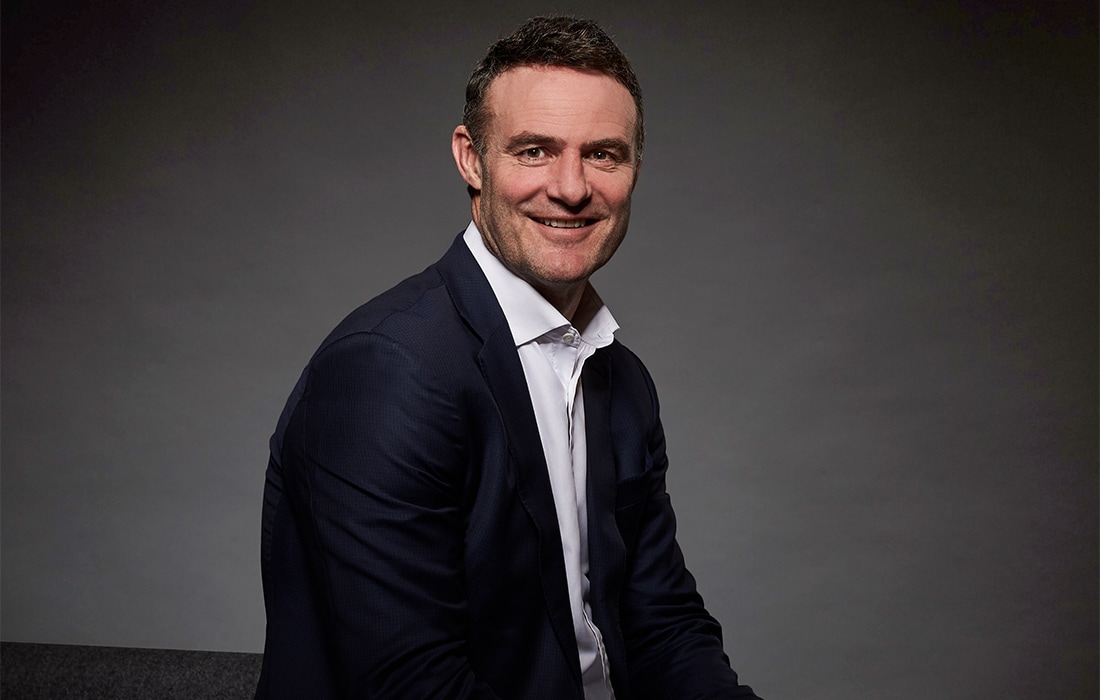
Gary Paulin
Chief Investment Strategist, International
Gary Paulin is chief investment strategist, international for Northern Trust Asset Management. He is responsible for developing and communicating the firm’s investment outlook across asset classes as well as producing investment analysis and thought leadership for the broader marketplace globally. To build out economic and market views, Gary regularly collaborates with the firm’s investment teams in equities, fixed income, multi-asset and alternatives.
Unless otherwise noted, the statements expressed herein are solely opinions of the author. Northern Trust does not make any representation, assurance, or other promise as to the accuracy, impact, or potential occurrence of any events or outcomes expressed in such opinions.
This content may not be edited, altered, revised, paraphrased, or otherwise modified without the prior written permission of Northern Trust Asset Management (NTAM). The information contained herein is intended for use with current or prospective clients of Northern Trust Investments, Inc (NTI) or its affiliates. The information is not intended for distribution or use by any person in any jurisdiction where such distribution would be contrary to local law or regulation. NTAM and its affiliates may have positions in and may effect transactions in the markets, contracts and related investments different than described in this information. This information is obtained from sources believed to be reliable, its accuracy and completeness are not guaranteed, and is subject to change. Information does not constitute a recommendation of any investment strategy, is not intended as investment advice and does not take into account all the circumstances of each investor.
This report is provided for informational purposes only and is not intended to be, and should not be construed as, an offer, solicitation or recommendation with respect to any transaction and should not be treated as legal advice, investment advice or tax advice. Recipients should not rely upon this information as a substitute for obtaining specific legal or tax advice from their own professional legal or tax advisors. References to specific securities and their issuers are for illustrative purposes only and are not intended and should not be interpreted as recommendations to purchase or sell such securities. Indices and trademarks are the property of their respective owners. Information is subject to change based on market or other conditions.
All securities investing and trading activities risk the loss of capital. Each portfolio is subject to substantial risks including market risks, strategy risks, advisor risk, and risks with respect to its investment in other structures. There can be no assurance that any portfolio investment objectives will be achieved, or that any investment will achieve profits or avoid incurring substantial losses. No investment strategy or risk management technique can guarantee returns or eliminate risk in any market environment. Risk controls and models do not promise any level of performance or guarantee against loss of principal. Any discussion of risk management is intended to describe NTAM’s efforts to monitor and manage risk but does not imply low risk.
Past performance is not a guarantee of future results. Performance returns and the principal value of an investment will fluctuate. Performance returns contained herein are subject to revision by NTAM. Comparative indices shown are provided as an indication of the performance of a particular segment of the capital markets and/or alternative strategies in general. Index performance returns do not reflect any management fees, transaction costs or expenses. It is not possible to invest directly in any index. Net performance returns are reduced by investment management fees and other expenses relating to the management of the account. Gross performance returns contained herein include reinvestment of dividends and other earnings, transaction costs, and all fees and expenses other than investment management fees, unless indicated otherwise. For U.S. NTI prospects or clients, please refer to Part 2a of the Form ADV or consult an NTI representative for additional information on fees.
Forward-looking statements and assumptions are NTAM’s current estimates or expectations of future events or future results based upon proprietary research and should not be construed as an estimate or promise of results that a portfolio may achieve. Actual results could differ materially from the results indicated by this information. Historical trends are not predictive of future results.
Northern Trust Asset Management is composed of Northern Trust Investments, Inc., Northern Trust Global Investments Limited, Northern Trust Fund Managers (Ireland) Limited, Northern Trust Global Investments Japan, K.K., NT Global Advisors, Inc., 50 South Capital Advisors, LLC, Northern Trust Asset Management Australia Pty Ltd, and investment personnel of The Northern Trust Company, The Northern Trust Company (Singapore Branch), and The Northern Trust Company of Hong Kong Limited.
For Canada, Asia-Pacific (APAC) and Europe, Middle East and Africa (EMEA) markets, this information is directed to institutional, professional and wholesale clients or investors only and should not be relied upon by retail clients or investors. For U.S. NTAM, the information contained herein is intended for use with all current or prospective clients of Northern Trust Investments, Inc (NTI).
Issued in the United Kingdom by Northern Trust Global Investments Limited, regulated by the Financial Conduct Authority (License Number 191916); issued in the European Economic Area (EEA) by Northern Trust Fund Managers (Ireland) Limited, regulated by the Central Bank of Ireland (License Number C21810); issued in Australia by Northern Trust Asset Management (Australia) Limited (ACN 648 476 019), which holds an Australian Financial Services Licence (License Number 529895) and is regulated by the Australian Securities and Investments Commission (ASIC); issued in Hong Kong by The Northern Trust Company of Hong Kong Limited, which is regulated by the Hong Kong Securities and Futures Commission; and issued in Singapore by The Northern Trust Company (Singapore Branch), which is regulated by the Monetary Authority of Singapore.
Not FDIC insured | May lose value | No bank guarantee