Memo from the Middle East
Takeaways from my recent roadshow in the Middle East — including answers to questions like whether rising deficits and monetary debasement will continue and whether AI capex is a bubble about to deflate.
Advisors and investors I spoke with are still uncertain on how the conflict ends, but they are surprisingly positive when it comes to U.S. risk.
Investors increasingly want to start conversations with the broad themes driving change — and let asset class and regional decisions follow from there.
Structural forces such as monetary debasement, scarcity and AI investment remain intact, with risks manageable and classic bubble conditions not yet fully in place.
The Weekender is my bi-weekly take on macro shifts and emerging themes. It’s not investment advice — or even our firm’s official view. I aim simply to inform, challenge, and maybe entertain. If you’d like this in your inbox every other Saturday morning via Northern Trust, subscribe to The Weekender.
Since returning from China, I spent the week on a (virtual) Middle Eastern roadshow, connecting with clients and colleagues across the region. I will write up my thoughts more fully next time, but suffice to say: While many people I spoke with remain uncertain as to how and when the conflict ends, the tone on risk — particularly U.S. risk — is surprisingly constructive.
Re-Dollarization?
Certain corners of the investment media would have you believe U.S. assets are being shunned and that de-dollarisation is accelerating. There has, of course, been some selling for liquidity reasons. But the overwhelming sense I took from conversations — and what I heard in China some weeks earlier — was quite the opposite. Recent data on U.S. Treasury International Capital (TIC) reinforces this, showing roughly ~$10 billion inflows into equities in March alone. Re-dollarization may be the more appropriate term.
More interesting, however, is where the conversation now begins. Clients increasingly want to start with the big ideas — the mega-themes, the primary drivers of change (think debasement, technology, deglobalisation) — before asking which asset class, region, or style offers the best exposure; a road that often leads back to America. It is a timely reminder that success in life, business and markets depends more on where you play than how you play. Get the first-order driver right and the second- and third-order effects tend to take care of themselves. Pick the tide before choosing the boat.
Where, Not How
The breadth of topics discussed this week was striking:
- China's ongoing transition
- Could oil prices fall faster than expected?
- Implications of potential IPOs from SpaceX and OpenAI
- Implications of potential IPOs from SpaceX and OpenAI
- Whether AI-driven disinflation can offset rising raw materials
- The so-called 'Jobs and SaaS apocalypse'
- Emerging bottlenecks in AI (e.g., permitting)
- The risk of food inflation from fertiliser shortages and a potential Super El Niño
- What Kevin Warsh's past tells us about the Federal Reserve’s future
- Whether markets 'test' a new Fed chair
- What conditions might trigger lending under Section 13(3) of the Federal Reserve Act (which allows the Fed to provide loans to non-financial institutions in exigent circumstances) or even yield curve control
- Whether bank deregulation could revive a classic credit cycle
- Whether rising yields signal stagflation — or simply stronger future growth
All important, and I will return to many of these. But two questions sat above the rest: Will rising deficits and monetary debasement continue? And is AI capex a bubble about to deflate?
Scarcity Attracts a Premium
Rising deficits are driven more by demographics than anything else, though defence and national security spending are clearly adding in the short term. Demographics are slow-moving and hard to reverse. As dependency ratios rise and deglobalisation persists, it is difficult to see deficits — or money supply — doing anything other than continuing to grow.
Over the past 20 years, U.S. money supply has expanded at roughly 7% per annum. As the supply of money rises, purchasing power falls. Protecting against that dilution means allocating to scarcity — assets where supply grows more slowly than the money in which they are priced. Scarcity attracts a premium.
Real assets, broadly defined, fit that bill so too do the sectors and regions that supply them (think Emerging Markets). Gold remains a standout. U.S. large-cap equities arguably do as well — though that case is now being challenged. A pipeline of large IPOs from SpaceX, OpenAI, and possibly others raises the question of whether the scarcity narrative for equities is about to be tested. History offers little comfort here: Major corporate events have often coincided with market peaks — AOL–Time Warner, Pets.com — and there will be no shortage of voices drawing the same parallels today.
Will IPOs Mark the Top?
The SpaceX IPO is shaping up to be the largest in history — targeting a valuation of $1.75 trillion–$2 trillion and aiming to raise $70 billion–80 billion, roughly 2.5x Saudi Aramco's record $29.4 billion raise. Put differently, SpaceX alone could exceed a full year of Nasdaq IPO issuance (around $46 billion in 2025). Add OpenAI — and perhaps Anthropic — and the market may need to absorb more than $200 billion in new supply. At first glance, that sounds alarming.
But context matters.
There have been individual trading days where Nvidia has turned over comparable volume on its own. OpenAI recently raised $120 billion privately — a record — without disturbing markets. More importantly, supply should always be viewed against total demand, which is vastly larger. U.S. corporate buybacks alone are running at over $1 trillion annually. Pension and defined contribution flows continue to deliver steady, price-insensitive demand. New policy initiatives — including the so-called Trump Accounts — may add further incremental retail flows. And foreign demand remains intact.
Stack those together and annual equity demand runs comfortably into the trillions. In that context, even large IPOs are unlikely, in isolation, to be market-dislocating. When the top comes, I suspect it will be less convenient, less telegraphed and far less obvious.
Bubbles Need Hot Air
All revolutionary technologies tend to form a bubble. From railways and electricity to the internet, each outlived its respective crash and delivered profound economic and social change. In each case, the excitement of the new technology created what economist John Kenneth Galbraith called “a mass escape from reality” — markets discounting a future divorced from earnings. Yet the bubble itself helped fund the very infrastructure it was celebrating. Eventually, supply outran demand, utilisation fell and a debt-fuelled buildout without near-term cash flows ended predictably in a crash. The lesson: Bubbles are a recurring feature of technology revolutions. They burst when euphoria — the hot air — combines with oversupply, declining returns and leverage: a combination that, for now, remains conspicuously absent.
Euphoria? Not Yet
There is little evidence of a “mass escape from reality” in today's poster child, Nvidia.
Earnings and price remain broadly aligned — a far cry from Cisco at the peak of the dot-com bubble, where price diverged dramatically from underlying earnings. That distinction matters. Manias end when euphoria and hot air overwhelm fundamentals and price is divorced from earnings — but right now, the evidence for either remains remarkably thin.
Demand Slowing?
It is also hard to see how demand for AI is slowing when Claude is glitching multiple times a day — and yet only around 1% of users currently pay for an LLM. That does not sound like a market in deceleration; it sounds like one in early acceleration. What happens when LLM penetration reaches 5%? Or 25%? What happens as more compute-intensive applications proliferate — agentic AI, embodied AI — or entirely new demand categories emerge, such as space, which the CEO of ASML recently described as the “underappreciated source of semiconductor demand”? Utilisation rates are difficult to see slowing when graphics processing units (GPUs) are still delivering economic value well beyond their depreciation cycles and backlog orders are growing faster than most capex budgets — which Nvidia believes could triple by the end of the decade. Again, this is not obviously a demand problem.
Popular With Capital, Less So With People
What is genuinely concerning — and what could slow things down — is regulation born of public hostility. The anti-AI movement is gathering pace: Several data centres have been delayed by protest, with objections spanning environmental impact (water consumption), cost of living (electricity prices), inequality (benefits accruing to owners rather than communities), and the risk of job displacement — particularly among younger cohorts.
There are counterarguments to each. Water usage is largely recycled. Electricity costs, in some regions, are rising more slowly as supply expands. Policy can, in theory, address distributional concerns through taxation and subsidies. And so far, there is little evidence of a 'jobs apocalypse' — OECD unemployment remains close to record lows.
But perception matters. Former Google CEO Eric Schmidt was recently booed during a university commencement address. Sam Altman's house was firebombed. AI has a messaging problem.
As I was reminded this week, however, if data centres cannot secure approval in certain U.S. states, there is no shortage of regions willing to host them — not least the Middle East, which happens to have an abundance of the one resource AI ultimately requires: energy.
Conclusion: The Tide Is Still Coming In
The conversations this week reinforced a consistent theme: The big structural forces — monetary debasement, scarcity, and AI-driven productivity — remain firmly intact. The risks are real but, for now, manageable. Froth in parts of the market is evident, and the coming wave of mega-IPOs will test the demand/supply narrative. But the classic ingredients of a bubble burst — widespread euphoria, rampant leverage, declining utilisation, and supply overwhelming demand — are not yet fully in place.
The most important investment question remains the first-order one: Are you positioned in the right tide? The forces of ongoing debasement and sustained AI investment still appear to be rising — and if that is right, it is a tide worth riding. For a while yet.
Have a great weekend.
Gary
Related Content
Meet Your Expert
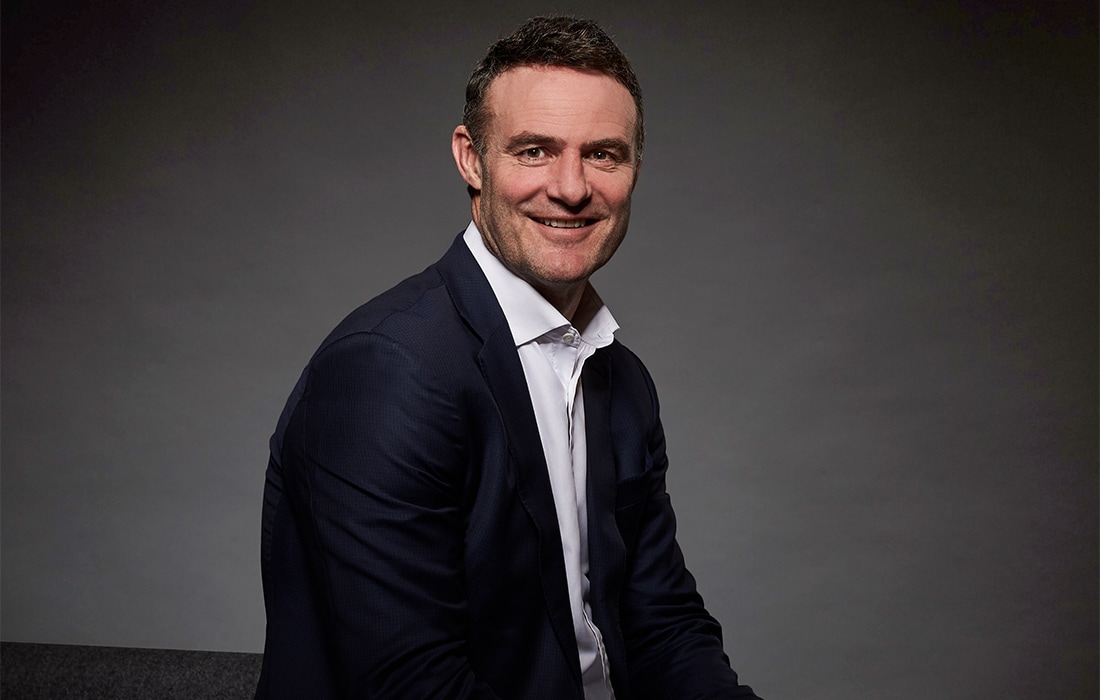
Gary Paulin
Chief Investment Strategist, International
Gary Paulin is chief investment strategist, international for Northern Trust Asset Management. He is responsible for developing and communicating the firm’s investment outlook across asset classes as well as producing investment analysis and thought leadership for the broader marketplace globally. To build out economic and market views, Gary regularly collaborates with the firm’s investment teams in equities, fixed income, multi-asset and alternatives.
Unless otherwise noted, the statements expressed herein are solely opinions of the author. Northern Trust does not make any representation, assurance, or other promise as to the accuracy, impact, or potential occurrence of any events or outcomes expressed in such opinions.
This content may not be edited, altered, revised, paraphrased, or otherwise modified without the prior written permission of Northern Trust Asset Management (NTAM). The information contained herein is intended for use with current or prospective clients of Northern Trust Investments, Inc (NTI) or its affiliates. The information is not intended for distribution or use by any person in any jurisdiction where such distribution would be contrary to local law or regulation. NTAM and its affiliates may have positions in and may effect transactions in the markets, contracts and related investments different than described in this information. This information is obtained from sources believed to be reliable, its accuracy and completeness are not guaranteed, and is subject to change. Information does not constitute a recommendation of any investment strategy, is not intended as investment advice and does not take into account all the circumstances of each investor.
This report is provided for informational purposes only and is not intended to be, and should not be construed as, an offer, solicitation or recommendation with respect to any transaction and should not be treated as legal advice, investment advice or tax advice. Recipients should not rely upon this information as a substitute for obtaining specific legal or tax advice from their own professional legal or tax advisors. References to specific securities and their issuers are for illustrative purposes only and are not intended and should not be interpreted as recommendations to purchase or sell such securities. Indices and trademarks are the property of their respective owners. Information is subject to change based on market or other conditions.
All securities investing and trading activities risk the loss of capital. Each portfolio is subject to substantial risks including market risks, strategy risks, advisor risk, and risks with respect to its investment in other structures. There can be no assurance that any portfolio investment objectives will be achieved, or that any investment will achieve profits or avoid incurring substantial losses. No investment strategy or risk management technique can guarantee returns or eliminate risk in any market environment. Risk controls and models do not promise any level of performance or guarantee against loss of principal. Any discussion of risk management is intended to describe NTAM’s efforts to monitor and manage risk but does not imply low risk.
Past performance is not a guarantee of future results. Performance returns and the principal value of an investment will fluctuate. Performance returns contained herein are subject to revision by NTAM. Comparative indices shown are provided as an indication of the performance of a particular segment of the capital markets and/or alternative strategies in general. Index performance returns do not reflect any management fees, transaction costs or expenses. It is not possible to invest directly in any index. Net performance returns are reduced by investment management fees and other expenses relating to the management of the account. Gross performance returns contained herein include reinvestment of dividends and other earnings, transaction costs, and all fees and expenses other than investment management fees, unless indicated otherwise. For U.S. NTI prospects or clients, please refer to Part 2a of the Form ADV or consult an NTI representative for additional information on fees.
Forward-looking statements and assumptions are NTAM’s current estimates or expectations of future events or future results based upon proprietary research and should not be construed as an estimate or promise of results that a portfolio may achieve. Actual results could differ materially from the results indicated by this information. Historical trends are not predictive of future results.
Northern Trust Asset Management is composed of Northern Trust Investments, Inc., Northern Trust Global Investments Limited, Northern Trust Fund Managers (Ireland) Limited, Northern Trust Global Investments Japan, K.K., NT Global Advisors, Inc., 50 South Capital Advisors, LLC, Northern Trust Asset Management Australia Pty Ltd, and investment personnel of The Northern Trust Company, The Northern Trust Company (Singapore Branch), and The Northern Trust Company of Hong Kong Limited.
For Canada, Asia-Pacific (APAC) and Europe, Middle East and Africa (EMEA) markets, this information is directed to institutional, professional and wholesale clients or investors only and should not be relied upon by retail clients or investors. For U.S. NTAM, the information contained herein is intended for use with all current or prospective clients of Northern Trust Investments, Inc (NTI).
Issued in the United Kingdom by Northern Trust Global Investments Limited, regulated by the Financial Conduct Authority (License Number 191916); issued in the European Economic Area (EEA) by Northern Trust Fund Managers (Ireland) Limited, regulated by the Central Bank of Ireland (License Number C21810); issued in Australia by Northern Trust Asset Management (Australia) Limited (ACN 648 476 019), which holds an Australian Financial Services Licence (License Number 529895) and is regulated by the Australian Securities and Investments Commission (ASIC); issued in Hong Kong by The Northern Trust Company of Hong Kong Limited, which is regulated by the Hong Kong Securities and Futures Commission; and issued in Singapore by The Northern Trust Company (Singapore Branch), which is regulated by the Monetary Authority of Singapore.
Not FDIC insured | May lose value | No bank guarantee