
Weekly Economic Commentary | September 11, 2026
Fed Preview: Boxed In
Wednesday's decision will be a close call.
Economic Growth
Hold Steady
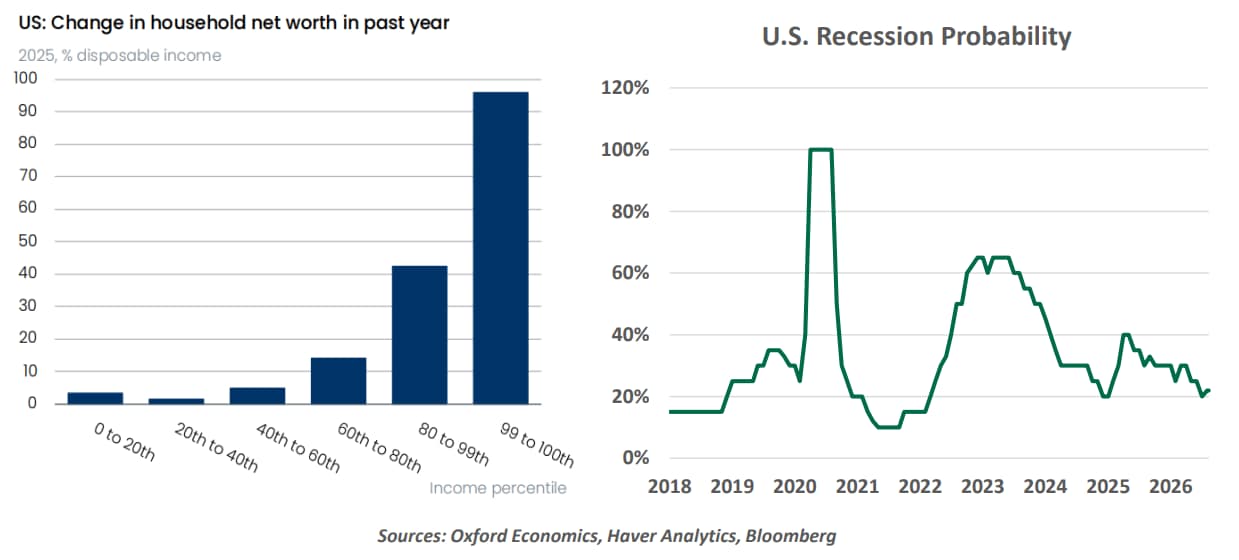
Activity has remained buoyant in the face of multiple shocks, but the economy is not invulnerable. Business investment is an important driver of activity, but it is concentrated in the technology sector. Although consumer spending rebounded in the last quarter, lower-income households are tapping into savings as inflation remains persistent. Holding rates steady would provide additional time to assess whether there are potential cracks in the foundation of the expansion.
Raise Rates
Gross domestic product (GDP) growth slowed in the second quarter, but it reflected temporary drags from inventories, net exports and government spending. Underlying domestic demand remained firm, with both consumer spending and business investment rebounding. Given the economy's resilience to both domestic and external shocks, a modest increase in interest rates will not derail economic momentum.
Inflation
Hold Steady
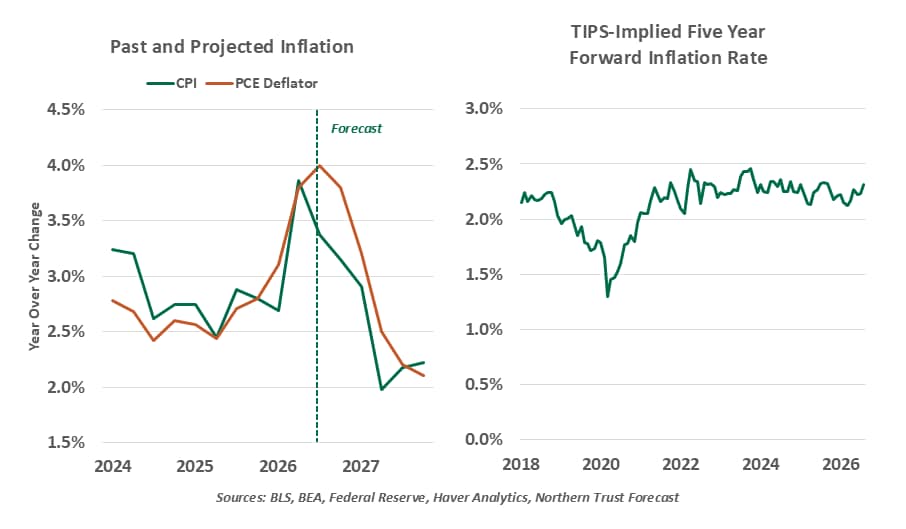
The year to date has brought a series of inflationary forces that are outside the scope of monetary policy. Increases in oil prices and the introduction of tariffs fall into this category. The Fed typically looks through these kinds of exogenous shocks to focus on underlying inflation. Taking that view, wage gains and housing costs have stayed contained, giving confidence in a return to disinflation. Longer-run inflation expectations remain steady, suggesting that markets are not anticipating that recent price surges will persist.
Raise Rates
The Federal Open Market Committee annually affirms an inflation target of a 2% yearly increase in the personal consumption expenditures (PCE) price index. That measure stands at 3.7%, and more timely inflation readings offer little hope for PCE to fall in the near term. Forecasts anticipating a gradual return to target have proven incorrect. Facing similar conditions, many other central banks have reacted by raising rates. The Fed needs to follow suit to maintain credibility and demonstrate a commitment to price stability.
Inflation is well above target, and the path down is unclear.
Employment
Hold Steady
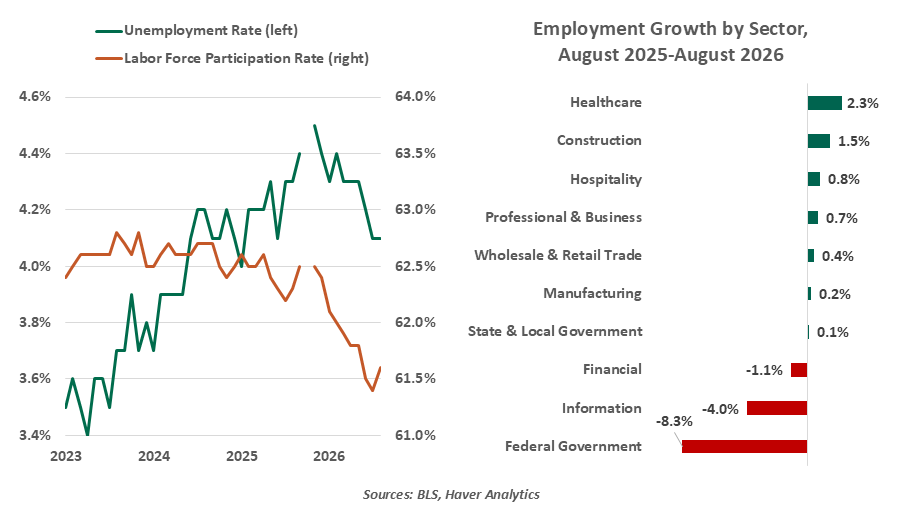
Job gains have been uneven across sectors. AI is likely leading to cautious hiring in knowledge sectors and among recent college graduates. Labor force participation has trended down, especially among older workers; this suggests the presence of some slack. Wages are growing moderately and are not an inflationary force. The number of job openings is close to the number of unemployed people; if the ratio of the two slips further, joblessness could rise quickly.
Raise Rates
An unemployment rate of 4.1% is consistent with full employment. Hiring is trending up, and most sectors have added jobs in the year to date. Claims for unemployment benefits are very low, as are job losses due to layoffs. Employment is gaining at a slower pace than old norms, but so is population growth. The job market has enough momentum to tolerate higher rates, and is healthy enough that the Fed should focus on its inflation mandate at the upcoming meeting.
The labor market is not the Fed’s primary focus at the moment.
Other Considerations
Hold Steady
The Fed is giving serious consideration to reducing its balance sheet. Additional “quantitative tightening” would make policy more restrictive. The recent rise in long-term rates has made long-term borrowing more expensive. This is slowing the U.S. housing market; the rate on a 30 year mortgage loan is 50 basis points higher than it was six months ago. This may take pressure off the Fed to raise overnight rates.
Raise Rates
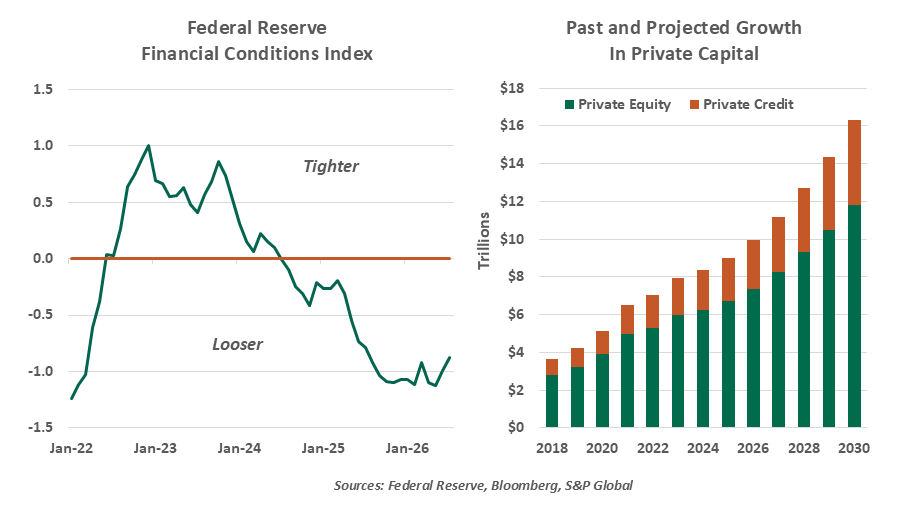
Some of the recent shift in Treasury yields may reflect worries that the Fed will be slow to act. Financial conditions are anything but tight. Money is flowing freely into the AI buildout, and investment grade borrowers are paying some of the lowest spreads in decades. Growth in private equity and private credit has widened the channel that translates Fed action into the availability of capital. Rates need to be raised to slow demand and contain inflation.
Credit is easy, but the politics surrounding the Fed are not.
Related Articles
Meet Our Team



Subscribe to Publications on Economic Trends & Insights
Gain insight into economic developments and our latest forecasts for the United States.
Information is not intended to be and should not be construed as an offer, solicitation or recommendation with respect to any transaction and should not be treated as legal advice, investment advice or tax advice. Under no circumstances should you rely upon this information as a substitute for obtaining specific legal or tax advice from your own professional legal or tax advisors. Information is subject to change based on market or other conditions and is not intended to influence your investment decisions.
© 2026 Northern Trust Corporation. Head Office: 50 South La Salle Street, Chicago, Illinois 60603 U.S.A. Incorporated with limited liability in the U.S. Products and services provided by subsidiaries of Northern Trust Corporation may vary in different markets and are offered in accordance with local regulation. For legal and regulatory information about individual market offices, visit northerntrust.com/terms-and-conditions.