Weekly Economic Commentary | March 27, 2026
The Quest for Energy Independence
Energy scarcity is back, and its consequences may endure.
By Carl Tannenbaum
During the pandemic, my wife lived in constant fear that we would run short of paper products, disinfectants and other essentials. I was frequently sent out on reconnaissance missions to replenish supplies.
The Iran war is creating a new set of concerns over potential shortages, on a much larger scale. The interruption of energy imports is creating fear in many world capitals. A search for new and more secure supplies is underway, one which will have economic and environmental consequences.
The Strait of Hormuz remains effectively closed. A military offensive may be undertaken to reopen it, but such an operation would be risky and take weeks. The limits on transit and storage capacity for energy have forced producers to curtail operations; the loss of daily crude oil output is the largest in history. Even if a truce is eventually agreed, it will take weeks to restore normal service.
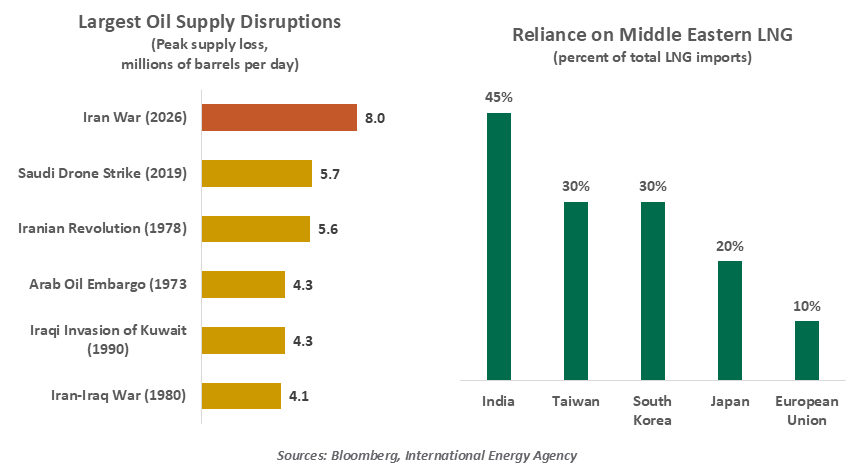
The situation surrounding liquified natural gas (LNG) is even more serious. Qatar supplies about a quarter of the world’s LNG; production facilities there were shut down pre-emptively, and then damaged by an Iranian attack. Restoring full capacity will take several years.
Consumers around the world are certainly hoping for an end to the war in the very near term, with no further damage to energy infrastructure. But it bears noting that the Middle East has been a volatile region for centuries, and recent history suggests that an outbreak is never far from the surface. Energy sourced from the region is typically plentiful and inexpensive, but intermittent supply shocks illustrate the risk of overreliance.
In the wake of the war, nations may set a course to greater energy security. This will involve focusing on alternative sources, alternative fuels and alternatives for conservation.
Japan relies extensively on imported oil, and is a significant importer of LNG. In the wake of the war, the country is considering restarting nuclear power plants that were idled after the Fukushima disaster in 2011. Japan is also considering lifting restrictions on coal-fired generators.
Once again, nations are scrambling to secure energy.
India has scant reserves of petroleum, including the liquified petroleum gas (LPG) that is used for cooking. Sourcing energy from other regions is being considered, as is using LNG for additional power generation. Neither is a quick fix, meaning that coal will be the first line of defense. This approach carries downsides for a country where air pollution is already a major problem.
Europe has made significant progress in using renewable sources of energy, which now supply about half of the continent’s power. Unfortunately, wind and solar energy cannot be scaled up to offset shocks in the supplies of other fuels. Investment in new capacity is likely, but will take years to come online.
There has been very little oil and gas exploration in the waters surrounding the United Kingdom in recent decades, but underseas deposits are resident there. Finding and developing these sources will take considerable time, and will challenge the green sensibilities of many in Britain.
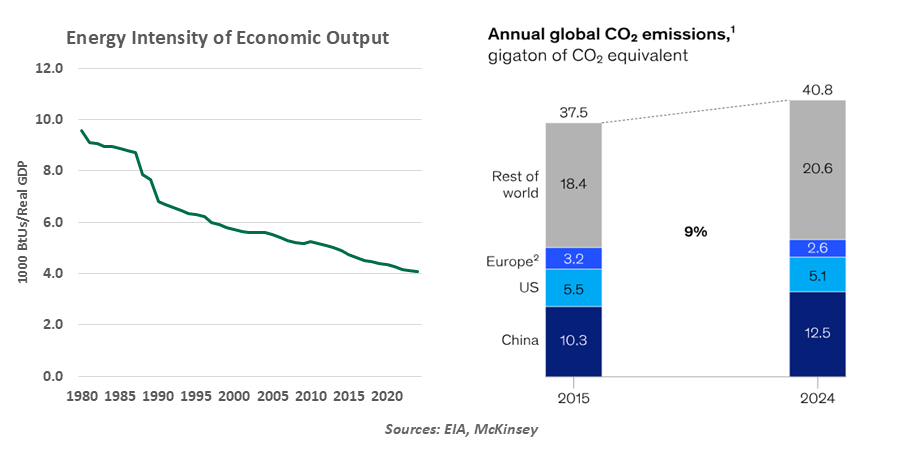
Across markets, measures are being taken to constrain energy usage. Rationing is in place in some countries, while others will redouble efforts to conserve. The world has greatly reduced the level of energy needed to support economic output over time, but more will need to be done.
The war may prove costly to big Middle Eastern oil and gas producers. They have been shown to be vulnerable, and may lose some of their market share over the medium term as the search for more secure sources unfolds.
One clear loser in the war is the environment. The world has not been able to check the growth in greenhouse gas emissions, and the United States has de-emphasized efforts to combat climate change. As countries use more of what they have at hand, the global energy mix may shift back towards fuels which are more carbon-intensive.
My wife is very concerned about the rising price of gasoline, and has sent me out on reconnaissance missions to find cheap sources. She has also instructed me to establish a strategic fuel reserve by installing a storage tank in our back yard. I don’t think the neighbors are going to be happy…
Related Articles
Meet Your Expert
Carl Tannenbaum
Chief Economist
Carl Tannenbaum is the Chief Economist for Northern Trust. In this role, he briefs clients and colleagues on the economy and business conditions, prepares the bank's official economic outlook and participates in forecast surveys. He is a member of Northern Trust's investment policy committee, its capital committee, and its asset/liability management committee.

Meet Our Team



Subscribe to Publications on Economic Trends & Insights
Gain insight into economic developments and our latest forecasts for the United States.
Information is not intended to be and should not be construed as an offer, solicitation or recommendation with respect to any transaction and should not be treated as legal advice, investment advice or tax advice. Under no circumstances should you rely upon this information as a substitute for obtaining specific legal or tax advice from your own professional legal or tax advisors. Information is subject to change based on market or other conditions and is not intended to influence your investment decisions.
© 2026 Northern Trust Corporation. Head Office: 50 South La Salle Street, Chicago, Illinois 60603 U.S.A. Incorporated with limited liability in the U.S. Products and services provided by subsidiaries of Northern Trust Corporation may vary in different markets and are offered in accordance with local regulation. For legal and regulatory information about individual market offices, visit northerntrust.com/terms-and-conditions.