APAC Asset Owners: A Move Toward More Integrated Portfolio and Operating Models
APAC asset owners are operating in an investment environment defined by higher portfolio complexity, greater liquidity demands, growing private markets allocations and rising expectations for data-driven decision-making. According to Northern Trust’s 2026 Asset Owners in Focus report, these pressures are pushing institutions to take a more integrated view of investment strategy, operating model design and technology infrastructure. Traditional portfolio construction frameworks are being tested by more volatile markets, changing interest rate expectations, evolving funding needs, and operational demands of less liquid asset classes.
As a result, asset owners are placing greater emphasis on whole-portfolio visibility, scalable operating models, and data foundations that can support faster, more connected decision-making. The shift is not only about adjusting allocations. It also reflects a broader reassessment of the tools, processes, and partnerships required to manage increasingly complex portfolios across public and private markets.
The survey highlights five themes that illustrate how APAC asset owners are responding to these challenges and positioning themselves for the future.
1. Embracing a total portfolio approach
One of the clearest examples of this evolution is the growing adoption of a total portfolio approach. APAC asset owners are moving beyond static allocation models and placing greater emphasis on whole-portfolio decision-making.
Twenty percent of respondents named a total portfolio approach as their guiding investment philosophy, compared with 13% globally. In addition, the number of APAC asset owners relying on overlay strategies jumped from 20% in 2025 to 28% in 2026. Total portfolio approaches are becoming more prominent as institutions seek to connect asset allocation, risk management, liquidity planning, and implementation in a more coordinated way. This shift reflects a broader need for investment frameworks that can respond more quickly to market volatility, funding needs, and changing opportunity sets.
Rather than evaluating asset classes in isolation, asset owners are increasingly focused on how different exposures work together at the total portfolio level. By viewing portfolio decisions through a more integrated lens, institutions are aiming to build greater flexibility and resilience into their investment programs.
2. Private markets as an operating model challenge
The increasing focus on total portfolio management is occurring alongside continued growth in private markets allocations. While private assets offer opportunities for diversification and return enhancement, they also introduce a new layer of operational complexity.
Among APAC respondents, 53% identified operational complexity as the greatest challenge to investing in private markets, while 43% pointed to valuation transparency. APAC’s average asset owner allocates 18% of assets to private markets, underscoring the importance of building infrastructure that can support these investments over time.
As allocations expand, institutions must manage more complex cash flows, valuation cycles, reporting requirements and manager oversight processes. The key challenge is not simply gaining access to private markets opportunities. Asset owners also need the data, reporting, and oversight infrastructure required to invest in private assets at scale and understand their impact across the broader portfolio.
3. Liquidity as a strategic priority
The growth of private markets is also helping elevate the importance of liquidity management. As portfolios become more complex and capital is committed to less liquid investments, maintaining visibility into liquidity positions becomes increasingly important.
Liquidity is increasingly being treated as a strategic asset that supports portfolio flexibility, funding readiness, and operational resilience. Nearly two-thirds (63%) of APAC respondents said liquidity has become more important to their investment strategy over the last 12 months.
Market volatility, interest rate uncertainty, larger private markets allocations and shorter settlement cycles are increasing the need for more active liquidity planning. More than half (52%) named the interest rate environment as a top driver of their focus on liquidity.
The survey also highlights how institutions are putting this focus into practice. When asked why they maintain cash reserves exceeding 5% of total portfolio assets, 55% cited a strategic liquidity reserve, while 42% pointed to market volatility and collateral requirements for derivatives or other obligations.
Asset owners are responding by holding larger cash buffers, shortening duration, and placing greater emphasis on real-time liquidity visibility. Sixty percent say they are increasing allocations to cash positions, while 44% are systematizing the tracking of liquidity terms across alternative investments.
4. Data integration and AI readiness
As investment and liquidity management become more interconnected, the underlying quality and accessibility of data become increasingly important. For many APAC asset owners, data integration has emerged as a prerequisite for both operational efficiency and technology innovation.
Data fragmentation remains one of the most significant technology challenges facing APAC asset owners. Disconnected data sources can limit decision-making, risk management, and operational efficiency, particularly as portfolios become more complex.
Sixty-eight percent of APAC asset owners cited data integration across sources as a top challenge, nine percentage points higher than the global average. An additional 53% pointed to data accuracy challenges. Clean, timely, and consistently structured data is increasingly required to support investment oversight, liquidity planning, private markets reporting, and portfolio analytics.
This data foundation is also central to AI adoption. AI is best understood as an extension of a data-first operating model rather than a standalone capability. Ninety percent of APAC asset owners are actively using AI in some form. When identifying the most promising opportunities, 50% named research, while 48% highlighted investment due diligence, operational due diligence, and document management.
Without reliable integrated data, it becomes harder to apply AI in ways that improve investment and operational outcomes.
The same pattern is visible in digital assets, where APAC asset owners appear interested but measured in their adoption. Thirty-eight percent currently invest in digital assets, below the global average. Rather than signaling a lack of interest, this lower adoption rate may reflect a more cautious posture as institutions wait for clearer regulatory and compliance guidance from the industry. For many asset owners, digital assets remain closely tied to broader questions about governance, operating model readiness, data infrastructure, and risk oversight.
5. Operating model design around control and scale
The need for stronger data foundations, combined with increasing portfolio complexity, is influencing how asset owners think about operational responsibilities. As a result, many institutions are becoming more deliberate about which capabilities they retain internally and which they seek from external providers.
The dividing line is increasingly shaped by the need to retain control over differentiated activities while using scale providers for standardized and repeatable processes.
Activities tied to investment decision-making, alpha generation, data access and data governance are more likely to remain under internal control. Sixty-eight percent retain investment oversight in house, while 23% are actively considering or already outsourcing oversight to an OCIO.
Meanwhile, activities that require scale, standardization, and operational efficiency are more likely to be outsourced. Half of respondents outsource transaction capture and processing for alternative investments as well as trade execution. Forty percent outsource accounting administration for alternative investments, depositary and trustee services, and transfer agency functions.
At the same time, functions such as analytics and performance are moving closer to the investment decision layer as asset owners seek more connected oversight across portfolios, operations and data.
Overall, APAC asset owners are putting more focus on how outsourcing partners can work within the growing complexity of their portfolios and operations. When asked what were the most important factors when choosing a service provider, client service, expertise, technology, products, and financial strength all remain key factors, but the ability to handle complex clients and investment structures significantly jumped year-on-year as a driver, from 18% in 2025 to 43% in 2026.
The next phase for APAC asset owners
APAC asset owners are entering a period in which investment strategy and operating model design are becoming increasingly interconnected. The move toward total portfolio approaches reflects a need for more flexible frameworks that can respond to market volatility, liquidity needs, and changing investment opportunities.
At the same time, growth in private markets is increasing the importance of operational infrastructure, including data management, reporting, valuation oversight, and liquidity planning. Data integration is becoming a foundational priority because it underpins portfolio transparency, AI readiness, and more effective decision-making.
As complexity continues to increase, asset owners are likely to keep refining what they control internally, where they seek external scale and how they connect investment decisions with operational execution. The institutions that can successfully align portfolio construction, operational capabilities, and data infrastructure will be best positioned to navigate the next phase of investment management.
Meet Your Expert
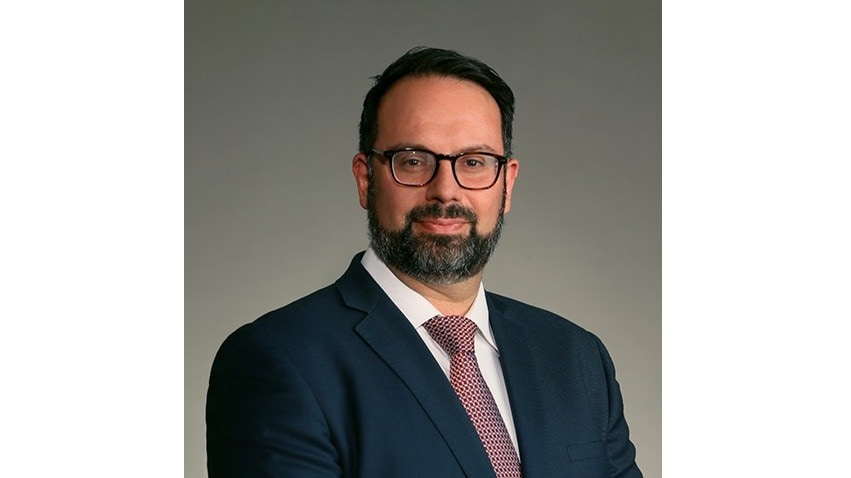
Leon Stavrou
Leon is the Head of Australia and New Zealand at Northern Trust. He is responsible for the overall business and strategic direction for asset servicing, asset management and capital markets solutions for sophisticated institutional clients across the region.
Meet Your Expert
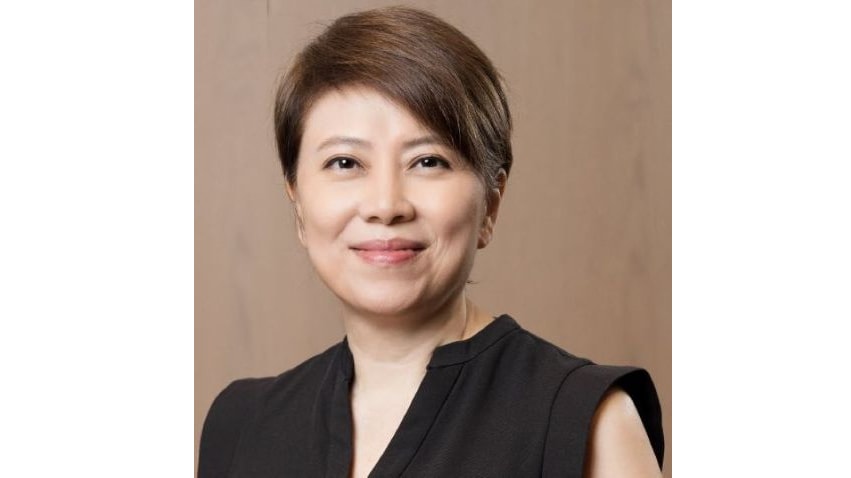
Yen Leng Ong
Based in Singapore, Yen Leng Ong is the Head of Southeast Asia at Northern Trust. She oversees the business and strategic direction for asset servicing, asset management and capital markets solutions for institutional clients across the region.
© 2026 Northern Trust Corporation. Head Office: 50 South La Salle Street, Chicago, Illinois 60603 U.S.A. Incorporated with limited liability as an Illinois corporation under number 0014019. Products and services provided by subsidiaries of Northern Trust Corporation may vary in different markets and are offered in accordance with local regulation. This material is directed to professional clients (or equivalent) only and is not intended for retail clients and should not be relied upon by any other persons. The contents of this communication should not be construed as a recommendation, solicitation or offer to buy, sell or procure any securities or related financial products or to enter into an investment, service or product agreement in any jurisdiction in which such solicitation is unlawful or to any person to whom it is unlawful. This communication does not constitute investment advice, does not constitute a personal recommendation and has been prepared without regard to the individual financial circumstances, needs or objectives of persons who receive it. Moreover, it neither constitutes an offer to enter into an investment, service or product agreement with the recipient of this document nor the invitation to respond to it by making an offer to enter into an investment, service or product agreement. For Asia-Pacific markets, this communication is directed to expert, institutional, professional and wholesale clients or investors only and should not be relied upon by retail clients or investors. For legal and regulatory information about our offices and legal entities, visit northerntrust.com/disclosures. The views, thoughts, and opinions expressed in the text belong solely to the author, and not necessarily to the author's employer, organization, committee or other group or individual.
The following information is provided to comply with local disclosure requirements: The Northern Trust Company, London Branch, Northern Trust Global Investments Limited, Northern Trust Securities LLP, Northern Trust Global Services SE UK Branch and Northern Trust Investor Services Limited, 50 Bank Street, London E14 5NT, are authorised and regulated by the UK’s Financial Conduct Authority. The Northern Trust Company, London Branch and Northern Trust Global Services SE UK Branch are also authorised and regulated by the UK’s Prudential Regulation Authority. Not all of the products and services mentioned within this material are authorised and regulated by the UK’s Financial Conduct Authority or UK’s Prudential Regulation Authority. Northern Trust Global Services SE, 10 rue du Château d’Eau, L-3364 Leudelange, Grand-Duché de Luxembourg, incorporated with limited liability in Luxembourg at the RCS under number B232281; authorised by the ECB and subject to the prudential supervision of the ECB and the CSSF; Northern Trust Global Services SE UK Branch, UK establishment number BR023423 and UK office at 50 Bank Street, London E14 5NT; Northern Trust Global Services SE Sweden Bankfilial, Ingmar Bergmans gata 4, 1st Floor, 114 34 Stockholm, Sweden, registered with the Swedish Companies Registration Office (Sw. Bolagsverket) with registration number 516405-3786 and the Swedish Financial Supervisory Authority (Sw. Finansinspektionen) with institution number 11654; Northern Trust Global Services SE Netherlands Branch, Viñoly 6th & 7th floor, Claude Debussylaan 16A-18A, 1082 MD Amsterdam, the Netherlands. Subject to regulation in the Netherlands by De Nederlandsche Bank and Autoriteit Financiële Markten. Northern Trust Global Services SE Abu Dhabi Branch, registration Number 000000519 licenced by ADGM under FSRA #160018; Northern Trust Global Services SE NUF, org. no. 925 952 567 (Foretaksregisteret), address Third Floor, Haakon VIIs gate 6 0161 Oslo, is a Norwegian branch of Northern Trust Global Services SE supervised by Finanstilsynet. Northern Trust Global Services SE Leudelange, Luxembourg, Zweigniederlassung Basel is a branch of Northern Trust Global Services SE. The Branch has its registered office at Grosspeter Tower, Grosspeteranlage 29, 4052 Basel, Switzerland, and is authorised and regulated by the Swiss Financial Market Supervisory Authority FINMA. The Northern Trust Company Saudi Arabia, PO Box 7508, Level 20, Kingdom Tower, Al Urubah Road, Olaya District, Riyadh, Kingdom of Saudi Arabia 11214-9597, a Saudi Joint Stock Company – capital 52 million SAR. Regulated and Authorised by the Capital Market Authority License #12163-26 CR 1010366439. Northern Trust (Guernsey) Limited (2651) (NTGL)/Northern Trust Fiduciary Services (Guernsey) Limited (29806) (NTFSGL)/Northern Trust International Fund Administration Services (Guernsey) Limited (15532) (NTIFASGL) are licensed by the Guernsey Financial Services Commission. Registered Office: NTGL/NTFSGL -Trafalgar Court, Les Banques, St Peter Port, Guernsey GY1 3DA. NTIFASGL - Trafalgar Court, Les Banques, St Peter Port, Guernsey GY1 3QL. Northern Trust International Fund Administration Services (Ireland) Limited (160579)/Northern Trust Fiduciary Services (Ireland) Limited (161386) and The Northern Trust Company, Ireland Branch (910415) are authorised and regulated by the Central Bank of Ireland. Registered Office: Georges Court, 54-62 Townsend Street, Dublin 2, D02 R156.