'%3e%3cpath%20d='M14.5584%2010.5857L23.6652%200H21.5072L13.5999%209.19156L7.2843%200H0L9.55034%2013.8992L0%2025H2.1582L10.5087%2015.2935L17.1783%2025H24.4626L14.5582%2010.5857H14.5588H14.5584ZM11.6025%2014.0215L10.6348%2012.6375L2.9357%201.62451H6.25036L12.4638%2010.5123L13.4315%2011.8963L21.5082%2023.4491H18.1935L11.6027%2014.0219V14.0213L11.6025%2014.0215Z'%20fill='%23808182'/%3e%3c/g%3e%3cdefs%3e%3cclipPath%20id='clip0_20_84'%3e%3crect%20width='24.4624'%20height='25'%20fill='white'/%3e%3c/clipPath%3e%3c/defs%3e%3c/svg%3e)
%20is%20a%20leading%20provider%20of%20wealth%20management,%20asset%20servicing,%20asset%20management%20and%20banking%20to%20corporations,%20institutions,%20affluent%20families%20and%20individuals.%20Founded%20in%20Chicago%20in%201889,%20Northern%20Trust%20has%20offices%20in%20the%20United%20States%20in%2019%20states%20and%20Washington,%20D.C.,%20and%2020%20international%20locations%20in%20Canada,%20Europe,%20the%20Middle%20East%20and%20the%20Asia-Pacific%20region.%20%3c/desc%3e%3cpath%20fill='%233d4042'%20d='M21,21H17V14.25C17,13.19%2015.81,12.31%2014.75,12.31C13.69,12.31%2013,13.19%2013,14.25V21H9V9H13V11C13.66,9.93%2015.36,9.24%2016.5,9.24C19,9.24%2021,11.28%2021,13.75V21M7,21H3V9H7V21M5,3A2,2%200%200,1%207,5A2,2%200%200,1%205,7A2,2%200%200,1%203,5A2,2%200%200,1%205,3Z'%3e%3c/path%3e%3c/svg%3e)
%20-%20https://sketch.com%20--%3e%3ctitle%3eEmail%3c/title%3e%3cdesc%3eShare%20article%20via%20email%3c/desc%3e%3cg%20id='Article'%20stroke='none'%20stroke-width='1'%20fill='none'%20fill-rule='evenodd'%3e%3cg%20id='article-desktop'%20transform='translate(-291.000000,%20-905.000000)'%20fill='%233d4042'%20fill-rule='nonzero'%3e%3cg%20id='Group-3'%20transform='translate(280.000000,%20700.000000)'%3e%3cpath%20d='M12.5859376,205%20L25.5,216.098563%20L38.4140625,205%20L12.5859376,205%20Z%20M11,206.352162%20L11,221.582916%20L19.5446429,213.697123%20L11,206.352162%20Z%20M40,206.352162%20L31.4553572,213.697123%20L40,221.582916%20L40,206.352162%20L40,206.352162%20Z%20M21.1197917,215.049268%20L12.5212054,223%20L38.4787946,223%20L29.8802084,215.049268%20L26.1688988,218.240388%20C25.7827601,218.567837%2025.21724,218.567837%2024.8311012,218.240388%20L21.1197917,215.049268%20L21.1197917,215.049268%20Z'%20id='Shape'%3e%3c/path%3e%3c/g%3e%3c/g%3e%3c/g%3e%3c/svg%3e)
'%20fill='%233d4042'%20fill-rule='nonzero'%3e%3cpath%20d='M317.048444,961%20C318.677807,961.001791%20319.998224,962.333083%20320,963.975866%20L320,963.975866%20L320,972.789759%20C320,973.478748%20319.446027,974.037283%20318.762667,974.037283%20L318.762667,974.037283%20L313.420222,974.037283%20L313.420222,980.619276%20C313.466211,981.335082%20312.928257,981.953082%20312.218333,982%20L312.218333,982%20L298.781667,982%20C298.071743,981.953082%20297.533789,981.335082%20297.579778,980.619276%20L297.579778,980.619276%20L297.579778,974.037283%20L292.237333,974.037283%20C291.553973,974.037283%20291,973.478748%20291,972.789759%20L291,972.789759%20L291,963.975866%20C291.001776,962.333083%20292.322193,961.001791%20293.951556,961%20L293.951556,961%20Z%20M311.486889,970.525371%20L299.513111,970.525371%20L299.513111,980.050743%20L311.486889,980.050743%20L311.486889,970.525371%20Z%20M314.395276,962.742345%20C313.970645,962.65481%20313.549254,962.905694%20313.420222,963.322865%20C313.394809,963.404999%20313.380715,963.490265%20313.378333,963.576269%20C313.380722,963.661209%20313.394821,963.7454%20313.420222,963.826423%20C313.529012,964.18316%20313.855609,964.426832%20314.225778,964.427444%20C314.659193,964.427644%20315.022348,964.096906%20315.066078,963.66215%20C315.109809,963.227395%20314.819907,962.829881%20314.395276,962.742345%20Z%20M317.130097,962.784571%20C316.813535,962.651298%20316.448506,962.723595%20316.20547,962.967701%20C315.962434,963.211807%20315.889338,963.579564%20316.020315,963.899239%20C316.151293,964.218915%20316.460504,964.427444%20316.803556,964.427444%20L316.803556,964.427444%20C317.274992,964.425655%20317.651006,964.045094%20317.651006,963.576269%20C317.652304,963.230394%20317.44666,962.917844%20317.130097,962.784571%20Z%20M311.783656,955%20C312.500482,955.040538%20313.043667,955.574507%20312.997231,956.192982%20L312.997231,956.192982%20L312.997231,959%20L297.002769,959%20L297.002769,956.192982%20C296.956333,955.574507%20297.499518,955.040538%20298.216344,955%20L298.216344,955%20Z'%20id='icon-print'%3e%3c/path%3e%3c/g%3e%3c/g%3e%3c/svg%3e)
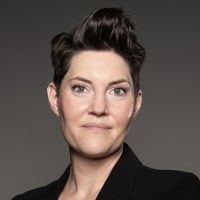
Lynne Kostakis
Executive Director of Alternative Investments
In collaboration with Jon Jackson, Central Region Practice Leader for Estate Settlement Services
This information is intended solely for clients or potential clients of Northern Trust Wealth Management. Alternative investments are available only to qualified investors and are not suitable for all portfolios. These strategies often involve limited liquidity, complex structures and additional tax reporting, including K‑1 filings. Allocating to alternative investments within a diversified portfolio may require tolerance for greater administrative complexity, delayed reporting and information, and a higher degree of risk, including potential loss of capital.
Longer time horizons, illiquidity and estate planning complexity lead some would-be investors to wonder if investing in alts is right for them.
For many, private market investing, much like me looking to borrow something from my 20‑something year old daughter’s wardrobe, starts with an important question: “Am I too old for this!?”
And as with many good questions, the answer is: It depends.
For qualified investors, private market opportunities may offer compelling risk‑adjusted return potential driven by alpha generation, income, inflation protection and diversification, depending on the underlying asset classes and strategies selected. Additionally, private‑equity‑backed companies now outnumber public companies roughly two to one.1 And missing that opportunity set may be costly. Northern Trust’s 2026 Capital Market Assumptions, a long-term forecast of market projections, projects private assets achieving higher return premiums than their public‑market counterparts over the next decade.2 For qualified investors, private markets may be an effective tool to meet goals across both a lifetime and a legacy.
These potential benefits come with challenges, however. Private market investments are complex. They often require investors to meet accredited investor or qualified purchaser standards, come with a wide dispersion between top- and bottom‑quartile managers — making access and manager selection critical — carry higher fees than most public investments, and involve nuanced reporting. They also require long time horizons and comfort with illiquidity, characteristics that may not align neatly with those nearing the later stages of life.
So we return to the question: Am I too old for private market investments?
The better question may be less about whether you will outlive your investments and more about what you intend to happen with those investments afterwards.
Key Estate Planning Considerations: Valuation and Transfer
How are private market investments valued?
For executors, trustees and beneficiaries navigating a decedent's estate, everything begins with valuation — and private investments work very differently from public markets, potentially necessitating a professional appraiser. Unlike marketable securities, private market investments lack daily pricing, but they must establish a cost basis, whether or not an estate is taxable. These investments are typically structured as limited partnerships (LPs) or limited liability companies (LLCs), and the interest being valued is the LP or member interest held of the overall fund. Additionally, valuations may include discounts for lack of control or marketability, resulting in values below the amounts shown on fund statements. Understanding these complexities is essential to ensuring a smooth transition for executors and beneficiaries.
How are private market investments transferred to beneficiaries?
Beneficiaries, individuals or trusts generally must meet the same qualifications required of the original investor: If you needed to be an accredited investor or qualified purchaser, chances are they will too.
If the investment is still in its investment period, the beneficiary must also be prepared to meet ongoing capital calls — an important element to build into estate‑settlement planning. And, as with most private market processes, transfers involve significant paperwork, varying by investment manager, with the investment manager having ultimate determination if a recipient beneficiary is allowed to hold the asset. Tax reporting adds further complexity: K‑1s often arrive late, often require filing extensions, and can complicate beneficiaries’ tax planning. Preparing heirs for these realities is essential for successful transfer.
So… am I too old?
For many investors, the answer is no. But for some, the answer is yes. Private market investing may support objectives that extend beyond one’s lifetime — if properly planned. Trust and estate experts with deep experience and specialized expertise planning with complex assets can help individuals, families and their legacies navigate these complexities and ensure their intentions for their wealth are realized.
They can’t help me decide whether I’m too old for my daughter’s clothing — but alongside your portfolio advisor, they can help you answer “Am I too old for private market investing?”
Am I Too Old for Alts? Key Questions for Advisor Conversations:
- Do I qualify to invest in alternative investments? Can my heirs and/or trusts inherit the investments?
- How do these investments align with my needs today as well as long-term goals for my family, legacy or charitable intentions?
- What level of illiquidity am I comfortable with, and what other sources of liquidity could I rely on if my circumstances change?
- How much capital might be required over time through capital calls, and how would these obligations be met?
- How is governance and monitoring on my alternative investments handled?
- What should I expect from a tax and reporting perspective during my lifetime? What should my beneficiaries expect?
- How will my investments be valued for reporting and estate purposes?
- If I am no longer around while the investments are still active, what happens operationally?
%20scale(1,%20-1)%20rotate(-90.000000)%20translate(-22.445237,%20-21.357547)%20'%20points='21.2928054%2010.2071946%2022.707019%208.79298104%2030.8809213%2016.9668834%2015.4904479%2033.9221138%2014.0095521%2032.5778862%2028.119%2017.034'%3e%3c/polygon%3e%3c/g%3e%3c/svg%3e)