'%3e%3cpath%20d='M14.5584%2010.5857L23.6652%200H21.5072L13.5999%209.19156L7.2843%200H0L9.55034%2013.8992L0%2025H2.1582L10.5087%2015.2935L17.1783%2025H24.4626L14.5582%2010.5857H14.5588H14.5584ZM11.6025%2014.0215L10.6348%2012.6375L2.9357%201.62451H6.25036L12.4638%2010.5123L13.4315%2011.8963L21.5082%2023.4491H18.1935L11.6027%2014.0219V14.0213L11.6025%2014.0215Z'%20fill='%23808182'/%3e%3c/g%3e%3cdefs%3e%3cclipPath%20id='clip0_20_84'%3e%3crect%20width='24.4624'%20height='25'%20fill='white'/%3e%3c/clipPath%3e%3c/defs%3e%3c/svg%3e)
%20is%20a%20leading%20provider%20of%20wealth%20management,%20asset%20servicing,%20asset%20management%20and%20banking%20to%20corporations,%20institutions,%20affluent%20families%20and%20individuals.%20Founded%20in%20Chicago%20in%201889,%20Northern%20Trust%20has%20offices%20in%20the%20United%20States%20in%2019%20states%20and%20Washington,%20D.C.,%20and%2020%20international%20locations%20in%20Canada,%20Europe,%20the%20Middle%20East%20and%20the%20Asia-Pacific%20region.%20%3c/desc%3e%3cpath%20fill='%233d4042'%20d='M21,21H17V14.25C17,13.19%2015.81,12.31%2014.75,12.31C13.69,12.31%2013,13.19%2013,14.25V21H9V9H13V11C13.66,9.93%2015.36,9.24%2016.5,9.24C19,9.24%2021,11.28%2021,13.75V21M7,21H3V9H7V21M5,3A2,2%200%200,1%207,5A2,2%200%200,1%205,7A2,2%200%200,1%203,5A2,2%200%200,1%205,3Z'%3e%3c/path%3e%3c/svg%3e)
%20-%20https://sketch.com%20--%3e%3ctitle%3eEmail%3c/title%3e%3cdesc%3eShare%20article%20via%20email%3c/desc%3e%3cg%20id='Article'%20stroke='none'%20stroke-width='1'%20fill='none'%20fill-rule='evenodd'%3e%3cg%20id='article-desktop'%20transform='translate(-291.000000,%20-905.000000)'%20fill='%233d4042'%20fill-rule='nonzero'%3e%3cg%20id='Group-3'%20transform='translate(280.000000,%20700.000000)'%3e%3cpath%20d='M12.5859376,205%20L25.5,216.098563%20L38.4140625,205%20L12.5859376,205%20Z%20M11,206.352162%20L11,221.582916%20L19.5446429,213.697123%20L11,206.352162%20Z%20M40,206.352162%20L31.4553572,213.697123%20L40,221.582916%20L40,206.352162%20L40,206.352162%20Z%20M21.1197917,215.049268%20L12.5212054,223%20L38.4787946,223%20L29.8802084,215.049268%20L26.1688988,218.240388%20C25.7827601,218.567837%2025.21724,218.567837%2024.8311012,218.240388%20L21.1197917,215.049268%20L21.1197917,215.049268%20Z'%20id='Shape'%3e%3c/path%3e%3c/g%3e%3c/g%3e%3c/g%3e%3c/svg%3e)
'%20fill='%233d4042'%20fill-rule='nonzero'%3e%3cpath%20d='M317.048444,961%20C318.677807,961.001791%20319.998224,962.333083%20320,963.975866%20L320,963.975866%20L320,972.789759%20C320,973.478748%20319.446027,974.037283%20318.762667,974.037283%20L318.762667,974.037283%20L313.420222,974.037283%20L313.420222,980.619276%20C313.466211,981.335082%20312.928257,981.953082%20312.218333,982%20L312.218333,982%20L298.781667,982%20C298.071743,981.953082%20297.533789,981.335082%20297.579778,980.619276%20L297.579778,980.619276%20L297.579778,974.037283%20L292.237333,974.037283%20C291.553973,974.037283%20291,973.478748%20291,972.789759%20L291,972.789759%20L291,963.975866%20C291.001776,962.333083%20292.322193,961.001791%20293.951556,961%20L293.951556,961%20Z%20M311.486889,970.525371%20L299.513111,970.525371%20L299.513111,980.050743%20L311.486889,980.050743%20L311.486889,970.525371%20Z%20M314.395276,962.742345%20C313.970645,962.65481%20313.549254,962.905694%20313.420222,963.322865%20C313.394809,963.404999%20313.380715,963.490265%20313.378333,963.576269%20C313.380722,963.661209%20313.394821,963.7454%20313.420222,963.826423%20C313.529012,964.18316%20313.855609,964.426832%20314.225778,964.427444%20C314.659193,964.427644%20315.022348,964.096906%20315.066078,963.66215%20C315.109809,963.227395%20314.819907,962.829881%20314.395276,962.742345%20Z%20M317.130097,962.784571%20C316.813535,962.651298%20316.448506,962.723595%20316.20547,962.967701%20C315.962434,963.211807%20315.889338,963.579564%20316.020315,963.899239%20C316.151293,964.218915%20316.460504,964.427444%20316.803556,964.427444%20L316.803556,964.427444%20C317.274992,964.425655%20317.651006,964.045094%20317.651006,963.576269%20C317.652304,963.230394%20317.44666,962.917844%20317.130097,962.784571%20Z%20M311.783656,955%20C312.500482,955.040538%20313.043667,955.574507%20312.997231,956.192982%20L312.997231,956.192982%20L312.997231,959%20L297.002769,959%20L297.002769,956.192982%20C296.956333,955.574507%20297.499518,955.040538%20298.216344,955%20L298.216344,955%20Z'%20id='icon-print'%3e%3c/path%3e%3c/g%3e%3c/g%3e%3c/svg%3e)
Art collections are born of passion, creativity and shared experiences with artists, communities and family — often leading to impressive collections built across decades.
In direct proportion to the significance and complexity of these collections are the manifold planning considerations: How do you accurately value the collection? What if the next generation is not interested in owning the collection? And how can one ensure that a collection retains its meaning when it is passed on, whether to an heir or museum?
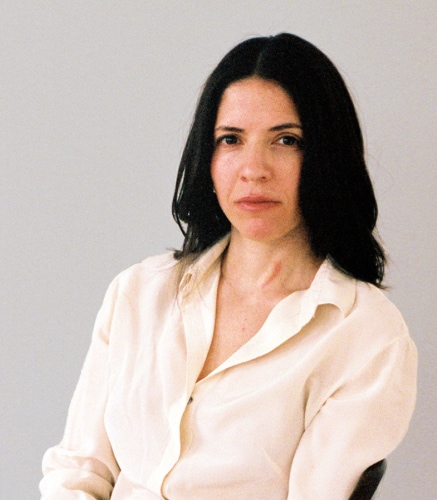
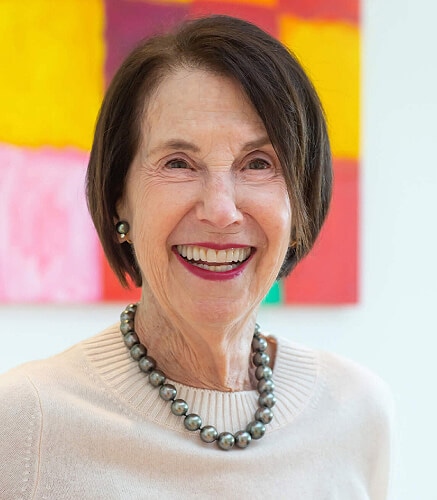
To help families answer these questions and ensure their vision for their collection is realized as intended, Northern Trust is thrilled to welcome Alyssa Quinlan. Joining from Freeman’s Auctions and Appraisals, where she was Chief Executive Officer, Alyssa will lead the integrated Art Advisory practice at the Northern Trust Institute, in addition to her role as Head of Advisor Relationships & Strategic Partnerships.
You have a unique background of deep experience in both art, particularly art auction and appraisal, and wealth management. How did you develop both of those skill sets?
My career has always existed at the intersection of art and financial stewardship. Early on, I became interested not only in the cultural and historical significance of works of art, but also in the ways they function as assets within families and estates. Over time, I had the opportunity to build experience on both sides of that equation — working closely with collectors, estates, and advisors to understand how art fits into broader financial and legacy planning.
Most recently, as CEO of Freeman’s Auctions, I worked with collectors, museums and families navigating everything from acquisitions and appraisals to estate disposition and legacy planning. That experience reinforced how often art intersects with wealth management questions — valuation, liquidity, philanthropy and succession planning. Joining the Northern Trust Institute, which advises across these areas based on its experience working with families for generations, felt like a natural extension of that work, because it allows me to bring art expertise directly into a broader advisory context.
How did you develop a passion for art?
My interest began at a young age attending museums with my parents, and also being around art that my parents purchased at auction. But I always had a curiosity about objects and the stories they carry. Works of art often reflect cultural moments, personal histories, and broader historical movements. What fascinated me early on was the idea that a single object could connect all of those narratives.
Auction houses provide a particularly compelling environment because they bring together scholarship, market insight and relationships. In appraisal and auction work, you’re constantly researching, evaluating and contextualizing objects while also helping collectors make important decisions about their collections. That combination of intellectual discovery and practical advising was something I found incredibly engaging.
You’re joining the Northern Trust Institute and expanding the capabilities for fine art and collectibles, via the integrated Art Advisory. Can you speak to your vision?
At the Northern Trust Institute, the goal is to help families think about art and their collections as part of a comprehensive wealth and legacy strategy. Many collectors have spent decades thoughtfully building collections, but the planning around those collections often happens later — or sometimes not at all.
In coordination with other practices across the Institute, such as philanthropy, tax and estate planning, the advisory will focus on helping collectors address questions such as: How should a collection be documented and valued? How might it be stewarded across generations? What philanthropic opportunities might align with a client’s values? And how can collections be preserved in ways that support both family goals and the cultural ecosystem?
Ultimately, our goal will be to provide families both strategic guidance and practical solutions, whether they’re actively collecting, planning their legacy, or simply trying to better understand how their art fits into their overall financial picture.
What are a few of the most common art-related estate planning challenges you’ve encountered over the years?
One of the most common challenges is simply a lack of documentation or planning. Collections may have been assembled over decades, but inventories, appraisals and provenance documentation aren’t always up to date.
Another frequent challenge involves intergenerational preferences. It’s true that sometimes the next generation doesn’t want — or doesn’t know how to care for— a collection their parents built with great enthusiasm.
And finally, there can be liquidity questions. Art can represent a significant portion of a family’s wealth, but it’s not always immediately liquid, so planning becomes important if it will play a role in estate settlement or philanthropic giving.
Can you speak to a few examples of how you help clients solve those challenges?
At the Institute, much of the thinking is geared toward planning around major life events — such as marriage, retirement and birth of a child. In the realm of art and collectables, those often center around when a family coalesces on a vision for the future of the collection and, frequently, the death of a family member.
For instance, a collector faces significantly differing tax implications for transferring a piece of art by gift during their life than bequest at death. In some instances, such as when they have used their annual and lifetime exclusion and would be required to pay federal gift tax on the transfer, it could be considerably more tax efficient to transfer by bequest. But these decisions, and their varying financial and non-financial advantages, are best made in view of your overall plan with a team of integrated experts who can advise across the tax, philanthropic and estate planning considerations.
Similarly, a collector or family may reach a point where they decide to sell a piece or a collection — potentially to buy new works, or for liquidity. Your timing and relationship to the art can largely determine the tax implications; for instance, if you are classified by the IRS as a collector or investor. It’s also important to have a full understanding of the potential fees, commissions, insurance and shipping expenses, and whether it ultimately makes more sense to sell at auction or a private sale.
What do you look forward to most about EXPO Chicago each year, and how will you be participating this year?
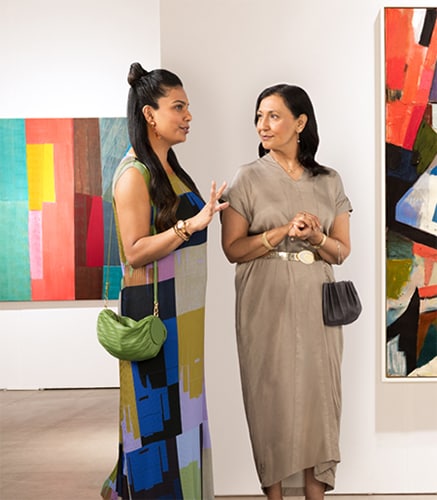
EXPO Chicago is always an exciting moment in the cultural calendar because it brings together artists, galleries, collectors and institutions from around the world in one place.
For me, it’s a chance not only to see extraordinary work but also to reconnect with colleagues and engage in conversations about how the art ecosystem continues to evolve.
This year I’m particularly looking forward to participating in discussions around collecting, philanthropy and the stewardship of artists’ legacies, as well as meeting with collectors visiting the fair.
EXPO CHICAGO takes place April 9-12 at Navy Pier.
%20scale(1,%20-1)%20rotate(-90.000000)%20translate(-22.445237,%20-21.357547)%20'%20points='21.2928054%2010.2071946%2022.707019%208.79298104%2030.8809213%2016.9668834%2015.4904479%2033.9221138%2014.0095521%2032.5778862%2028.119%2017.034'%3e%3c/polygon%3e%3c/g%3e%3c/svg%3e)